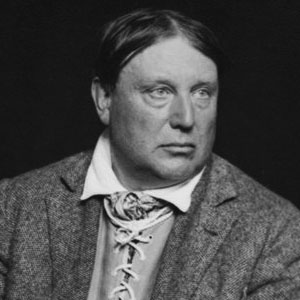

Henri Matisse was a French artist, leader of the Fauve group, regarded as one of the great formative figures in 20th-century art, a master of the use of color and form to convey emotional expression.
Henri Matisse was born in December of 1869 in Le Cateau, France. He began painting during a convalescence from an operation, and in 1891 moved to Paris to study art. Matisse became an accomplished painter, sculptor and graphic designer, and one of the most influential artists of the 1900s.
Matisse was born the son of a middle-class family, he studied and began to practice law. In 1890, however, while recovering slowly from an attack of appendicitis, he became intrigued by the practice of painting. In 1892, having given up his law career, he went to Paris to study art formally. His first teachers were academically trained and relatively conservative; Matisse’s own early style was a conventional form of naturalism, and he made many copies after the old masters. He also studied more contemporary art, especially that of the impressionists, and he began to experiment, earning a reputation as a rebellious member of his studio classes. Matisse’s true artistic liberation, in terms of the use of color to render forms and organize spatial planes, came about first through the influence of the French painters Paul Gauguin and Paul Cezanne and the Dutch artist Vincent van Gogh, whose work he studied closely beginning about 1899. Then, in 1903 and 1904, Matisse encountered the pointillist painting of Henri Edmond Cross and Paul Signac. Cross and Signac were experimenting with juxtaposing small strokes (often dots or “points”) of pure pigment to create the strongest visual vibration of intense color. Matisse adopted their technique and modified it repeatedly, using broader strokes. By 1905 he had produced some of the boldest color images ever created, including a striking picture of his wife, Green Stripe (Madame Matisse) (1905, Statens Museum for Kunst, Copenhagen). The title refers to a broad stroke of brilliant green that defines Madame Matisse’s brow and nose. In the same year Matisse exhibited this and similar paintings along with works by his artist companions, including Andre Derain and Maurice de Vlaminck. Together, th,of emotionalism in which they seemed to have indulged, their use of vivid colors, and their distortion of shapes.
While he was regarded as a leader of radicalism in the arts, Matisse was beginning to gain the approval of a number of influential critics and collectors, including the American expatriate writer Gertrude Stein and her family. Among the many important commissions he received was that of a Russian collector who requested mural panels illustrating dance and music (both completed in 1911; now in the Hermitage, Saint Petersburg). Such broadly conceived themes ideally suited Matisse; they allowed him freedom of invention and play of form and expression. His images of dancers, and of human figures in general, convey expressive form first and the particular details of anatomy only secondarily. Matisse extended this principle into other fields; his bronze sculptures, like his drawings and works in several graphic media, reveal the same expressive contours seen in his paintings. Although intellectually sophisticated, Matisse always emphasized the importance of instinct and intuition in the production of a work of art.
Matisse argued that an artist did not have complete control over color and form; instead, colors, shapes, and lines would come to dictate to the sensitive artist how they might be employed in relation to one another. He often emphasized his joy in abandoning himself to the play of the forces of color and design, and he explained the rhythmic, but distorted, forms of many of his figures in terms of the working out of a total pictorial harmony.
From the 1920s until his death, Matisse spent much time in the south of France, particularly Nice, painting local scenes with a thin, fluid application of bright color. In his old age, he was commissioned to design the decoration of the small Chapel of Saint-Marie du Rosaire at Vence (near Cannes), which he completed between 1947 and 1951. Often bedridden during his last years, he occupied himself with decoupage, creating works of brilliantly colored paper cutouts arranged casually, but with an unfailing eye for design, on a canvas surface. Matisse died in Nice on November 3, 1954. Unlike many artists, he was internationally popular during his lifetime, enjoying the favor of collectors, art critics, and the younger generation of artists.
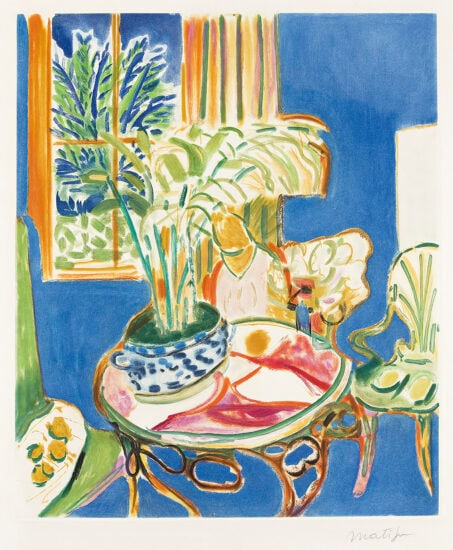
Henri Matisse Lithographs, Prints and Paintings reflect a number of influences: the decorative quality of Near Eastern art, the stylized forms of the masks and sculpture of African, the bright colors of the French impressionists, and the simplified forms of French artist Paul Cezanne and the cubists.
HENRI MATISSE PAINTINGS
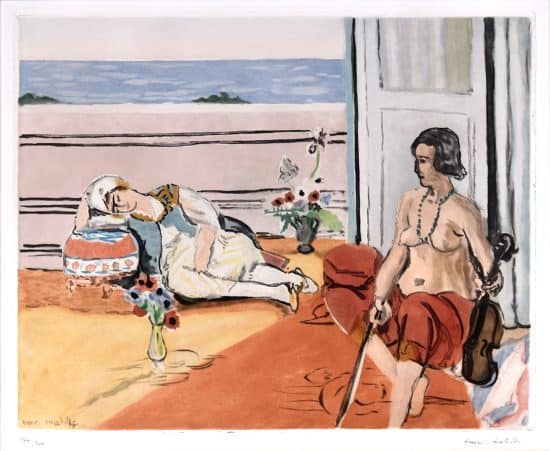
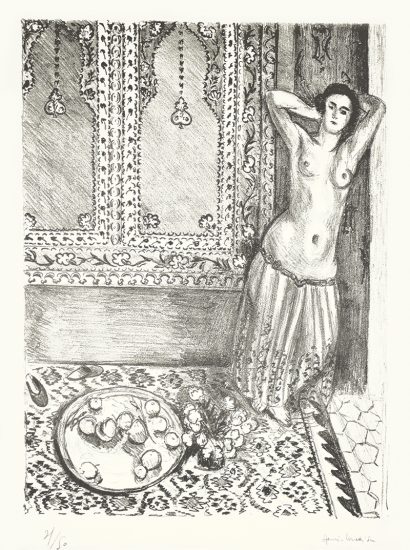
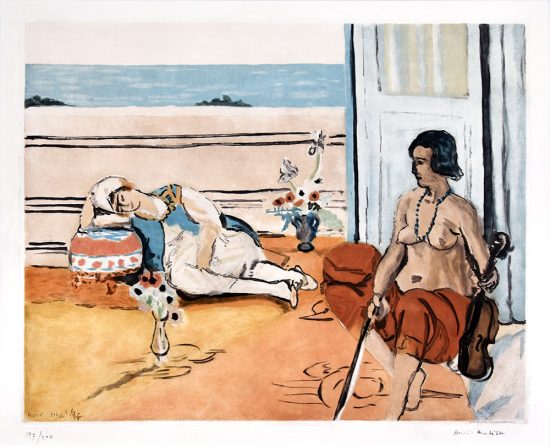
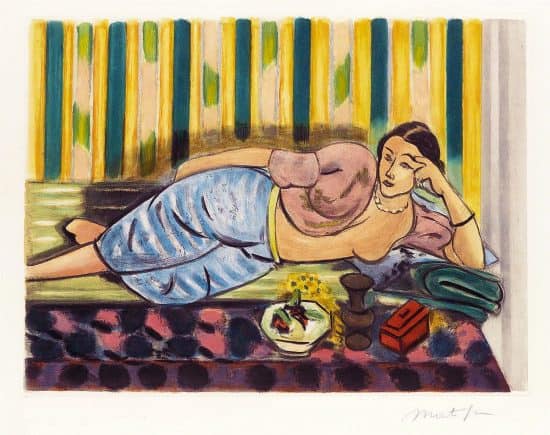
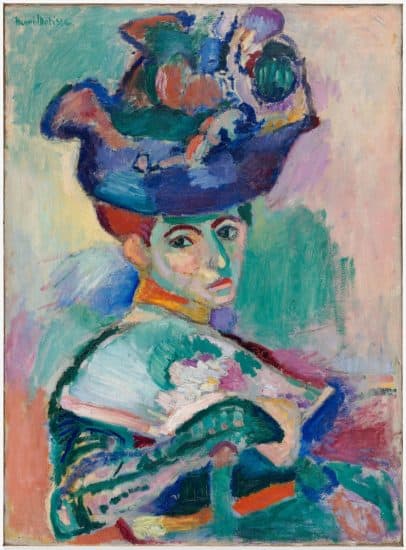
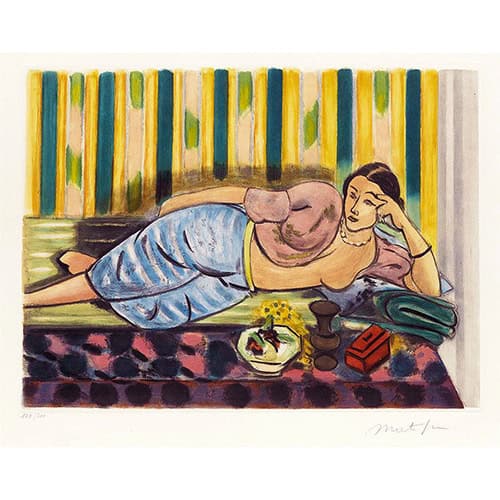
When Matisse began to study painting in 1891, he mainly painted still-life and landscapes in a traditional, academic style. However, his style began to evolve in 1897 when he was exposed to the work of Van Gogh. It was shortly after that Matisse painted Woman with a Hat, 1905. The painting was a portrait of his wife Amelie, executed in bright shades of thickly brushed whites, blues and greens. The painting outraged many critics for its overt departure from academic painting and earned Matisse the label of “fauve”, meaning “wild beast”. Owing to these critics, Matisse quickly gave rise to a new art movement called Fauvism. Other well-known members of the movement include Georges Braque and Maurice de Vlaminck. From 1912-1913, Matisse spent months in Morocco and produced around 24 orientalist paintings and drawings featuring subjects such as odalisques and the harem. He was fascinated with depicting the lush fabrics and interiors he encountered in his travels. An example is Odalisque in Red Trousers, c. 1924-25 in which the lush fabrics, costuming and furnishings recall the exoticism of the ‘Orient’. Matisse’s paintings of the odalisque continues to impress, as his portrait Odalisque au Fauteuil Noir fetched £15.8m at a Sotheby’s auction in 2015. His other notable paintings such as Dance, 1910, The Joy of Life, 1905-1905 are currently held in world-class museums and institutions.
HENRI MATISSE ETCHINGS
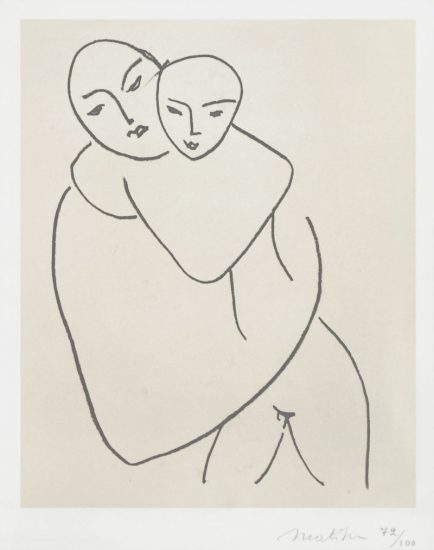
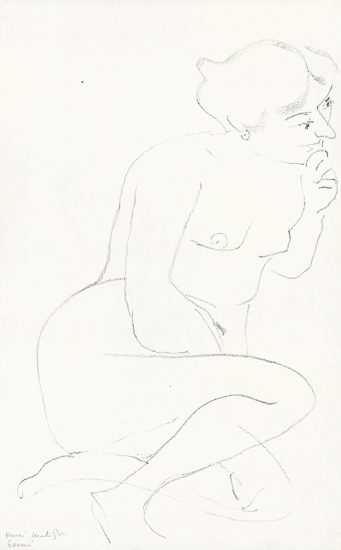
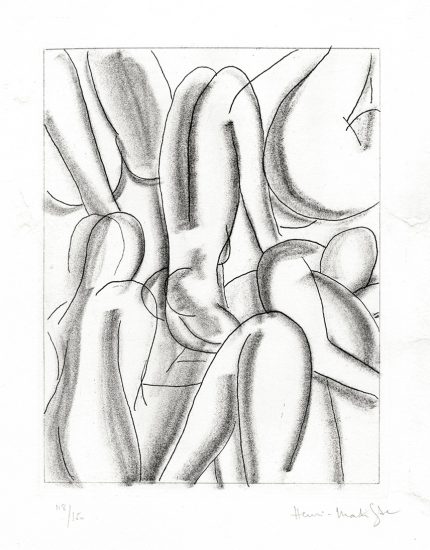
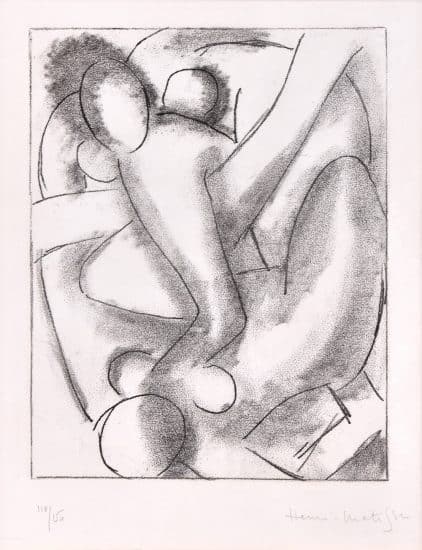
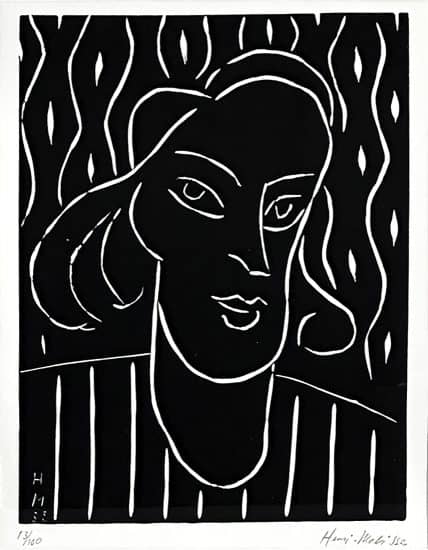
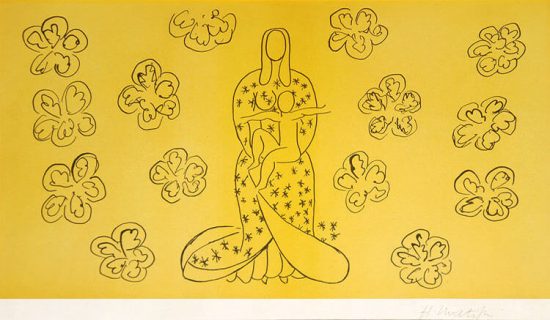
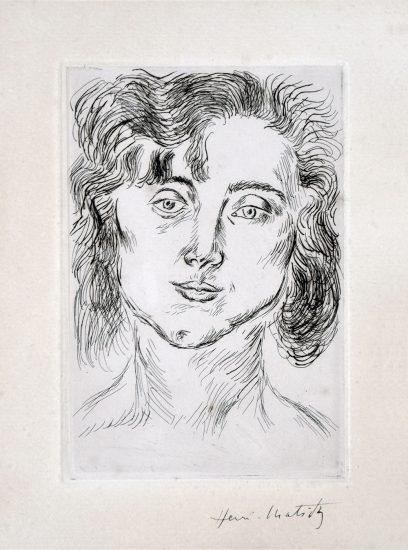
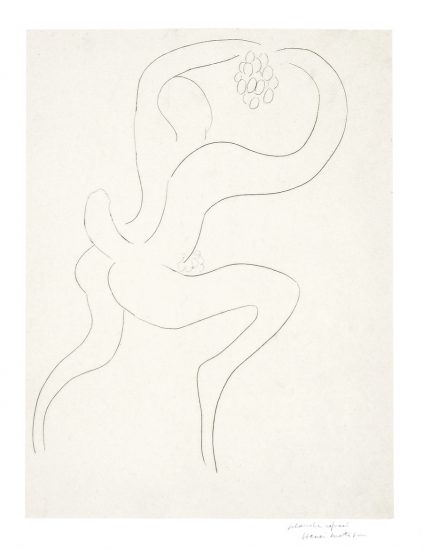
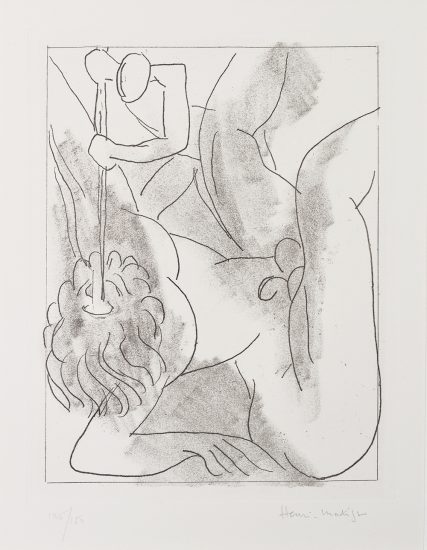
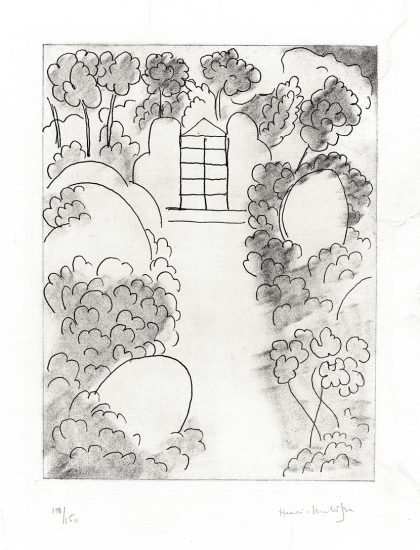
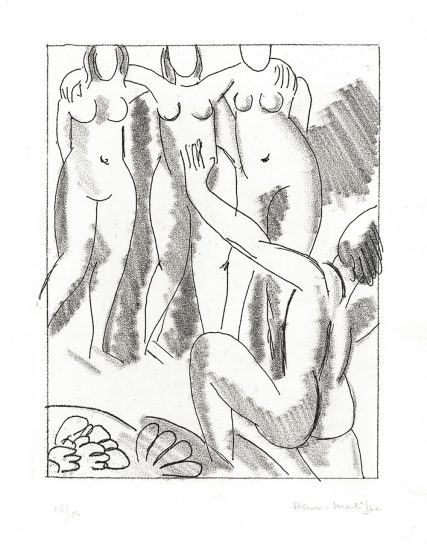
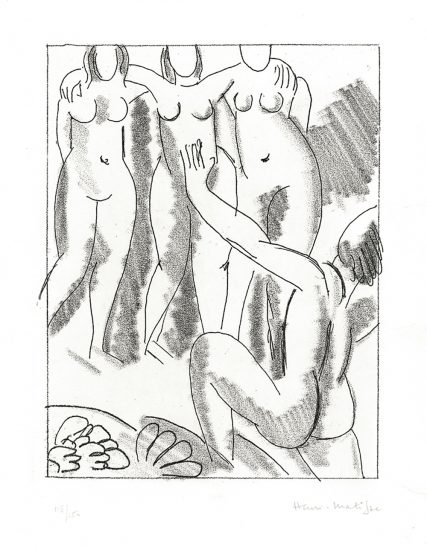
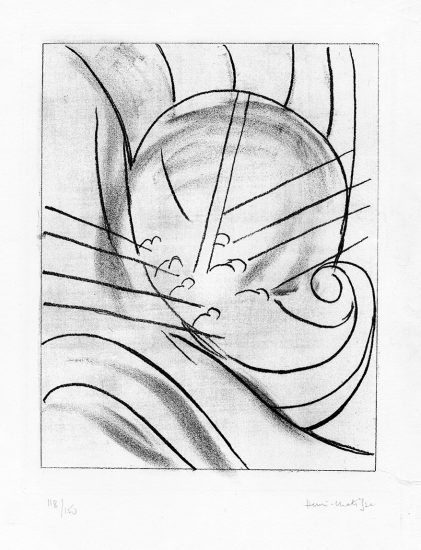
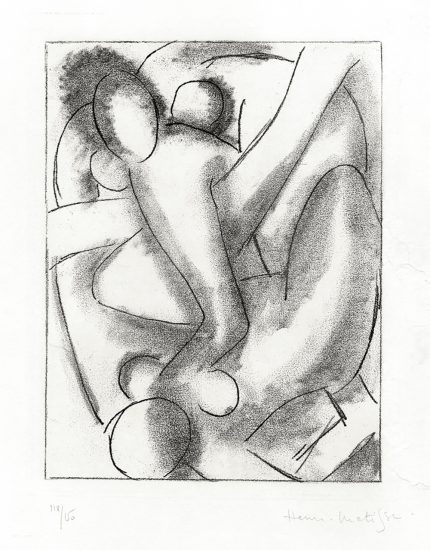
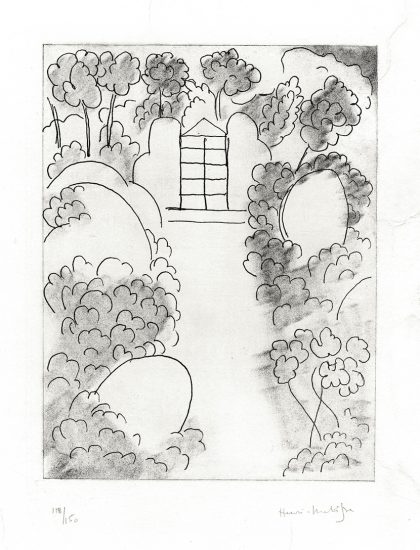
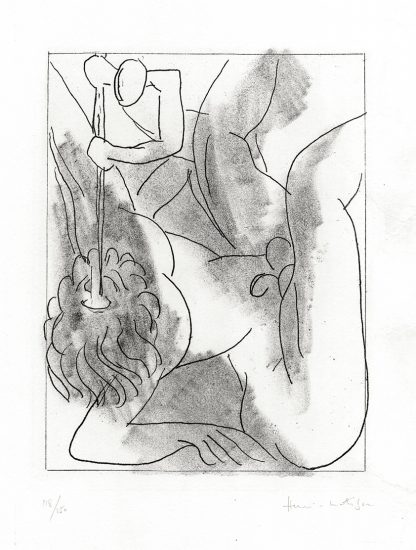
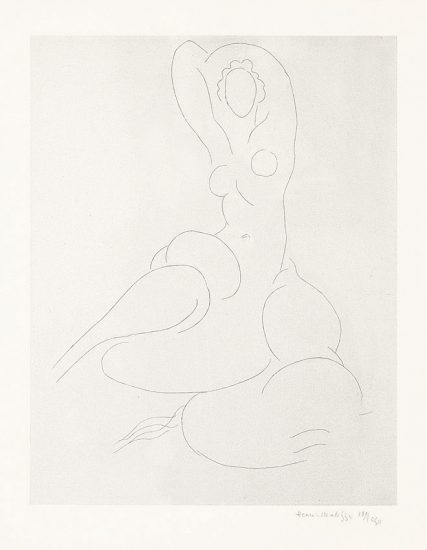
Matisse first began experimenting with printmaking in the early 1900s, though it was not until the 1910s that he began to focus more seriously on etching. Working primarily in black and white, Matisse used the etching needle with the same sensitivity and spontaneity as his pencil or brush. While his paintings are often celebrated for their bold color and expressive forms, his etchings reveal a quieter, more intimate side of his artistry. He often returned to familiar subjects such as portraits, female nudes, and interior scenes, but here they were rendered in delicate, calligraphic lines. One of his recurring models was the dancer and artist Henriette Darricarrère, who appears frequently in his prints of the 1920s. Her graceful poses, captured in a few fluid strokes, exemplify Matisse’s ability to convey elegance with remarkable economy.
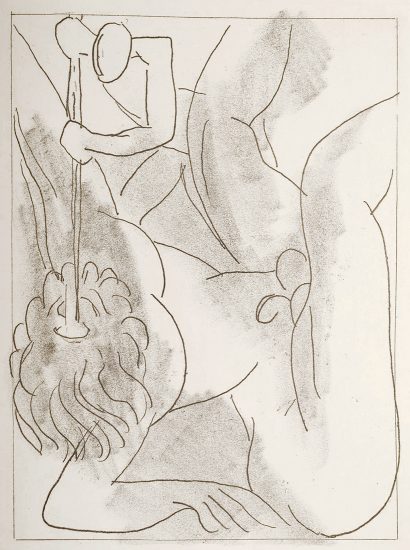
Much like his odalisque paintings, Matisse’s etchings also reflect his fascination with the female form and the richness of domestic life. Works such as Nude Seated on a Chair, 1923, show a sense of immediacy and intimacy, as if the viewer is catching a private moment between artist and sitter. In the 1930s, Matisse collaborated with publishers such as Tériade to produce illustrated books, including Poésies de Stéphane Mallarmé (1932), where his refined etching style complemented the lyrical quality of the text. These works reveal his deep appreciation for poetry, line, and form. Though often overshadowed by his bold Fauvist canvases, Matisse’s etchings remain an essential part of his legacy—subtle, elegant, and endlessly expressive.
HENRI MATISSE LITHOGRAPHS
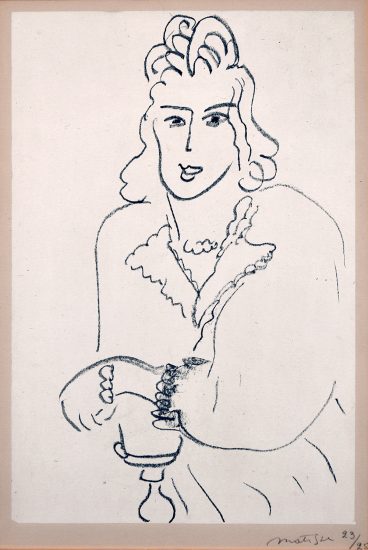
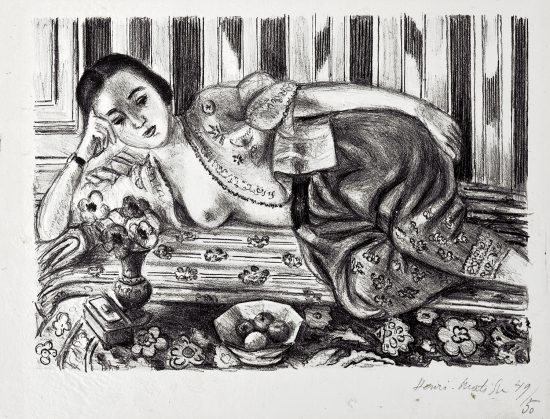
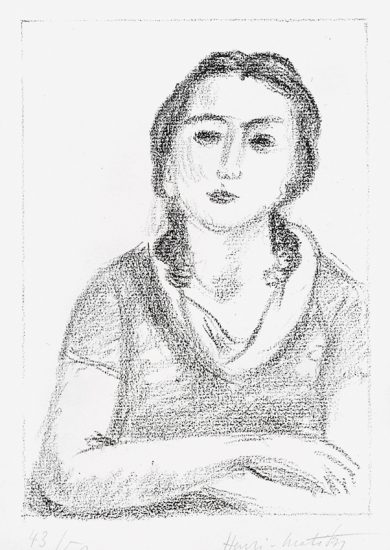
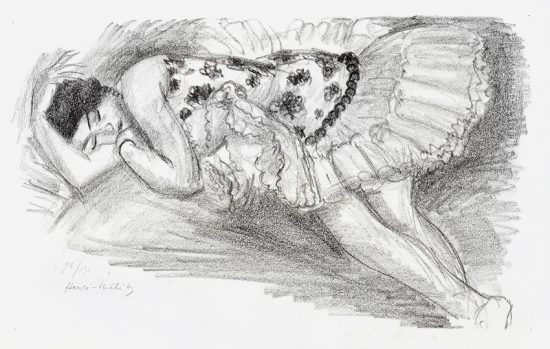
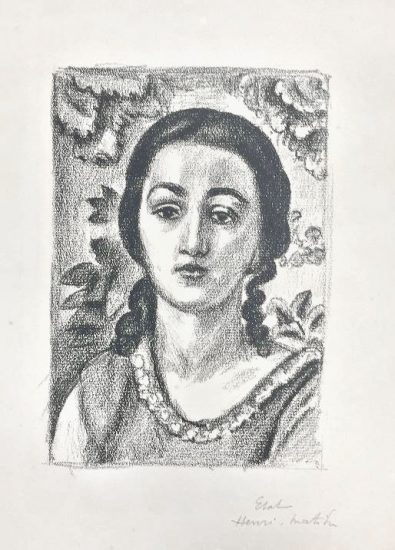
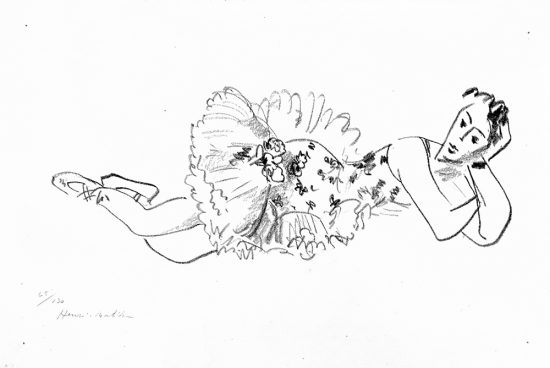
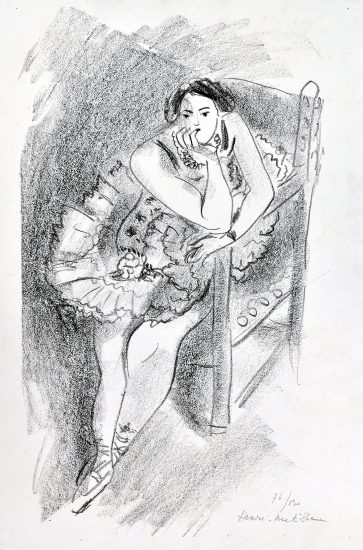
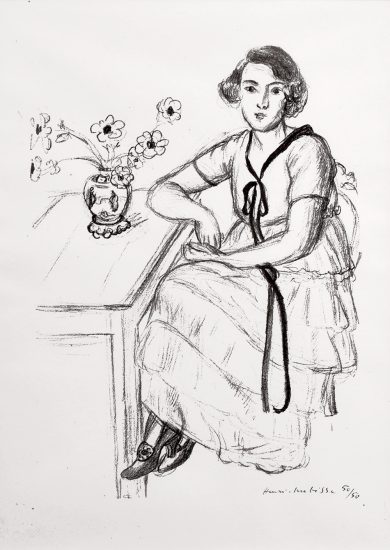
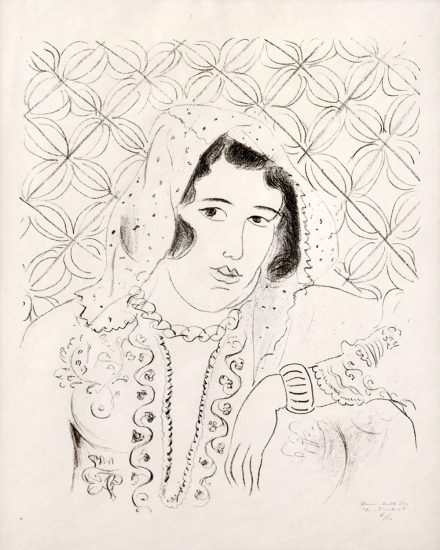
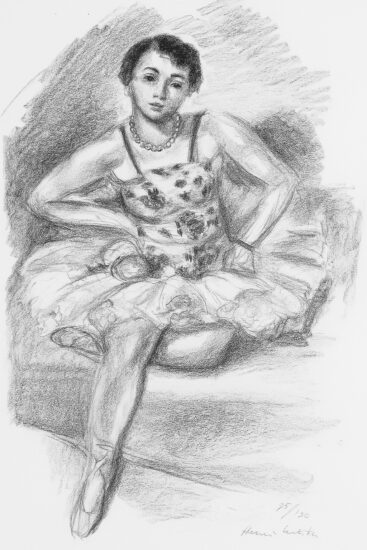
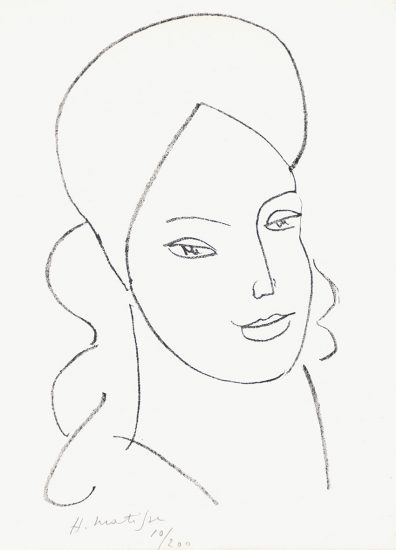
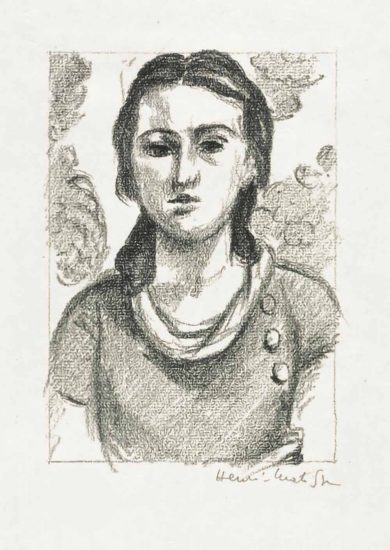
Though he is better known as a painter and sculptor, Matisse became an avid printmaker in 1906. He was especially involved in the process of lithography, a medium which led to black and white illustrations for books and over 100 original lithographs at the Mourlot studio. The lithographs were often in edition of 25 to 50 and included serial imagery such as reclining nudes, interiors and portraits. The lithographs were mostly in black and white, retaining the same sense of spontanaeity and intimacy as his pencil sketches. Matisse preferred lithography for this reason. The artist eventually installed a printing press in his own studio. The first color lithograph Matisse created for Mourlot was a poster of his 1935 painting La Reve. Towards the end of his life, Matisse also created a suite of 39 lithographs which recreated his famous paper cut-outs. This suite was published in 1958 after Matisse’s death. Of this series,the most recognized is Nu Bleu X and XI which feature the familiar blue dancing figure from the Jazz series. His lithographs are currently in the world renowned collection of Museum of Modern Art in New York and the Tate Modern.
HENRI MATISSE TAPESTRIES
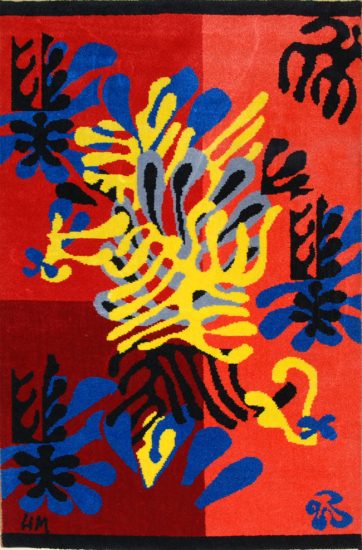
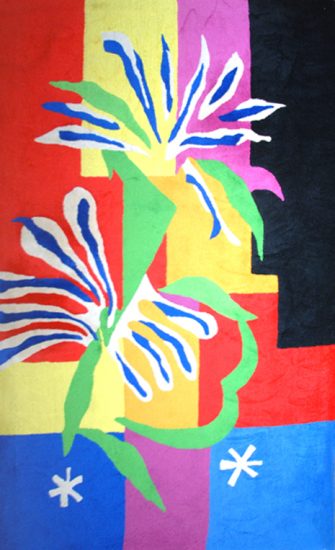
During the latter part of his career, Matisse moved away from painting due to ill health. However his keen eye for design and passion for creating led him to make cut-outs as a new artistic medium. He described it as "painting with scissors" and through this technique he created designs for maquettes, book plates, stained glass window designs, tapestries, and ceramics. His tapestries are particularly riveting, showing the artist's iconic art style in a new form. They often featured simple designs and bright colors. Matisse's tapestries were often single panels instead of part of a set, moving away from traditional tapestry customs in Europe. Matisse's modern tapestries are bright and abstracted and brought new energy to an old art form.
HENRI MATISSE TAPESTRIES
Henri Matisse frequently used flowers as a subject throughout his artistic career, seeing them not only as decorative elements but as vital expressions of color, emotion, and form. From early still lifes like Still Life with Geraniums to the vivid interiors of his Fauvist period and the bold paper cut-outs of his later years, flowers served as a consistent and meaningful motif. They allowed Matisse to explore the expressive potential of color and composition, often appearing in vases, patterns, or stylized shapes that blurred the line between nature and abstraction.
In his interior scenes, Matisse's flowers contributed to a sense of harmony and sensory richness, creating lush, intimate spaces. During his cut-out period, simplified floral forms such as in The Sheaf embodied movement, balance, and spiritual renewal. For Matisse, flowers symbolized joy, beauty, and the vitality of life—a natural subject that reflected his belief that art should bring comfort and serenity. By returning to floral imagery throughout his career, Matisse used nature not as passive decoration but as an active, dynamic force that shaped his vision of modern art. Flowers, in his hands, became not only botanical subjects but enduring symbols of creativity and emotional depth.
Henri Matisse Pinturas y Obras en español
Browse Henri Matisse Catalogue Raisonnés Online.
En español: Henri Matisse.