Marc Chagall Romantic
Romantic fine art gifts.
Romantic fine art gifts.
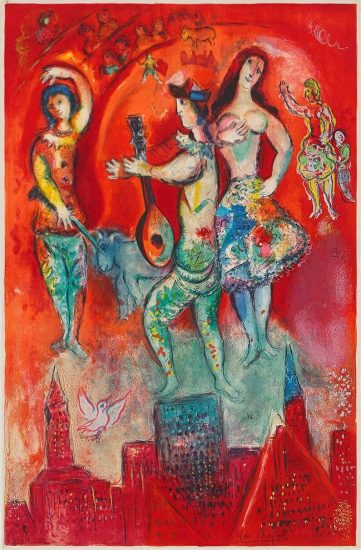
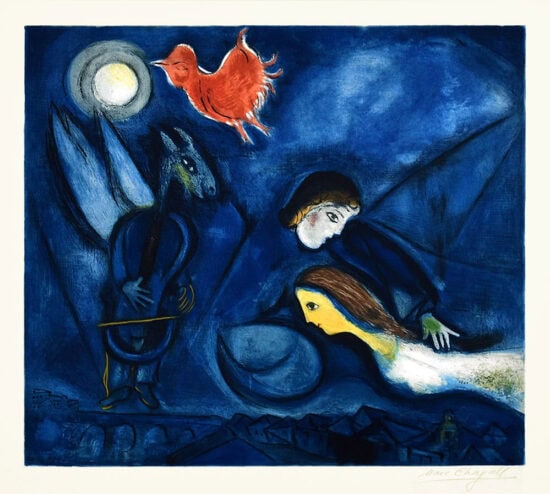

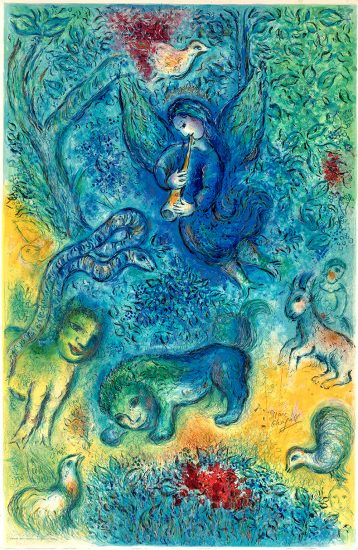
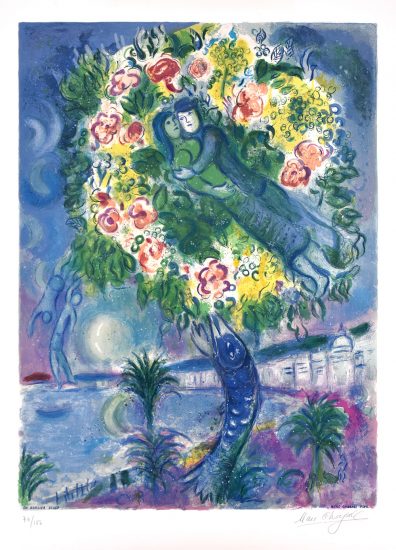


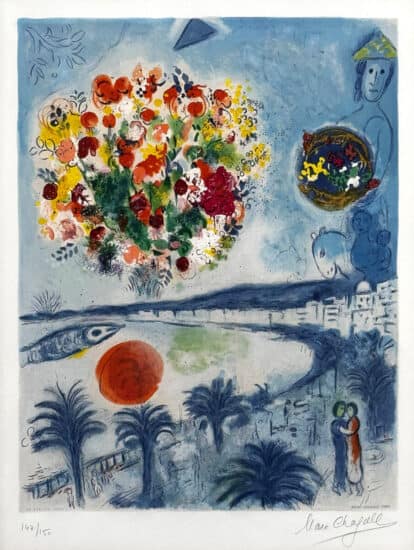
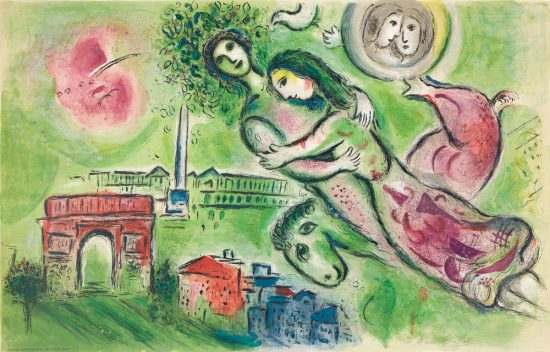
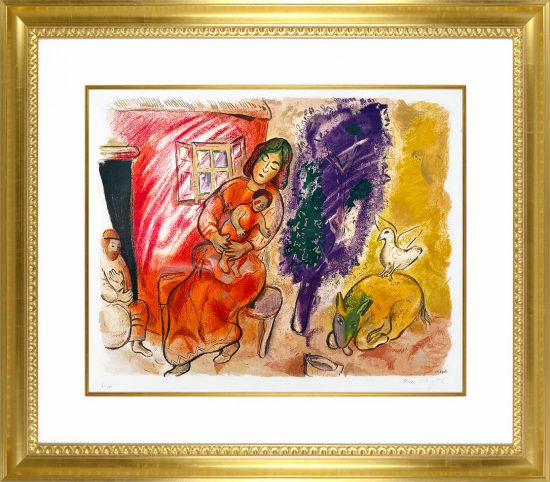

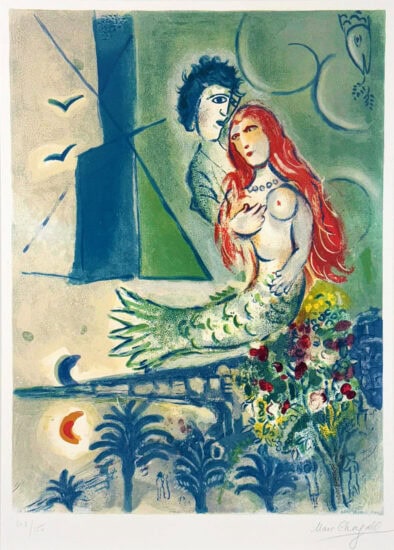
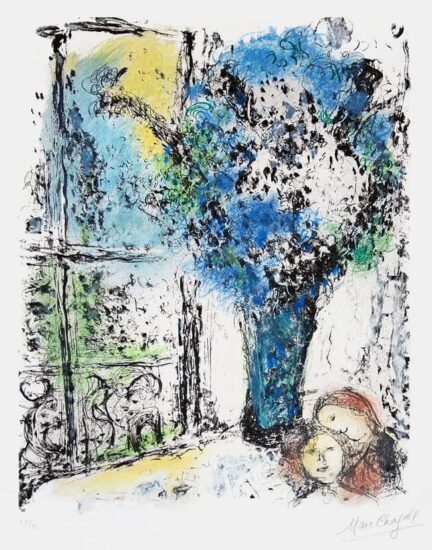
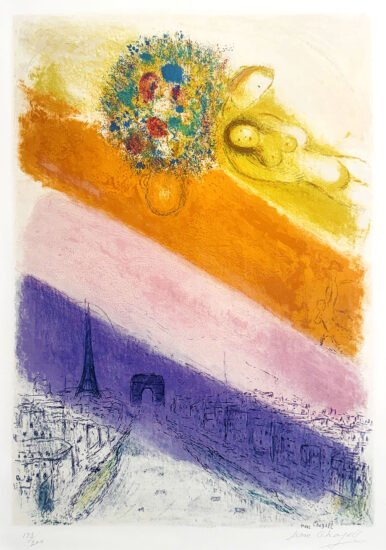
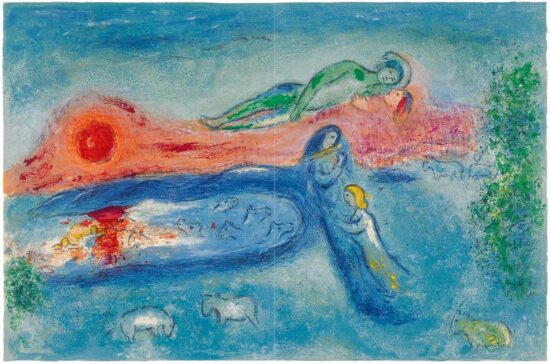
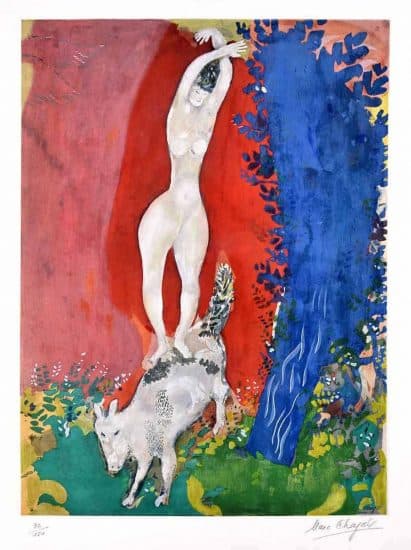
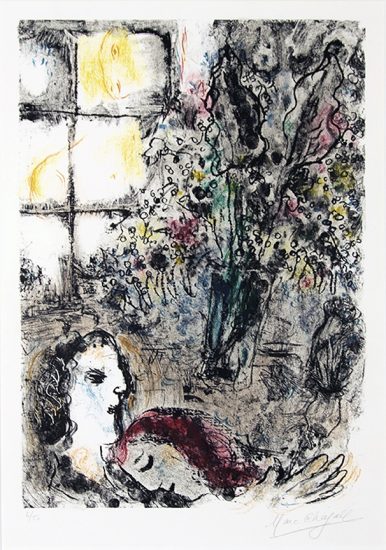
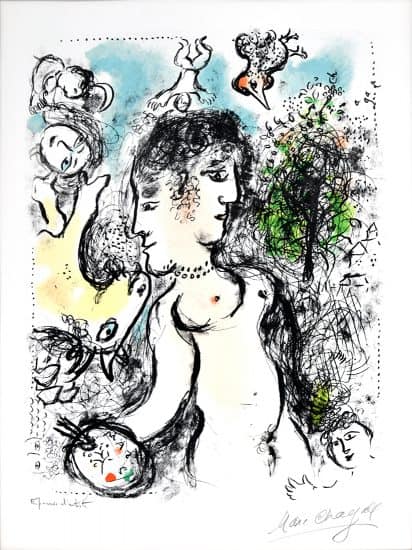
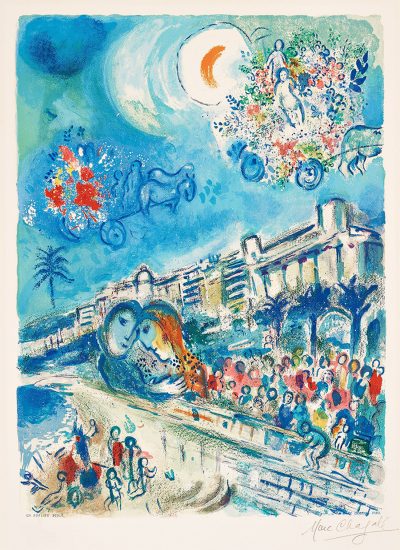
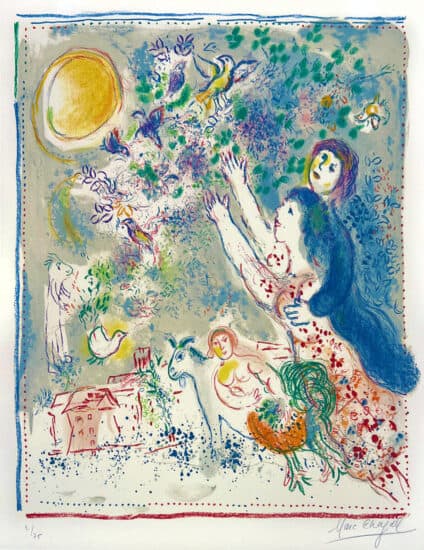
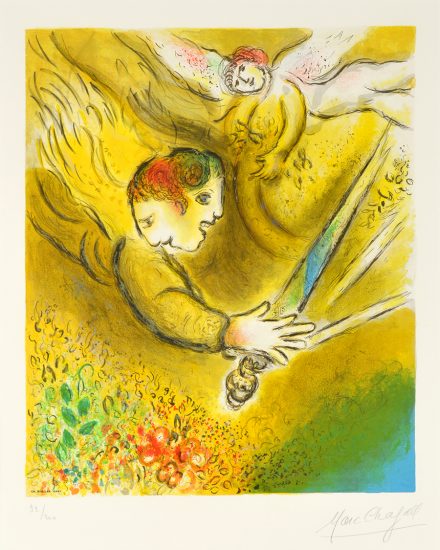

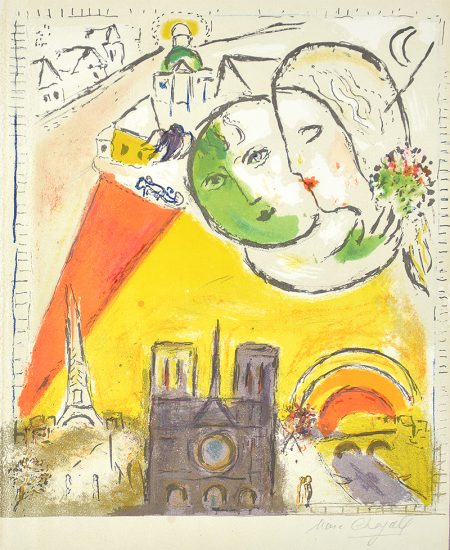
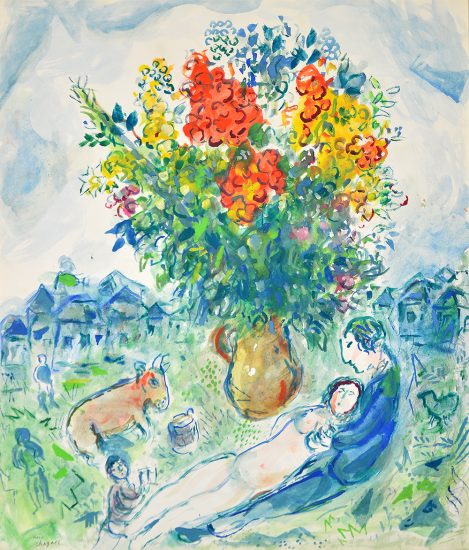
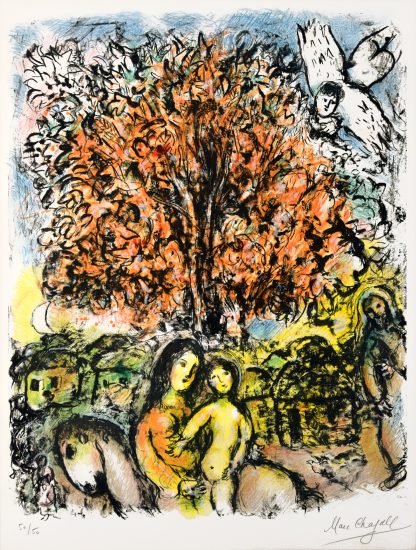
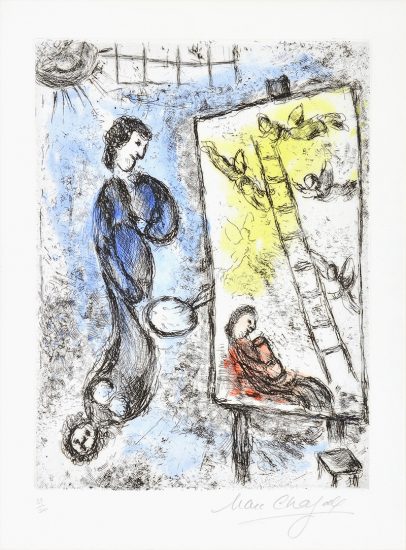
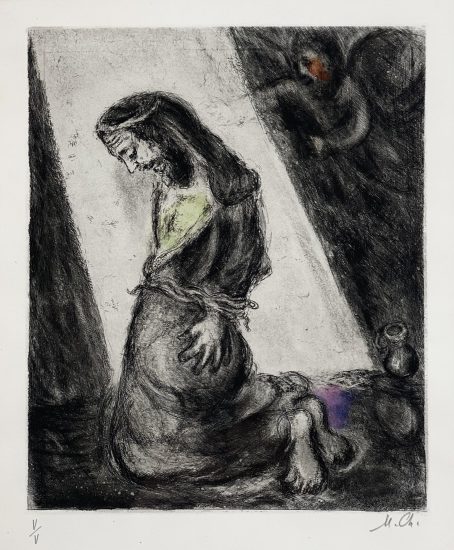
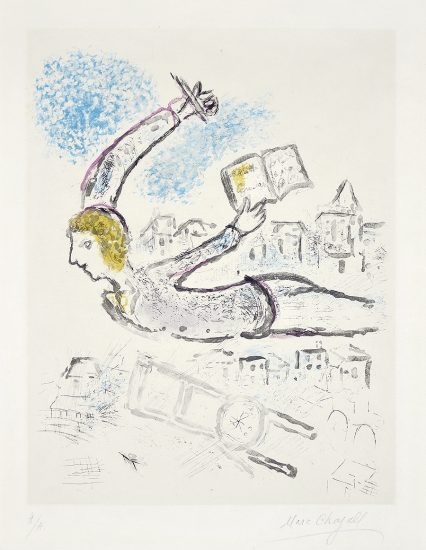
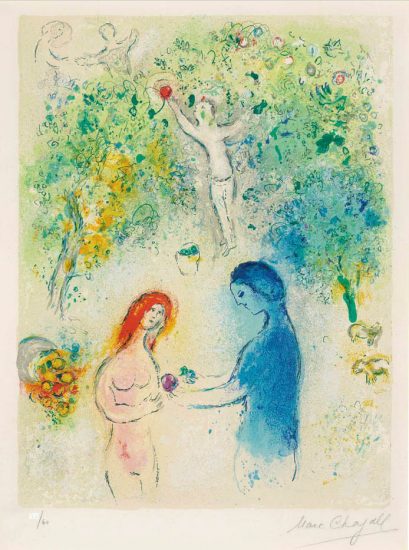


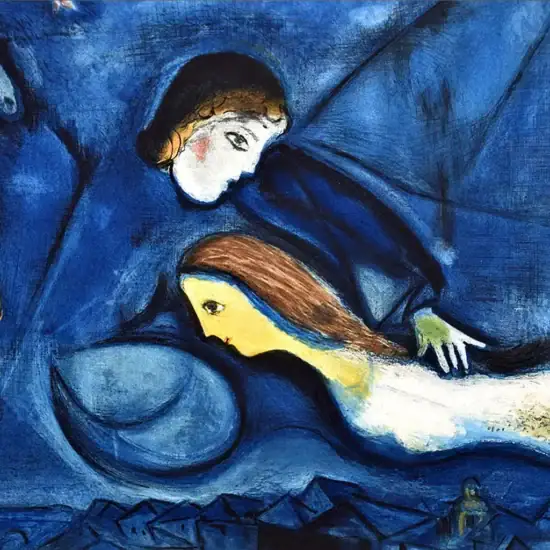
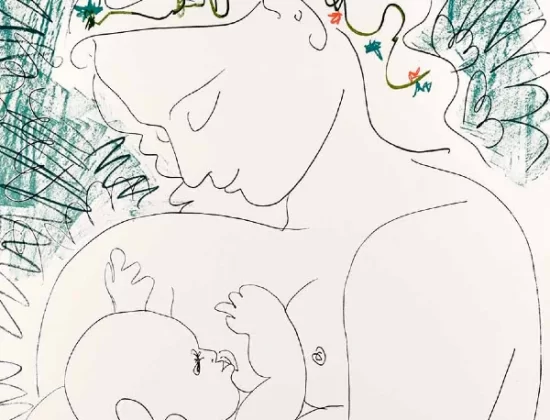
Marc Chagall was a French-Russian artist, painter, printmaker, illustrator, sculptor, ceramic artist, and designer whose distinctive combination of color, memory, fantasy, and symbolism made him one of the most recognizable artists of the twentieth century. Born on July 7, 1887, in Vitebsk, then part of the Russian Empire and today in Belarus, Chagall grew up in a Jewish family whose traditions, stories, music, religious imagery, and everyday life would remain central to his art throughout his career.
Chagall received his earliest formal artistic training in Vitebsk before moving to Saint Petersburg in 1907. There he continued his studies and later worked with Léon Bakst, whose engagement with modern European art introduced Chagall to new artistic possibilities. During these formative years, Chagall began combining memories of Vitebsk with increasingly modern approaches to color, composition, and space.
In 1911, Chagall left for Paris, then the center of the European avant-garde. He eventually settled at La Ruche, the famous artists' residence in Montparnasse, where he became acquainted with poets and artists including Guillaume Apollinaire, Blaise Cendrars, Max Jacob, and others associated with the Parisian avant-garde.
Paris exposed Chagall directly to Cubism, Fauvism, and other emerging forms of modern art, but he never fully adopted the principles of any single movement. Instead, he developed an intensely personal language in which floating figures, animals, musicians, lovers, village scenes, religious imagery, and memories of Vitebsk occupied dreamlike spaces defined by expressive color.
Important paintings from this period, including I and the Village, The Birthday, and Paris Through the Window, established many of the subjects and visual motifs that would recur throughout Chagall's career. His work combined the experimentation of modern European art with memories of Russian-Jewish life and an imaginative approach to narrative and symbolism.
In 1914, Chagall traveled to Berlin, where the Galerie Der Sturm organized an important exhibition of his work. He then returned to Vitebsk, intending only a temporary visit, but the outbreak of World War I prevented his return to Paris.
Chagall remained in Russia through the Revolution and its aftermath. In 1918 he was appointed Commissar of Arts for the Vitebsk region and became involved in establishing an art school in the city.
The Vitebsk school attracted artists with sharply different ideas about the direction of modern art. Chagall's poetic and figurative approach increasingly conflicted with the radical geometric abstraction associated with Kazimir Malevich and his followers. Chagall eventually left Vitebsk and moved to Moscow.
In Moscow, he worked on murals, costumes, and stage designs for the State Jewish Chamber Theater. The project allowed Chagall to combine painting, theater, Jewish cultural traditions, and modernist experimentation on an architectural scale.
After leaving Soviet Russia, Chagall traveled to Berlin in 1922. There he was introduced to printmaking while working with publisher Paul Cassirer on a project related to his autobiography My Life. Chagall responded immediately to the medium, producing a group of etchings based largely on memories of his childhood, family, and life in Vitebsk.
Printmaking would eventually become one of the most important aspects of Chagall's artistic career. He worked extensively in etching, engraving, lithography, woodcut, and illustrated books, producing graphic works that paralleled his paintings while taking advantage of the distinctive possibilities of each printmaking process.
After returning to Paris in 1923, Chagall met the influential art dealer and publisher Ambroise Vollard. Their relationship resulted in several of the most important illustrated-book projects of twentieth-century printmaking.
Vollard first commissioned Chagall to create illustrations for Nikolai Gogol's Dead Souls. Chagall produced ninety-six etchings for the project, transforming Gogol's satirical world into a series of expressive graphic images. Although begun during the 1920s, the book was not published until 1948, after Vollard's death.
Vollard subsequently commissioned Chagall to illustrate Jean de La Fontaine's Fables. Chagall produced one hundred etchings populated by animals, human figures, and imaginative scenes that complemented the poetic and moral character of La Fontaine's stories.
Chagall's monumental Bible project grew from another Vollard commission. Biblical narratives had particular importance for Chagall because they connected religious history with the Jewish traditions and visual memories that had surrounded him during his childhood in Vitebsk.
The Bible would remain one of the central subjects of Chagall's art for decades, appearing not only in etchings and lithographs but also in paintings, stained glass, ceramics, tapestries, and monumental commissions.
The rise of Nazism and the outbreak of World War II placed Chagall in increasing danger as both a Jewish artist and a prominent modernist. In 1941, Chagall and his wife Bella left France for the United States.
Chagall continued painting and working in other media while living in New York, but the period was marked by personal loss. Bella died suddenly in 1944, profoundly affecting Chagall and his work.
In 1946, the Museum of Modern Art in New York organized a major retrospective of his work. Chagall returned permanently to France in 1948, eventually settling in the south of France.
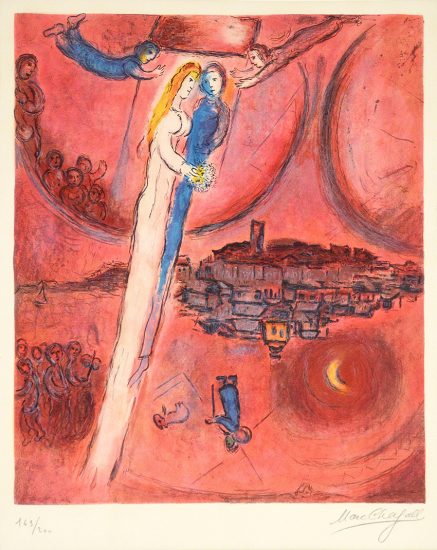
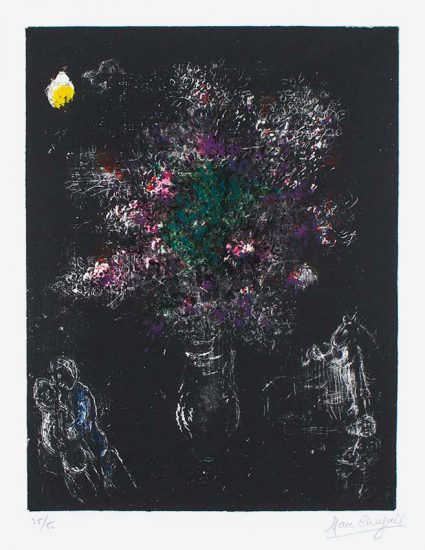
Lithography became especially important to Chagall after his return to France. His extensive work in the medium allowed him to combine the spontaneity of drawing with the intense colors that had long defined his paintings.
Chagall developed an especially important relationship with the Mourlot workshop in Paris, working closely with master printers to explore increasingly sophisticated color lithography. Rather than simply reproducing his paintings, Chagall treated lithography as an original creative medium, developing images specifically through the printing process.
Over the course of his career, Chagall produced more than one thousand lithographs, making graphic work one of the largest and most important components of his artistic output.
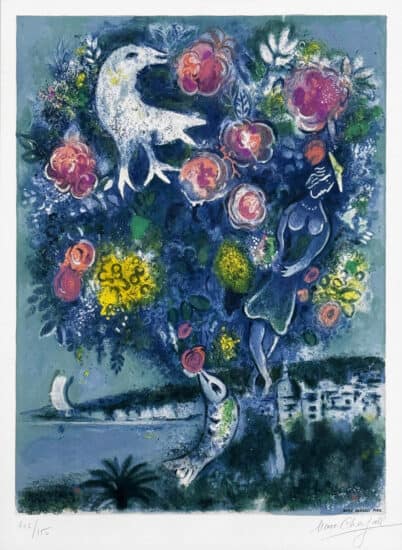
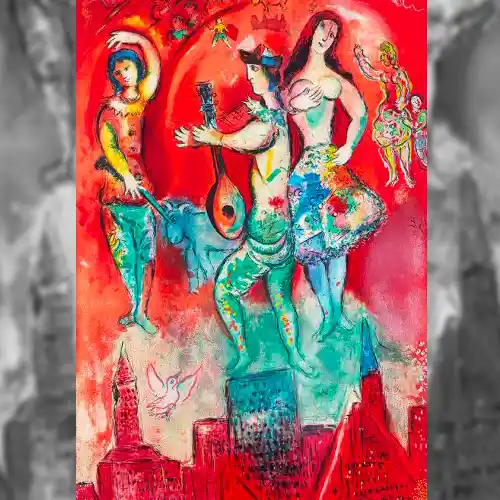
Recurring subjects in Chagall's lithographs include lovers, bouquets, musicians, animals, village scenes, circuses, biblical figures, Paris, and memories of Vitebsk. His distinctive use of color and floating, dreamlike imagery made his original lithographs particularly important within twentieth-century printmaking.
Collectors can explore our Marc Chagall lithographs for signed and editioned works spanning different periods of his career.
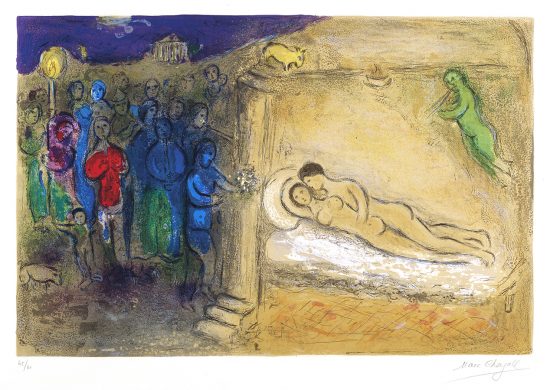
Among Chagall's most celebrated graphic projects is Daphnis and Chloé, based on the ancient pastoral romance attributed to Longus. Chagall traveled to Greece during the early 1950s, and the Mediterranean landscape, light, and mythology helped inspire the project.
Published in 1961, Daphnis and Chloé became one of Chagall's most ambitious achievements in color lithography. Its compositions combine lovers, animals, landscapes, mythological subjects, and brilliant fields of color, bringing together many of the themes that had defined Chagall's work for decades.
Chagall's mastery of color lithography extended far beyond individual portfolios. He continually returned to the medium throughout his later career, often collaborating closely with printers to achieve unusually rich and layered color effects.
Beginning in the early 1950s, Chagall increasingly explored media beyond painting and printmaking, including sculpture, ceramics, mosaics, tapestries, and stained glass.
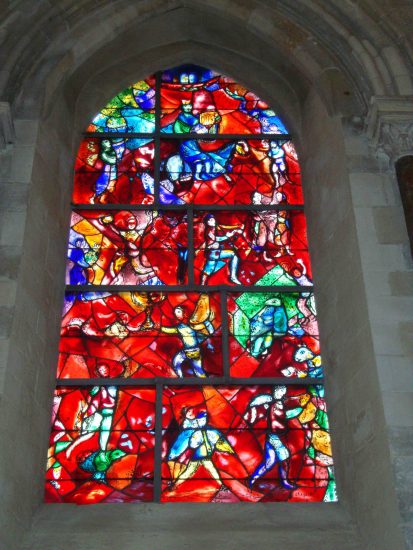
Stained glass became particularly important. Chagall's ability to organize large areas of saturated color translated naturally into architectural glass, and he created windows for religious and civic buildings in Europe, Israel, and the United States.
Among his best-known projects are the twelve stained-glass windows representing the Tribes of Israel for the synagogue at the Hadassah-Hebrew University Medical Center in Jerusalem, unveiled in 1962.
During the 1960s and 1970s, Chagall received increasingly ambitious public commissions.
In 1964, his painted ceiling for the Palais Garnier in Paris was unveiled. Rather than replacing the historic ceiling beneath it, Chagall's composition was installed as a new suspended work celebrating composers including Mozart, Wagner, Berlioz, Ravel, and Stravinsky.
He also created monumental murals for the Metropolitan Opera in New York, mosaics, tapestries, and numerous stained-glass projects. These commissions expanded the dreamlike figures, musicians, lovers, animals, and intense colors of his paintings into architectural environments.
Chagall continued creating monumental work well into his later years, including stained-glass projects for cathedrals and churches in France, Germany, Switzerland, the United Kingdom, and the United States.
Chagall's work incorporated elements associated with Cubism, Fauvism, Symbolism, Expressionism, and Surrealism, yet his art remained fundamentally independent of any single movement.
His imagery grew from an unusually personal combination of memory, folklore, Jewish tradition, biblical narratives, music, love, loss, exile, and the places in which he lived. Recurring figures—fiddlers, roosters, goats, donkeys, lovers, bouquets, angels, and floating human forms—became part of a symbolic vocabulary instantly associated with Chagall.
Color remained fundamental to his work across painting, printmaking, stained glass, ceramics, mosaics, and other media. Rather than using color primarily to describe the visible world, Chagall used it to establish atmosphere, emotion, movement, and memory.
During his long career, Chagall received major retrospectives and international recognition. The Marc Chagall National Museum opened in Nice in 1973 during the artist's lifetime, and major exhibitions of his work continued through his final years.
Marc Chagall died on March 28, 1985, in Saint-Paul-de-Vence, France, at the age of 97. His career extended across nearly the entire twentieth century, encompassing painting, printmaking, illustrated books, sculpture, ceramics, stained glass, mosaics, tapestry, theater design, and monumental public art.
Learn what determines the value of a Marc Chagall lithograph, including subject, edition size, signature, condition, catalogue reference, provenance, and recent comparable sales.
Learn how Mourlot and Sorlier catalogue references, signatures, paper, dimensions, edition information, printer and publisher details, and provenance help identify an original Marc Chagall lithograph.
Understand Chagall’s signatures, numbered editions, artist’s proofs, hors commerce impressions, printer’s proofs, and other documented proof designations.
Explore the principal catalogue raisonné references used to identify and research original Marc Chagall lithographs, etchings, illustrated books, and other graphic works.
Explore important Marc Chagall lithographs, portfolios, major series, and notable works within the collector market.