
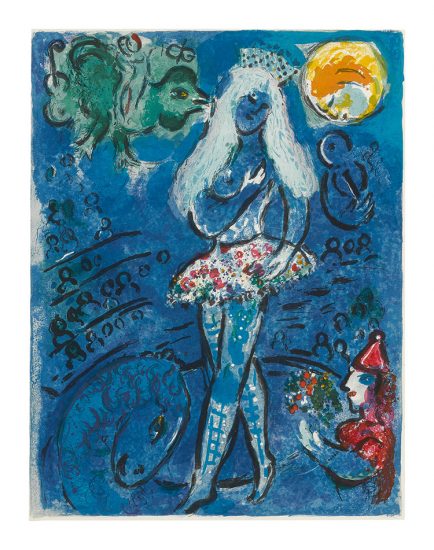





The Marc Chagall Circus (Cirque) Series
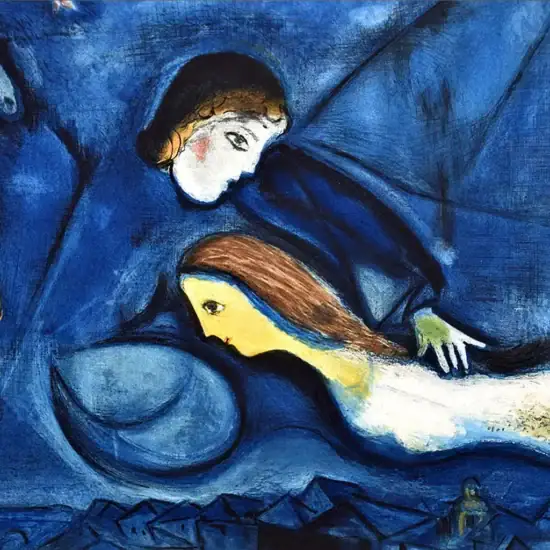
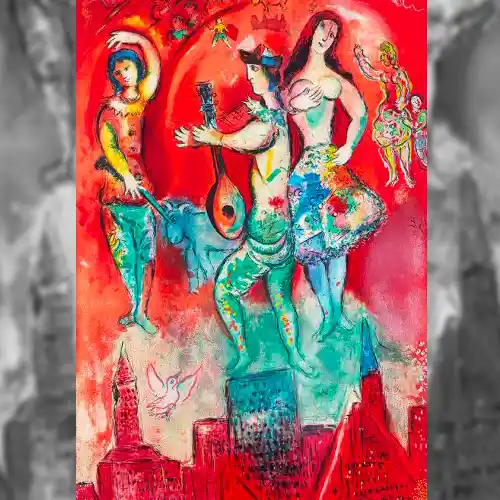
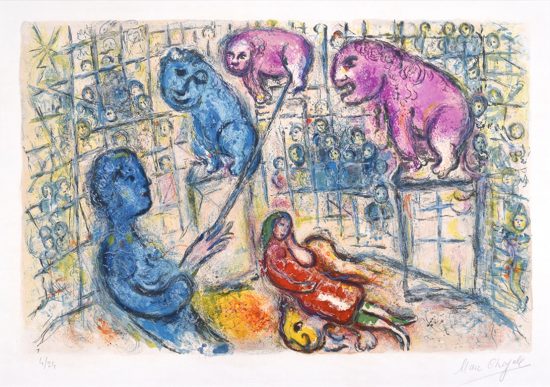
The circus was one of Marc Chagall’s most beloved subjects where art, music, and emotion intertwined. For Chagall, the circus symbolized life itself: a stage of color and movement where joy and sorrow, fantasy and reality, met in delicate balance.
From his early memories of traveling performers in Vitebsk to his visits to the Cirque d’Hiver and Medrano Circus in Paris, Chagall saw acrobats, clowns, and musicians as reflections of the artist’s own playful spirit. Their weightless forms, glowing in reds, blues, and golds, became symbols of hope, creativity, and transcendence.
The theme culminated in his celebrated Le Cirque series (1967), a suite of 38 lithographs published by Tériade, which remains one of his most joyful achievements. These works, along with paintings such as Le Cirque Bleu (1950, Musée National Marc Chagall, Nice) and The Acrobat and His Partner (1937, Centre Pompidou, Paris), express Chagall’s enduring belief that art transforms life into poetry.