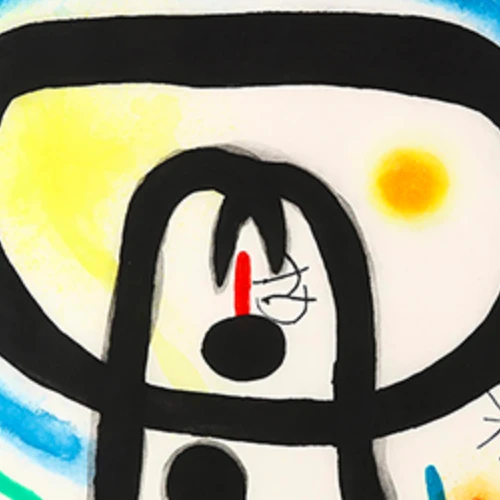
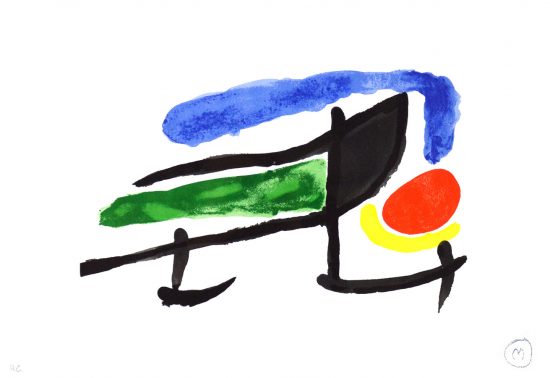
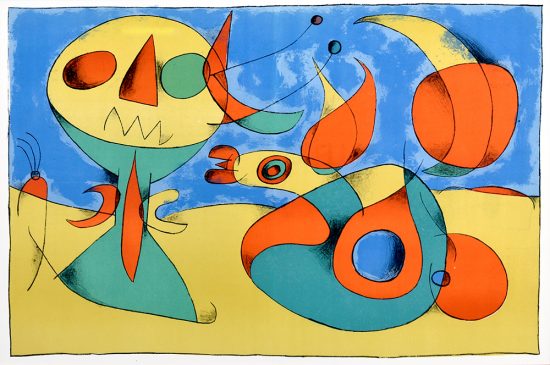
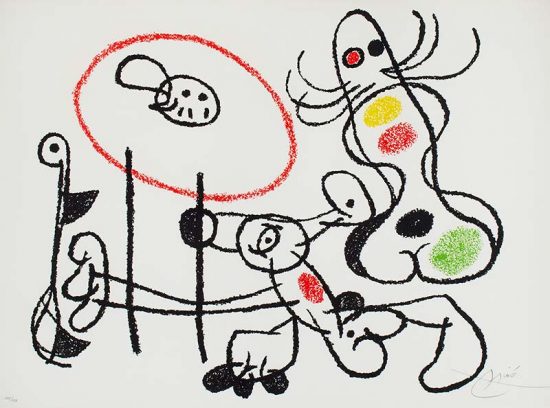
Explore original Joan Miró lithographs, etchings, and signed prints for sale. Masterworks Fine Art offers authenticated Joan Miró works with detailed edition, signature, provenance, and catalogue information, museum-quality framing, and worldwide delivery.
Buy Original Joan Miró Signed and Edition Numbered Artwork For Sale
Explore hand-signed Joan Miró lithographs, etchings, and original prints for sale. Fully authenticated works with museum-grade framing and global delivery.
Explore original Joan Miró lithographs, etchings, and signed prints for sale. Masterworks Fine Art offers authenticated Joan Miró works with detailed edition, signature, provenance, and catalogue information, museum-quality framing, and worldwide delivery.
Sell Joan Miró artwork with us. We specialize in buying and selling original hand-signed numbered edition prints. We will research its value and popularity for you.
Joan Miró was a Spanish painter, printmaker, sculptor, and ceramic artist whose highly personal visual language became one of the most recognizable in twentieth-century art. Born in Barcelona on April 20, 1893, Miró developed an artistic vocabulary that combined abstraction, symbolism, poetry, and elements associated with Surrealism while remaining resistant to identification with any single movement.
Miró studied at La Llotja in Barcelona while also attending business school. After briefly working as a clerk, his health deteriorated and he contracted typhoid fever in 1911, spending his recovery at his family’s farmhouse in Mont-roig, Catalonia. The following year he decided to devote himself fully to art and enrolled at the school of Francesc Galí, where he studied from 1912 to 1915. Mont-roig and the Catalan landscape would remain important sources of imagery throughout his career.
Early Career in Barcelona and Paris
Miró met the Barcelona dealer Josep Dalmau in 1916, and in 1918 Dalmau organized the artist’s first solo exhibition at the Galeries Dalmau in Barcelona. His early paintings combined close observation of the Catalan landscape with influences from Fauvism, Cubism, and contemporary European avant-garde art.
Miró first traveled to Paris in 1920 and visited Pablo Picasso. The following year he held his first solo exhibition in Paris at Galerie La Licorne and began using a studio at 45 rue Blomet. Through his neighbor André Masson, Miró became connected with a circle of avant-garde poets and artists that included Michel Leiris, Robert Desnos, Paul Éluard, and others associated with the emerging Surrealist movement.
During these years, Miró transformed recognizable landscapes, figures, and everyday objects into increasingly simplified signs and symbols. Paintings such as The Tilled Field and The Hunter (Catalan Landscape) helped establish a visual language that combined abstraction and figuration, the real and the imaginary, and imagery drawn from nature, rural Catalonia, and the unconscious.
Although closely associated with Surrealist artists and poets, Miró maintained an independent artistic identity throughout his career.
Collage, Sculpture and Experimentation
By the late 1920s, Miró was increasingly interested in expanding beyond traditional painting. In 1926 he collaborated with Max Ernst on the sets and costumes for the Ballets Russes production of Romeo and Juliet. In 1928 he produced his first object-collages, including works from the Spanish Dancer group, and by 1930 he had begun creating three-dimensional constructions.
This experimentation reflected Miró’s broader desire to challenge conventional painting and explore new materials, processes, and forms. Sculpture, collage, ceramics, printmaking, textiles, and monumental public works would all become important parts of his practice.
Joan Miró and Printmaking
Miró began experimenting with printmaking in the late 1920s and continued producing graphic works throughout the rest of his life. His early printmaking was intermittent, but in 1938 he began working more intensively with etching and drypoint under the guidance of Louis Marcoussis and at the workshops of Roger Lacourière and Stanley William Hayter.
Printmaking eventually became one of the most important aspects of Miró’s career. He worked across lithography, etching, aquatint, drypoint, woodcut, and later carborundum, continually experimenting with the relationship between spontaneous gesture, color, texture, and the technical demands of each process.
In 1944, the Barcelona Series, a group of fifty lithographs, was published under the supervision of Joan Prats. Later in the decade, Miró made frequent trips to Paris to work at the Mourlot studio on lithography and Atelier Lacourière on engraving.
The Spanish Civil War and Constellations
The outbreak of the Spanish Civil War in 1936 profoundly affected Miró. He remained in France with his family and in 1937 created The Reaper (Catalan Peasant in Revolt) for the Spanish Republican Pavilion at the Paris International Exposition.
In 1939 Miró moved to Varengeville-sur-Mer in Normandy. In January 1940 he began the series of twenty-three gouaches later known as the Constellations. As World War II spread through France, he returned to Spain with his family, settling first in Palma de Mallorca and later Barcelona. He completed the Constellations in 1941.
That same year, the Museum of Modern Art in New York organized his first major museum retrospective.
Ceramics, Sculpture and Monumental Work
Miró began working seriously in ceramics with Josep Llorens Artigas in 1944. Their collaboration continued in several phases and eventually produced hundreds of ceramic works as well as major architectural commissions.
Miró also expanded his sculptural practice. He produced his first bronze sculptures in 1946 and later developed increasingly monumental works using bronze, found objects, ceramics, and other materials.
In 1956 he moved permanently to Palma de Mallorca, where architect Josep Lluís Sert designed the studio in which Miró would work for the remainder of his career.
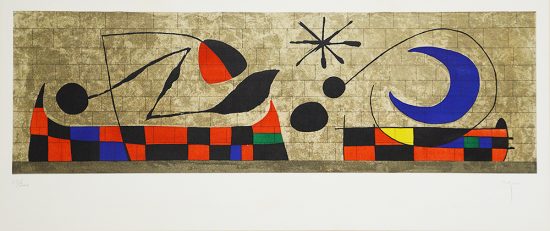
In 1958, Miró and Artigas completed two ceramic murals, The Wall of the Sun and The Wall of the Moon, for UNESCO headquarters in Paris. Miró received the Guggenheim International Award that year in recognition of the project.
Joan Miró Lithographs
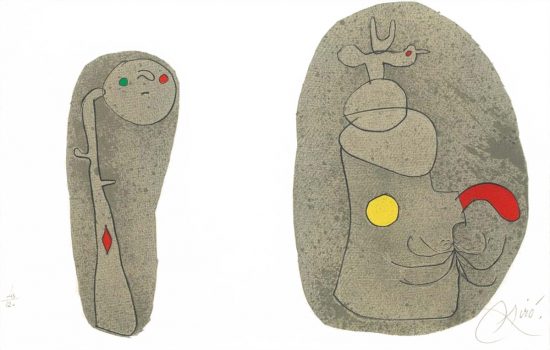
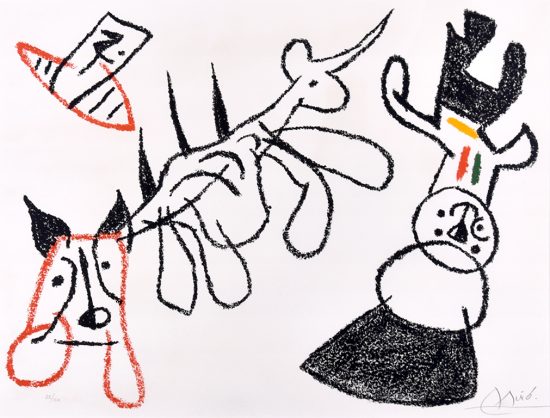
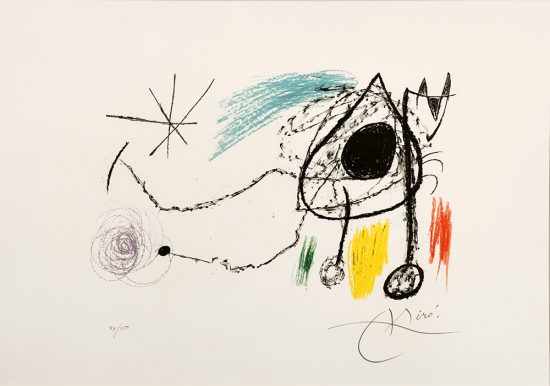
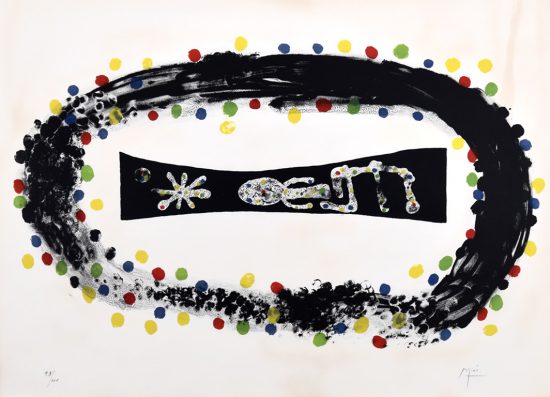
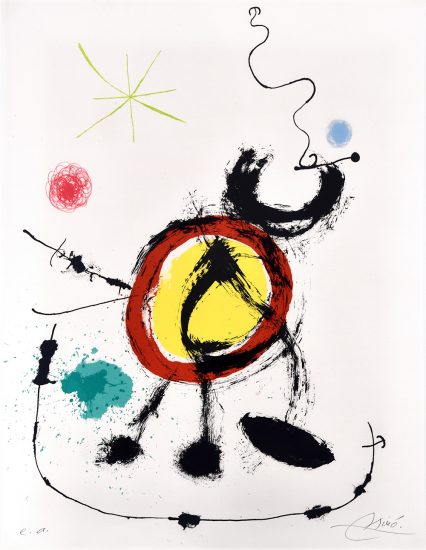
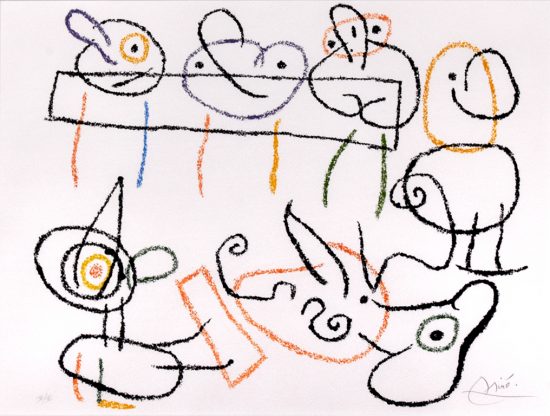
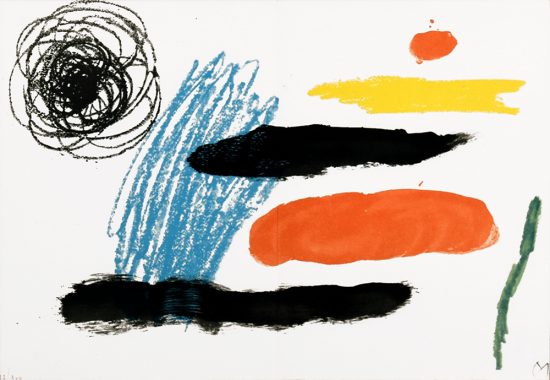
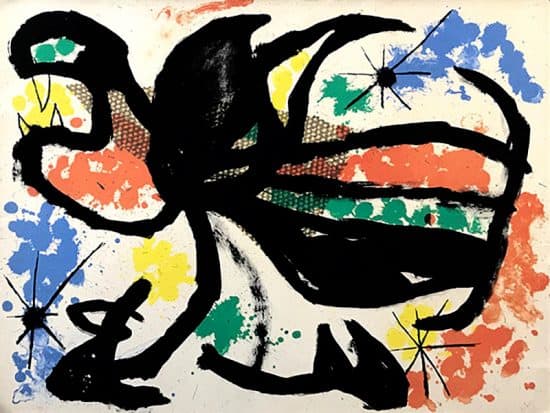
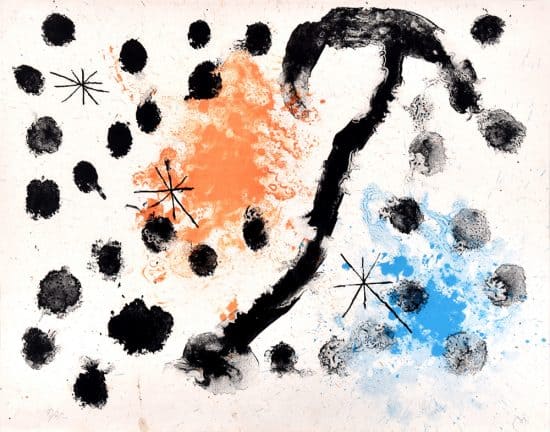
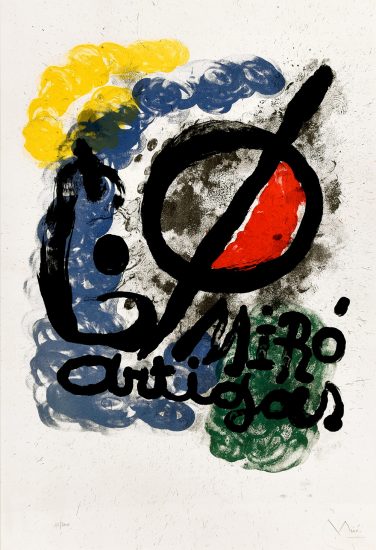
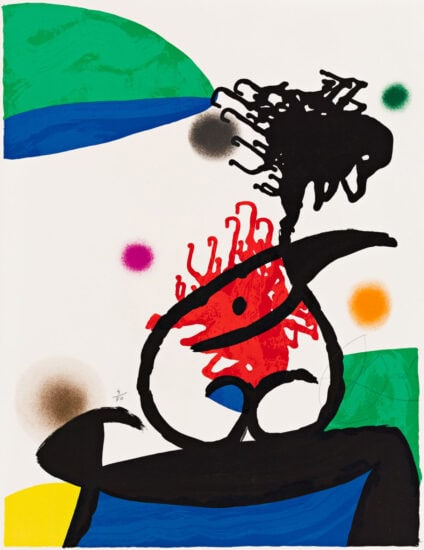
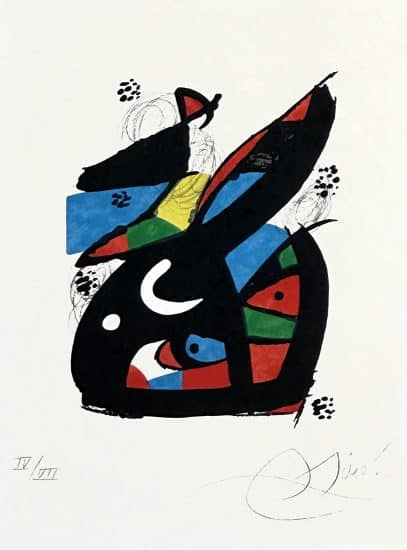
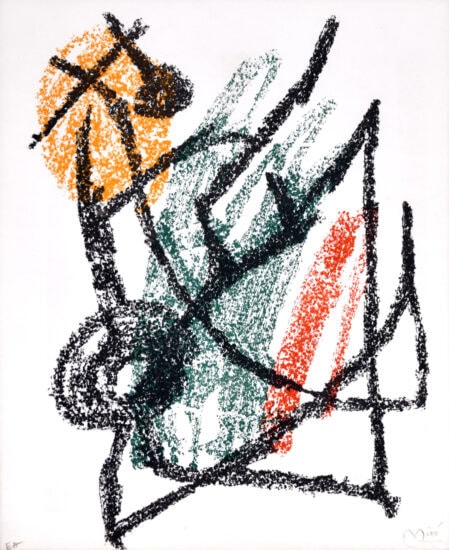
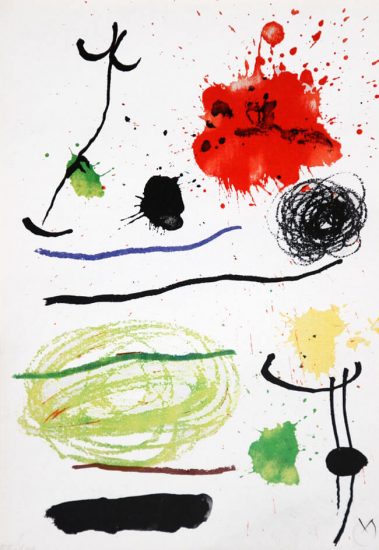
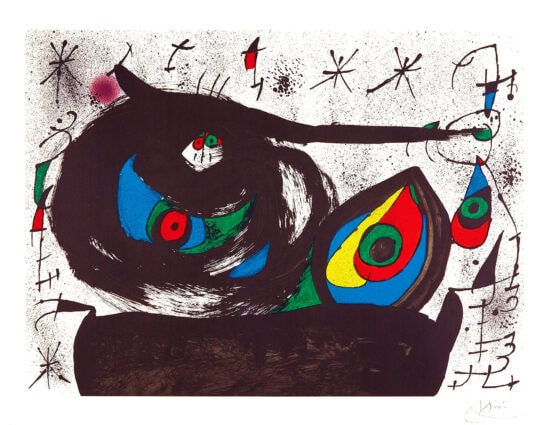
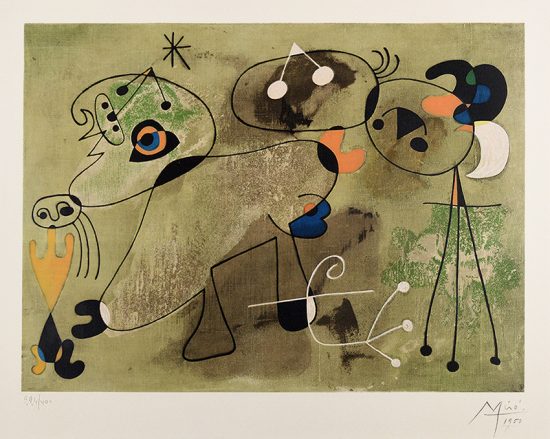
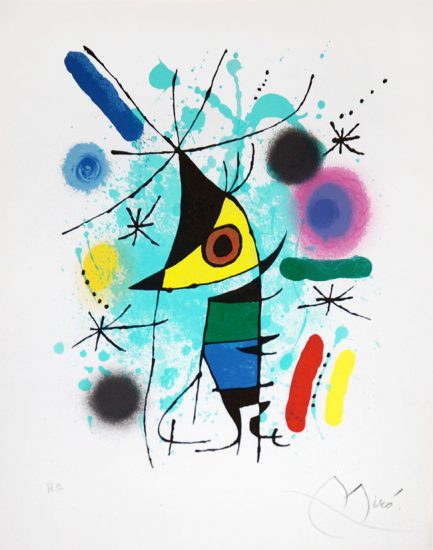
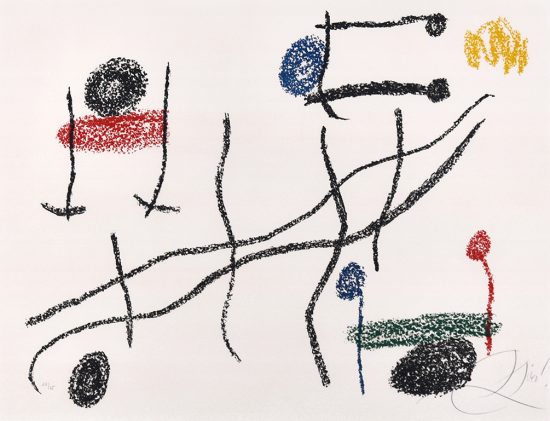
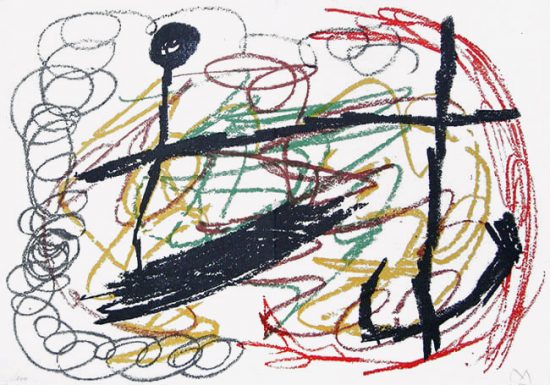
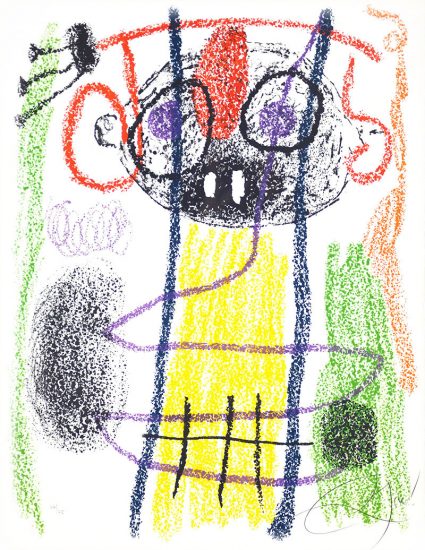
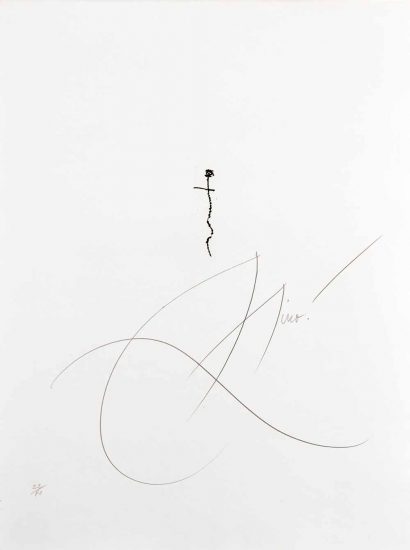
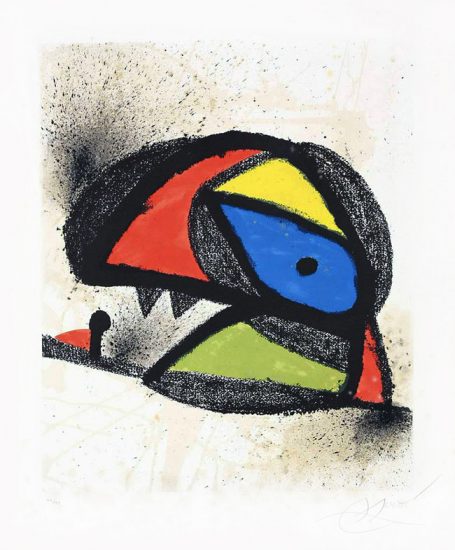
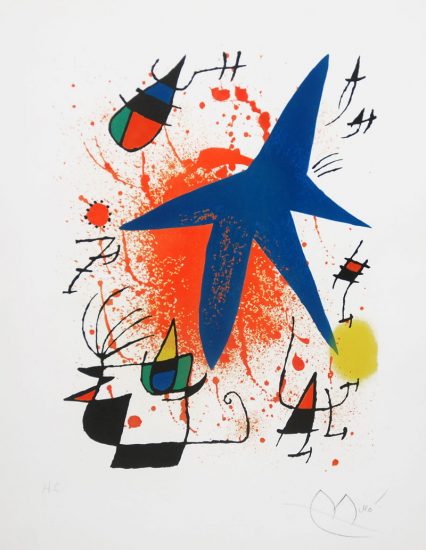
Lithography became one of Miró’s most important graphic media. His collaborations with specialist printers and publishers allowed him to exploit the medium’s capacity for bold color, spontaneous line, and layered imagery.
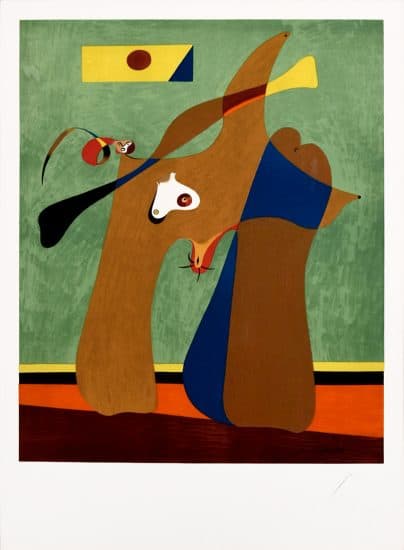
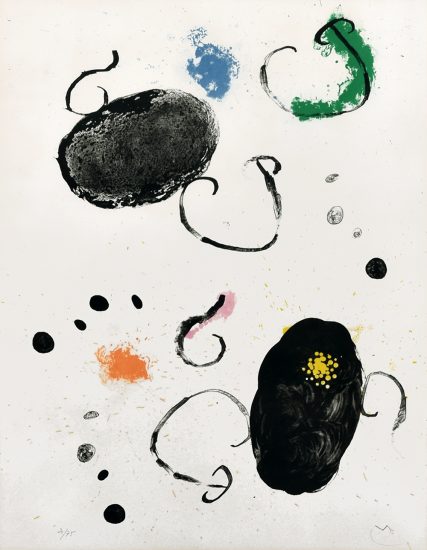
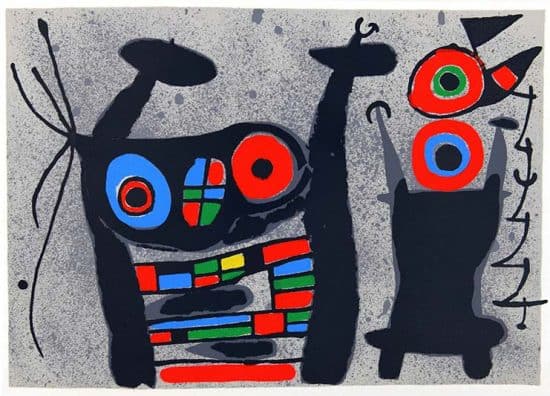
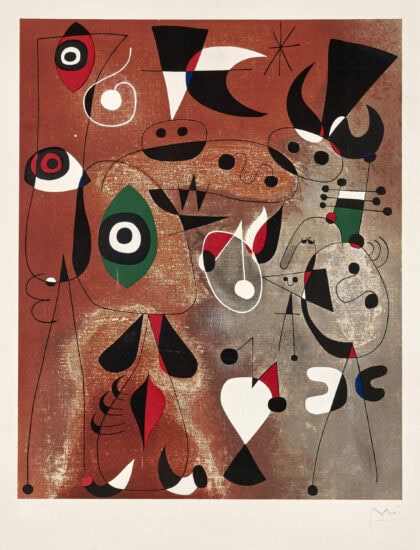
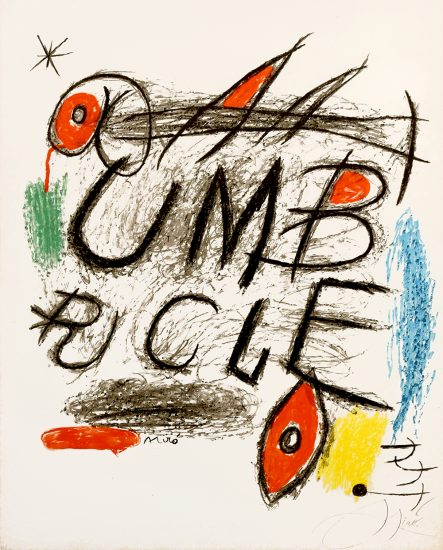
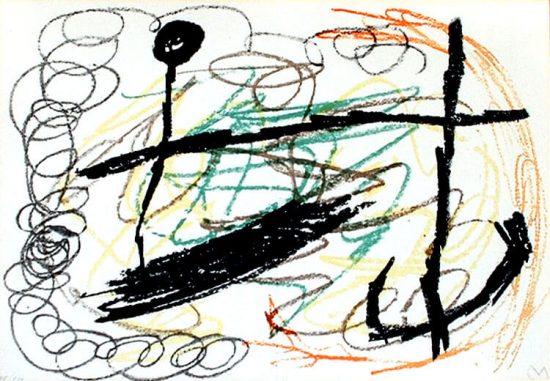
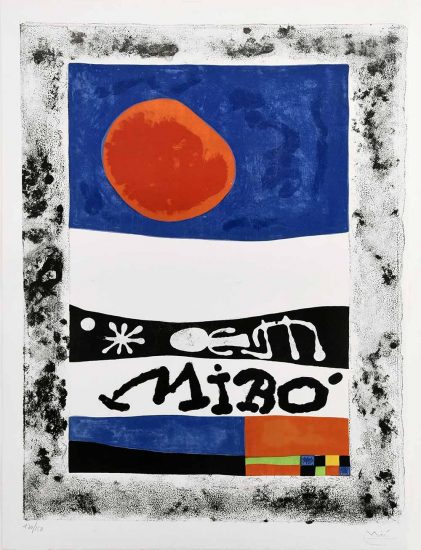
Miró’s lithographs often incorporate recurring signs from his visual vocabulary—birds, women, stars, moons, eyes, and abstract figures—while maintaining the immediacy and freedom of drawing. His extensive lithographic output is documented in the catalogue raisonné compiled by Fernand Mourlot and later volumes.
Collectors can explore our Joan Miró lithographs for examples of signed and numbered works spanning different periods of his printmaking career.
Joan Miró Etchings and Aquatints
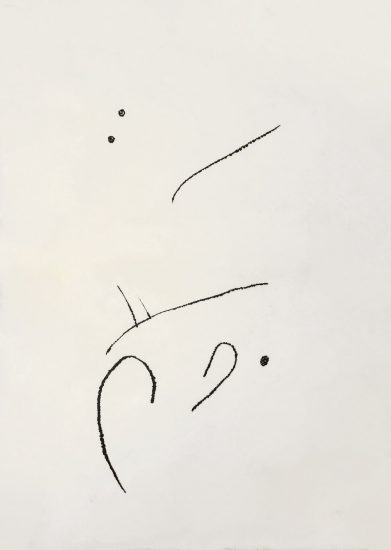
Etching and aquatint gave Miró a different range of possibilities. Incised lines allowed him to create crisp, calligraphic forms, while aquatint introduced areas of tone, texture, and dense color.
Miró frequently combined etching with aquatint, drypoint, and other techniques rather than treating each process in isolation. These mixed techniques became especially important as his prints grew larger and more experimental during the 1960s and 1970s.
Joan Miró Carborundum Prints
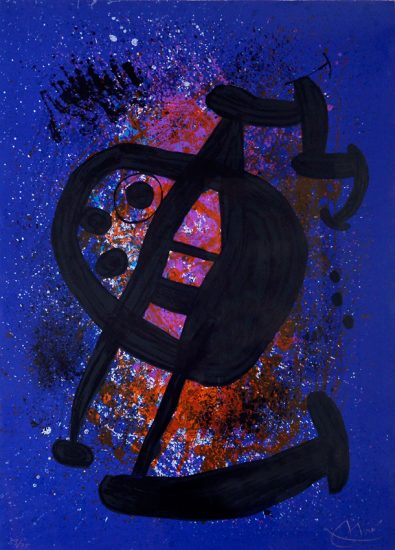
During the 1960s, Miró embraced carborundum printmaking, a technique developed by Henri Goetz that uses abrasive material and synthetic resins to create heavily textured printing surfaces. Miró recognized that the process allowed him to work with unusual spontaneity and produce rich, painterly areas of color and relief.
Works such as Équinoxe (1967), which combines etching, aquatint, and carborundum, demonstrate how Miró used the technique alongside traditional intaglio processes.
Carborundum became especially important in Miró’s later graphic work and contributed to some of his largest, most tactile, and visually powerful prints.
Later Career and Legacy
From the 1950s onward, Miró received increasing international recognition through exhibitions, awards, and monumental commissions. His work appeared in major museum retrospectives throughout Europe, the United States, and Japan. The Fundació Joan Miró opened in Barcelona in 1975 as a center devoted to Miró’s work and contemporary art.
Miró continued experimenting with painting, printmaking, sculpture, ceramics, textiles, and public art well into his later years. Major late works included monumental sculptures and architectural commissions, including Woman and Bird in Barcelona.
Joan Miró died in Palma de Mallorca on December 25, 1983, at the age of 90. His work remains central to the history of modern art, particularly for the way he combined abstraction, symbolism, Surrealist ideas, experimental materials, and an intensely personal vocabulary of signs.
How to Authenticate a Joan Miró Print
Learn how catalogue references, signatures, paper, dimensions, edition information, and provenance help identify original Miró prints.
Joan Miró Print Values & Prices
Learn what affects the value of a Joan Miró print, including subject, technique, edition size, condition, catalogue documentation, provenance, and recent comparable sales.