Fine art of landscapes.
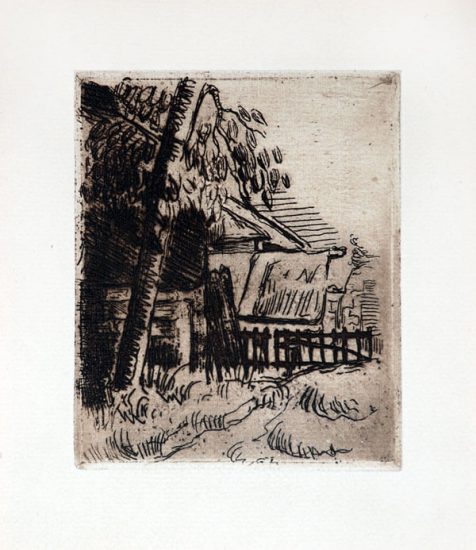
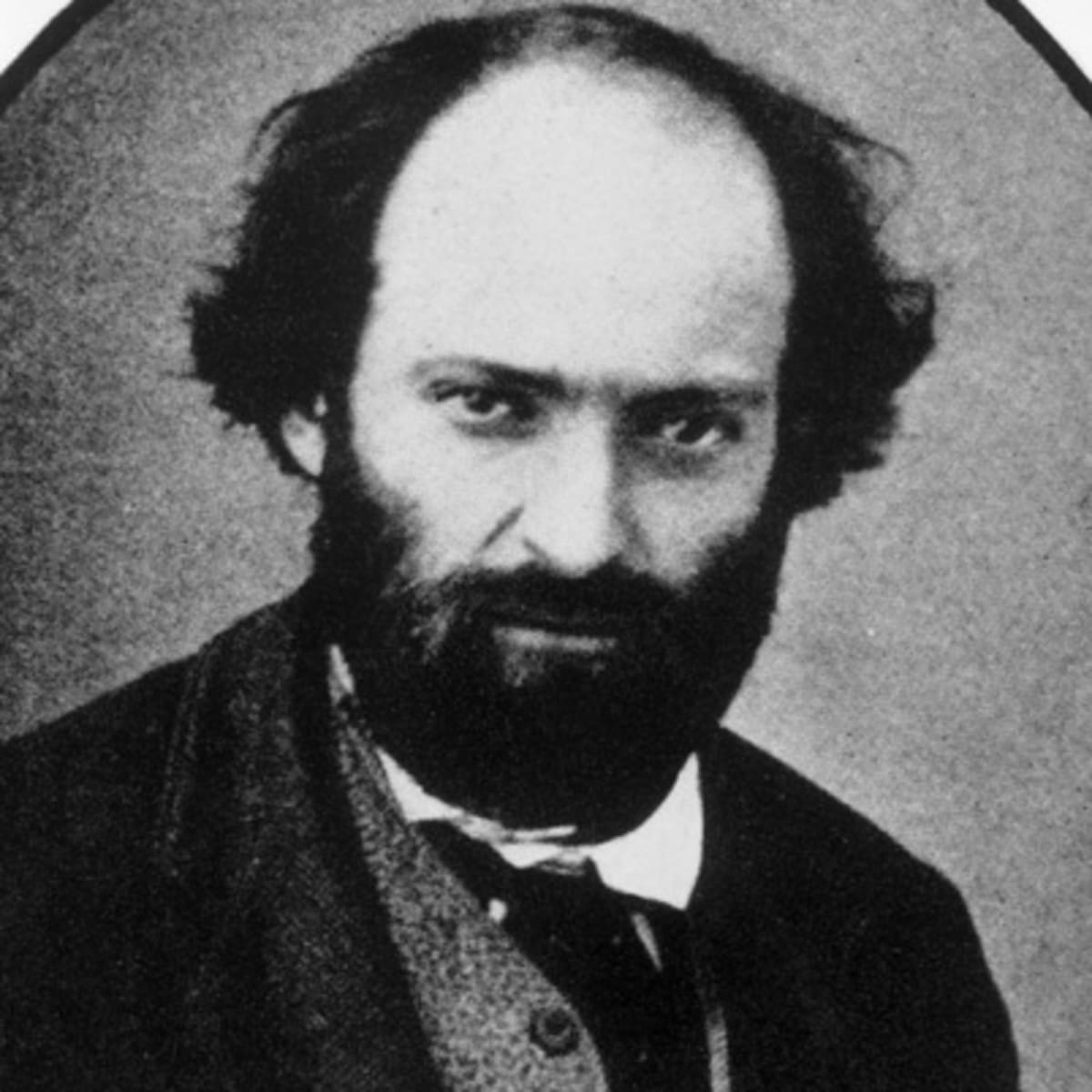
French painter, with Gauguin and van Gogh the greatest of the Post-Impressionists and a key figure in the development of 20th-century art. Paul Cézanne was born at Aix-en-Provence, son of a hat dealer who became a prosperous banker, and his financial security enabled him to survive the indifference to his work that lasted until the final decade of his life. His school fellow Emile Zola (1840-1902) introduced to Edouard Manet and Courbet, and persuaded him to take up the study of art in Paris. There at the Academy Suisse in 1861 he met Camille Pissarro, and the following year he got to know Monet, Bazille, Sisley, and Renoir. His painting at this time was in a vein of unrestrained and uncouth Romanticism, with a predilection for themes of violence or eroticism (The Murder, Walker Art Gallery, Liverpool). It was completely different from his mature work and gave little hint of greatness to come.
In 1869 he met Hortense Fiquet, a model and seamstress, who became his mistress and bore him a son, Paul, in 1872. Paul Cézanne kept them a secret from his family - he was terrified of his domineering father - but eventually married Hortense in 1886, shortly before his father's death. From about 1870 Cezanne started painting directly from nature and began to impose a more disciplined restraint on his natural impetuosity.
In 1872 he settled in Auvers sur-Oise, near Pontoise, the home of Camille Pissarro, and entered upon a long and fruitful association with him (in the last year of is life he even described himself as a 'pupil of Pis- rro'). He exhibited with the Impressionists in 1874 and again in 1877, but never identified himself with the Impressionist group or wholly adopted their aims and techniques (he was a touchy character and hid his insecurities by posing as a provincial boor, once refusing to shake hands with the elegant Manet because he claimed he had not washed for days and did not wish to dirty the great man). Cezanne was less interested in the realistic representation of casual and fleeting impressions and the fugitive effects of fight, devoting himself rather to the structural analysis of nature, looking for-ward in this respect to the Neo-Impressionists. His own aims are summarized in two of his sayings: that it was his ambition 'to do Poussin again, from Nature' and that he wanted to make of Impressionism something solid and enduring, like the art of the museums'. He trod a solitary and difficult path towards his goal of an art which would combine the best of the French classical tradition of structure with the best in contemporary Realism, an art which appealed not superficially to the eye but to the mind.
After the death of his father in 1886 and his inheritance of the family estate (the Jas de Bouffan, which features in many of his paintings), Cezanne lived mainly in Aix. He devoted himself principally to certain favorite themes - portraits of his wife Hortense, still lifes, and above all the landscape of Provence particularly the Monte Ste-Victoire. His painstaking analysis of nature differed fundamentally from Monet's exercises in painting repeated views of subjects such as Haystacks or Poplars. Cezanne was interested in underlying structure, and his paintings rarely give any obvious indication of the time of day or even the season represented. His later paintings are generally more sparsely composed and open, permeated with a sense of air and, light. The third dimension is created through perspective or foreshortening but by extraordinarily subtle variations of tonality. He worked in comparative obscurity until he was given a one-man show by the dealer Vollard in 1895. From that time his painting began to excite the younger artists and he attempted to explain his theories and aims in letters written to Emile Bernard and others. By the end of the century he was revered as the 'Sage' by many of the avantgarde and in 1904 the Salon d' Automne gave him a special exhibition. Since his death his reputation has increased among critics and art historians and he has exercised an enormous influence on 20th century art, most notably on the development of Cubism. His work was introduced to England with the Post-Impressionist exhibitions organized by Roger Fry in 1910 and 1912, and in 1914 Clive Bell wrote that: 'He was the Christopher Columbus of a new continent of form.' The belief that the picture surface has an integrity of its own irrespective of what it represents - a characteristic of so much modem painting-stems directly from him.
Although Paul Cézanne was a laboriously slow worker. He is said to have had over 100 sittings for a portrait of Ambroise Vollard (Petit Palais, Paris, 1899) before abandoning it with the comment that he was not displeased with the shirt front. He left a substantial body of work, including Cézanne's drawings and watercolors as well as oils. There are works in major museums, with particularly fine collections, for example, the Courtauld Institute Gallery London, the Musee d' Orsay, Paris, and the Bam Foundation, Merion, Pennsylvania. His studio Aix is now a Cezanne museum, reconstructed as was at the time of his death and displaying person mementoes such as his hat and clay pipe.
Browse Paul Cézanne Catalogue Raisonnés Online.
En español: Paul Cézanne.