Masterworks Fine Art Gallery
(650) 257-0965
  /  
  /  
EN
  |  
ES
  |  
FR
  |  
NL
 
Masterworks Fine Art Gallery
  • Artists
  • New Arrivals
  • About Us
  • Selling
  • Contact
  1. For Sale
  2. Alexander Archipenko
  3. Lithographs

Alexander Archipenko Lithographs

  • Alexander Archipenko Biography
  • Sell Alexander Archipenko
Filters
Available
View All
All Art (1)
Lithographs (0)
Drawings (1)
Sculptures (0)
Artworks (0)
Newly Featured
  • Newly Featured
  • Price: Highest first
  • Price: Lowest first
  • Newest first
  • Only Sold

You have reached the end of the best results we have for you.
Other Lithographs

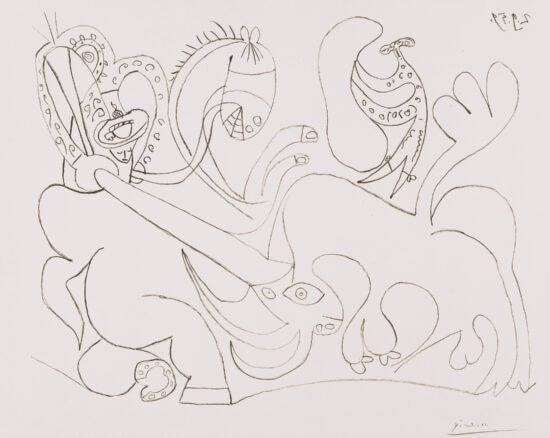
Pablo Picasso Lithograph, Grande Maternité (Grand Maternity), 1963
Pablo Picasso Lithograph for sale
Grande Maternité (Grand Maternity), 1963
ID # W-7607 $21,000 $16,000
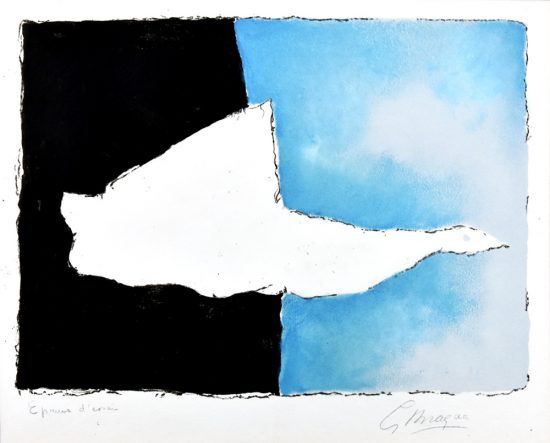
Georges Braque Lithograph, Equinoxe, 1962
Georges Braque Lithograph
Equinoxe, 1962
ID # w-9795 Price on Request
Georges Braque Lithograph, L’Echo (The Echo), 1960
Georges Braque Lithograph
L’Echo (The Echo), 1960
ID # W-7731 Sold
Georges Braque Lithograph, Nature Morte a la Palatte (Still life and the Palette), 1960
Georges Braque Lithograph for sale
Nature Morte a la Palatte (Still life and the Palette), 1960
ID # w-5419
Georges Braque Lithograph, Deux Oiseaux (Richesse de la France), 1961
Georges Braque Lithograph
Deux Oiseaux (Richesse de la France), 1961
ID # w-3957 Price on Request
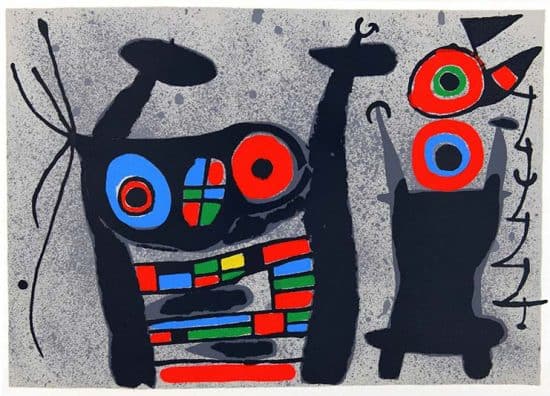
Joan Miró Lithograph, La Melodie Acide #13 (The Acid Melody #13), 1980
Joan Miró Lithograph
La Melodie Acide #13 (The Acid Melody #13), 1980
ID # w-8069 $10,000
Henri Matisse Lithograph, Danseuse assise (Seated Dancer), 1927
Henri Matisse Lithograph
Danseuse assise (Seated Dancer), 1927
ID # w-8944 $23,000 $16,500
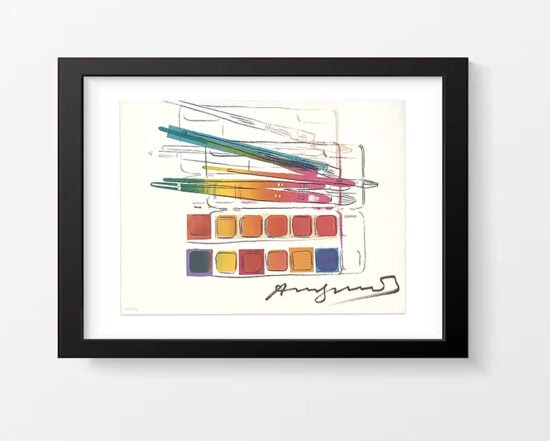
Andy Warhol Lithograph, Watercolor Paint Kit, 1982
Andy Warhol Lithograph
Watercolor Paint Kit, 1982
ID # W-8571 $20,000 $16,000
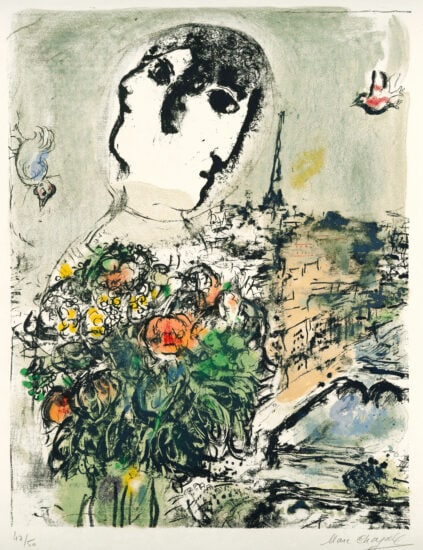
Marc Chagall Lithograph, l'Oiseau bleu (The Blue Bird), 1968
Marc Chagall Lithograph for sale
l'Oiseau bleu (The Blue Bird), 1968
ID # W-10009 Price on Request
Marc Chagall Lithograph, La flûte enchantée (The Magic Flute), 1967
Marc Chagall Lithograph
La flûte enchantée (The Magic Flute), 1967
ID # W-8060 Price on Request
Marc Chagall Lithograph, Carmen, 1966
Marc Chagall Lithograph
Carmen, 1966
ID # W-5404 Price on Request
Marc Chagall Lithograph, Romeo et Juliette (Romeo and Juliet), 1964
Marc Chagall Lithograph
Romeo et Juliette (Romeo and Juliet), 1964
ID # w-8319 Price on Request

Related Artists

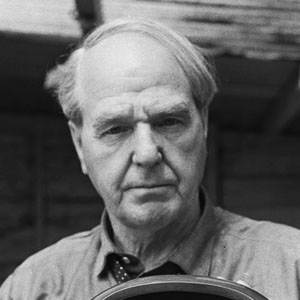
Henry Moore (British, 1898–1986)

Henry Moore

Buy Original Alexander Archipenko Signed and Numbered Artwork For Sale

Russian artist AlexanderArchipenko drew from ancient Egyptian artwork and the geometry of Fernand Léger's Cubsim.

Genres: Cubism Figurative Nude Pre-World War II School of Paris Modern Art

Have one to sell? Sell Alexander Archipenko fine art with us

Sell Alexander Archipenko artwork with us. We will research its value and popularity for you.

Alexander Archipenko Biography

Alexander Archipenko
Alexander Archipenko (American/Ukrainian, 1887–1964)

Russian-born sculptor who became an American citizen in 1928. Alexander Archipenko studied at the art school in his native Kiev from 1902 to 1905, when he was expelled for criticizing the academic attitudes of his teachers. In 1906 he moved to Moscow and in 1908 to Paris, where he left the Ecole des Beaux-Arts after two weeks' study, again showing his impatience of discipline.

Instead, Archipenko studied ancient and medieval sculpture in the Louvre, and some of the work of his early years in Paris (mainly female figures) is in a primitivistic manner recalling Egyptian artwork.

In about 1910, however, he was introduced to Cubism by Fernand Léger (whose studio was near his own) and he became one of the outstanding sculptors of the movement. In works such as the bronze Walking Woman (Denver Art Museum, 1912) he analysed the human figure into geometrical forms and opened it up with concavities and a central hole to create a contrast of solid and void, thus ushering in a new sculptural idiom: George Heard Hamilton writes that 'This is the first instance in modern sculpture of the use of a hole to signify more than a void, in fact the opposite of a void, because by recalling the original volume the hole acquires a shape and structure of its own'. In the same year, with Médrano I (destroyed), Archipenko began making sculptures that were assembled from pieces of commonplace materials, parallelling the work of Picasso; Médrano II (Guggenheim Museum, New York, 1913) is made of painted tin, wood, glass, and painted oilcloth. (Médrano was the name of a circus in Paris much frequented by artists; these two figures represented performers there.)

Archipenko quickly built up a reputation in France and elsewhere, particularly in Germany. In 1912 he had a one-man exhibition at the Folkwang Museum in Hagen and in 1913 one at the Sturm Gallery in Berlin; also in 1913 his work was included in the Armory Show in New York. His rise to international prominence was interrupted by the First World War, during which he lived in Cimiez, a suburb of Nice; his work of this period included a number of sculpto-paintings, a type of work he created in which forms project from and develop a painted background. After the war he soon relaunched his career, organizing an exhibition of his work that toured widely in Europe in 1919-21 (Athens, Brussels, Geneva, London, Munich, among several other cities). He also exhibited at the Venice Biennale in 1920, on which occasion his work was condemned by a Venetian cardinal. His first one-man show in the USA was given by the Société Anonyme in New York in 1921. At this period he was undoubtedly the best known and most influential of all Cubist sculptors.

From 1921 to 1923 Archipenko lived in Berlin, where he ran an art school, then emigrated to the USA. He lived, worked, and taught in various places, but chiefly in New York, where he directed his own school of sculpture from 1939 until his death. The work he did in America did not compare in quality or historical importance with that of his European period, but he continued to be highly inventive. In 1924, for example, he invented the Archipentura (a kind of Yinetic painting), and after the Second World War he experimented with 'light' sculptures, making structures of plastic lit from within. His work was influential in both Europe and America, notably in the revival of polychromy, in the use of new materials, and in pointing the way from the sculpture of solid form towards one of space and light.

Browse Alexander Archipenko Catalogue Raisonnés Online.

En español: Alexander Archipenko.

Explore the Fine Art Gallery

  • Home
  • Artists Represented
  • Artists' Genres and Series
  • Pablo Picasso Owls
  • Pablo Picasso Ceramics
  • Joan Miró Lithographs
  • Biographies
  • About the Gallery
  • Contact Us!
  • Shopping Cart
  • Sell Your Fine Art
  • Art News
  • Careers
  • Press
  • Privacy Policy
  • Galería de Bellas Artes Masterworks en español
  • Masterworks Fine Art Gallery (FR)
  • Masterworks Fine Art Gallery (NL)
  • Warhol Fine Art

Our Customer Service

  • Why Buy From Us
  • Always there for you
  • The Certificate of Authenticity
  • Historical Documentation
  • 100% Moneyback Guarantee
  • Museum-Archival Framing
  • Our Competitive Pricing
  • Easy Payments
  • Packaging and Insurance
  • Free Annual Appraisal!

Let's Get Social

  • Visit us on Facebook
  • Visit us on Instagram

Contact Us

  • What do you think of our gallery?
  • info@masterworksfineart.com
  • 650-257-0965
  • Masterworks Fine Art Gallery
    220 Hamilton Ave, Palo Alto CA 94301 USA


    Office:
    13470 Campus Drive
    Oakland Hills, California USA 94619

© Masterworks Fine Art Gallery. All rights reserved. Privacy Policy. Our gallery is located in Silicon Valley's Palo Alto of the San Francisco Bay Area, California, USA.