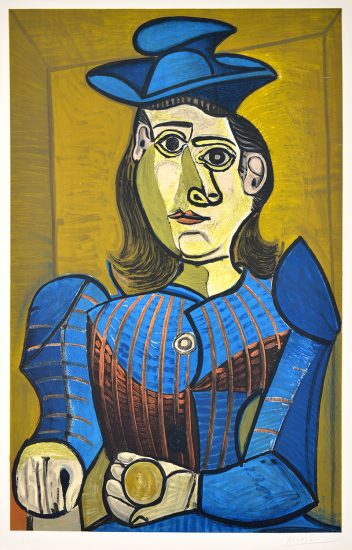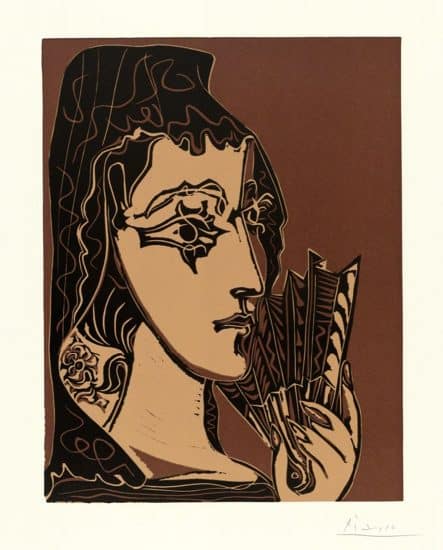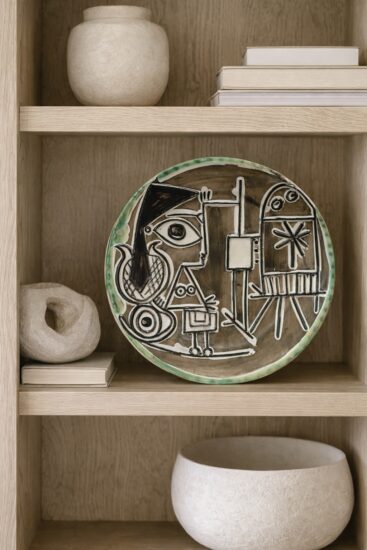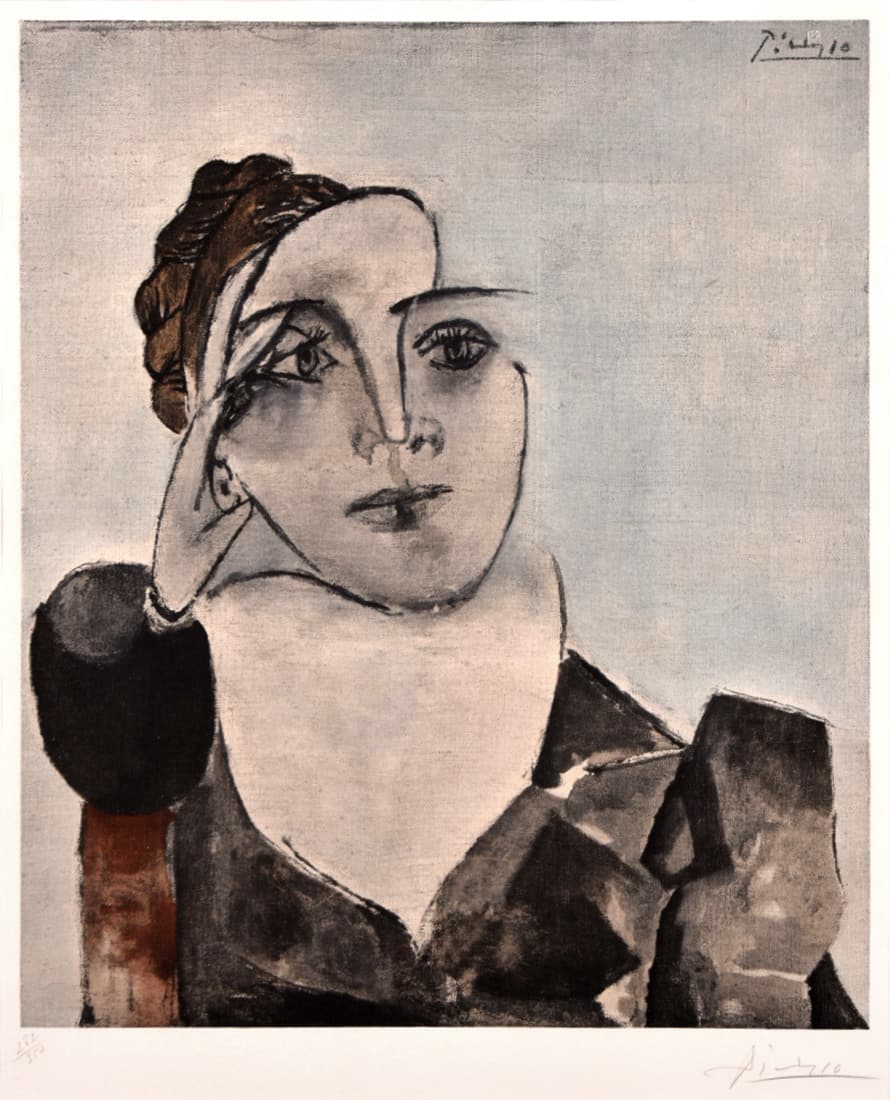
Pablo Picasso, Portrait de Mlle D.M. (Dora Maar), c. 1960
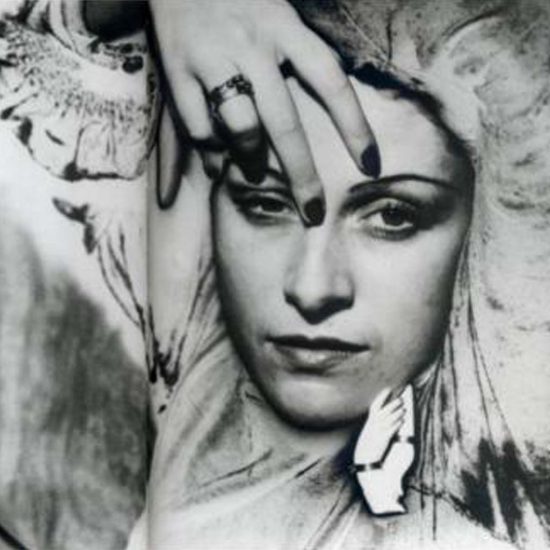
In 1926 her family moved back to Paris where Dora Maar attended the Academie Julian, the female equivalent to the Ecole des Beaux-Arts. It was around this time that she shortened her name to Dora Maar. Her main forms of art making were photography and painting – for which she always received better feedback on her photography. Dark humor filled her art and her life and she became part of a group of prominent Surrealists. Dora Maar was involved in activist groups during the rise of fascism in Europe including one called Appel a la lutte (Call to the Struggle).
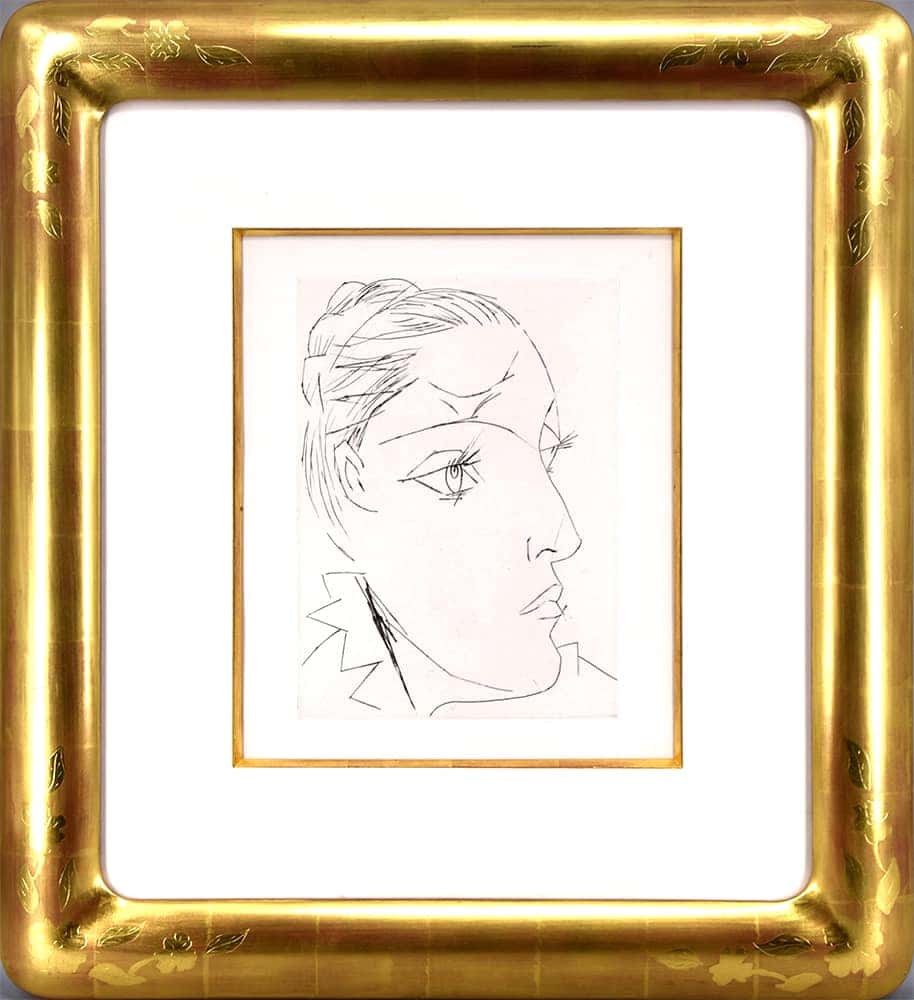
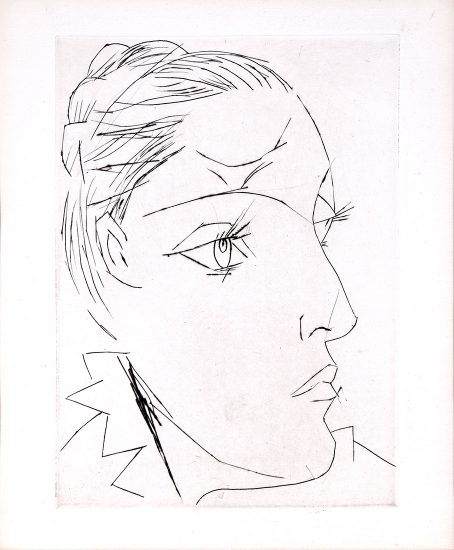
Pablo Picasso, Portrait De Dora Maar Au Chignon.II, 1936
Picasso and Maar entered into a fully-fledged romance later that year when they spent an extended amount of time together at the house of common friend and Surrealist Lise Deharme in Saint-Tropez. Back in Paris, Dora Maar moved into an apartment around the corner from Pablo Picasso’s new studio. The political and social climate of the time created an intense environment for a romance. What is more, Picasso was still seeing Marie-Thérèse and his daughter Maya frequently – a reality that was hard on both Marie-Therese and Dora Maar.
It is also during this time that Picasso created one of his greatest works of art, Guernica. Dora Maar was very involved in politics, and is certainly responsible for some of Picasso’s interest in them around this time.
Dora Maar took up painting while she was involved with Picasso – but there is little of Picasso’s influence in her work which remains very much her own. Dora Maar first encountered Picasso in 1935 when she was a photographer on the set of Le Crime de Monsieur Lange. The pair were introduced by Paul Eluard, who would be a close friend of both. Picasso was 54 years old at the time and involved in an affair with Marie-Thérèse who had recently given birth to their daughter Maya. Dora Maar remembered this first interaction, though it is said that Picasso did not. They met again in 1936 in a much mythologized meeting. This time they were in a restaurant, Picasso was again with Paul Eluard. Dora Maar was sitting at a nearby table wearing black lace gloves and playing with a knife. Occasionally she would accidentally cut herself and a drop of crimson blood would spill over the lace. Picasso was entranced both by her appearance and her actions. He asked Eluard to introduce them and approached Dora in French – he was taken when she replied in his native Spanish.
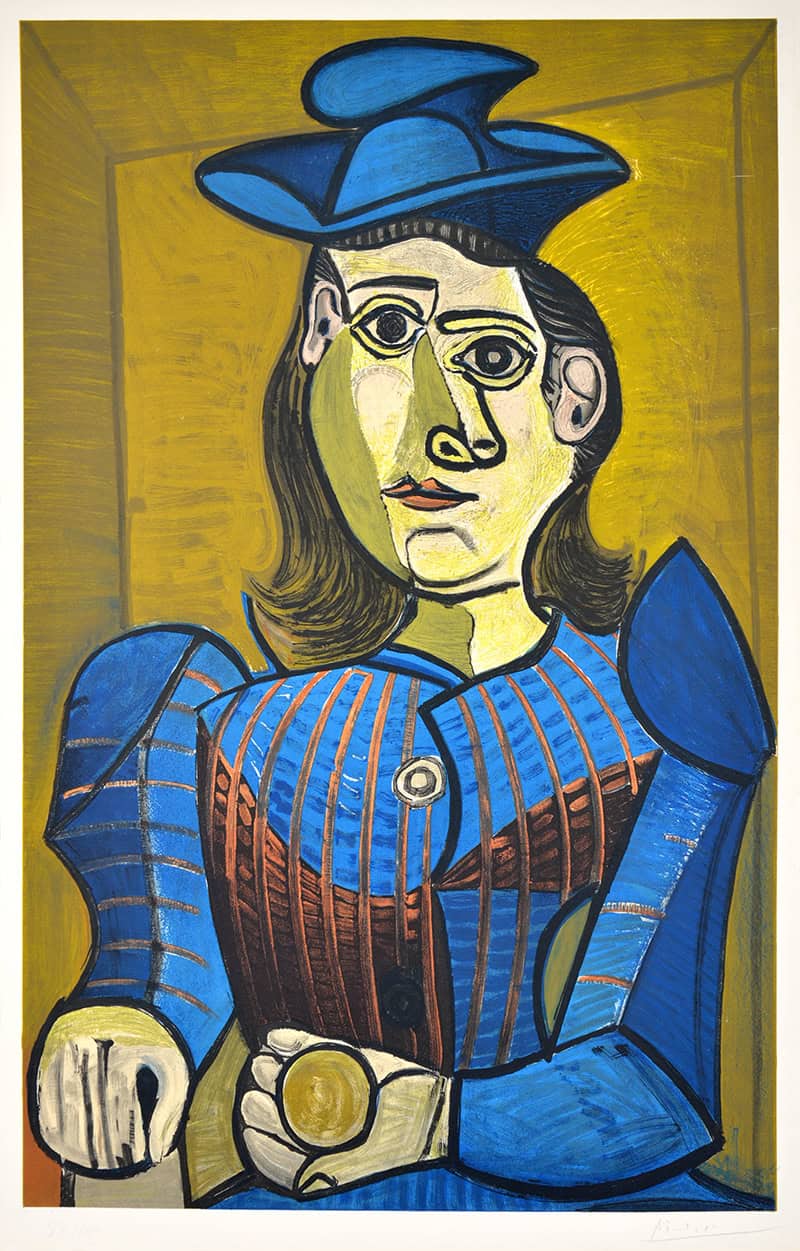
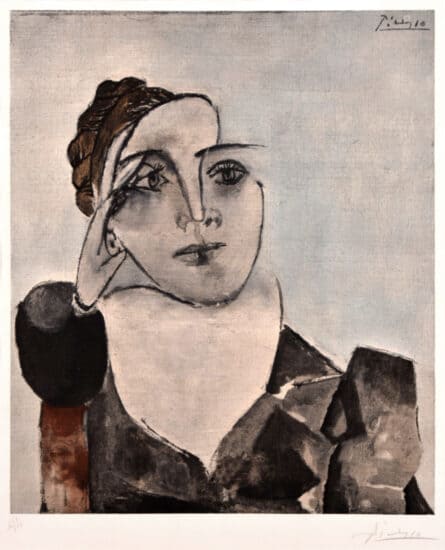
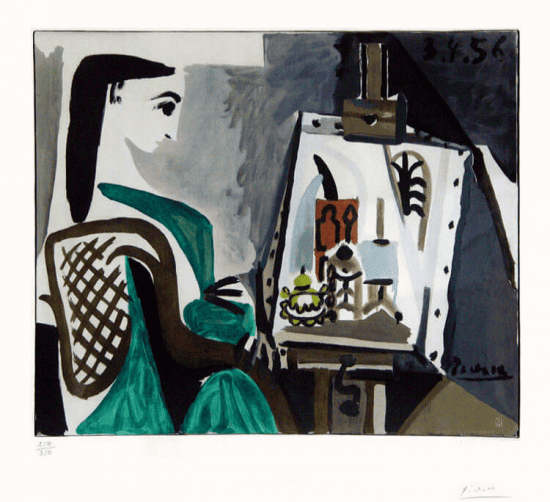
Pablo Picasso, Femme Assise (Dora Maar), 1955
Even 10 years after the end of their affair, Picasso continued to embarrass Dora Maar and negatively impact her life. The two also exchanged a number of twisted gifts up until his death in 1973. Dora Maar continued to paint, and near the end of her life she sold some of her personal Picasso paintings in order to support herself. She died in 1997 at age 89. By 1942 there was trouble in their relationship. Both were disheartened by current events and by the natural difficulties of a romance between two strong willed people. Dora Maar became very jealous when Picasso met François Gilot, and did not handle their budding romance well. In 1946 Dora Maar’s affair with Picasso ended for good. She suffered a nervous breakdown which put her in a psychiatric hospital where she endured three weeks of electric shock treatment. Luckily, she was removed from the hospital and placed into private clinic with the help of friend Paul Eluard. After two years in the clinic and getting heavily involved in the Roman Catholic Church, Dora Maar resumed a more normal life.
Auction of Pablo Picasso's Dora Maar painting in October 2025
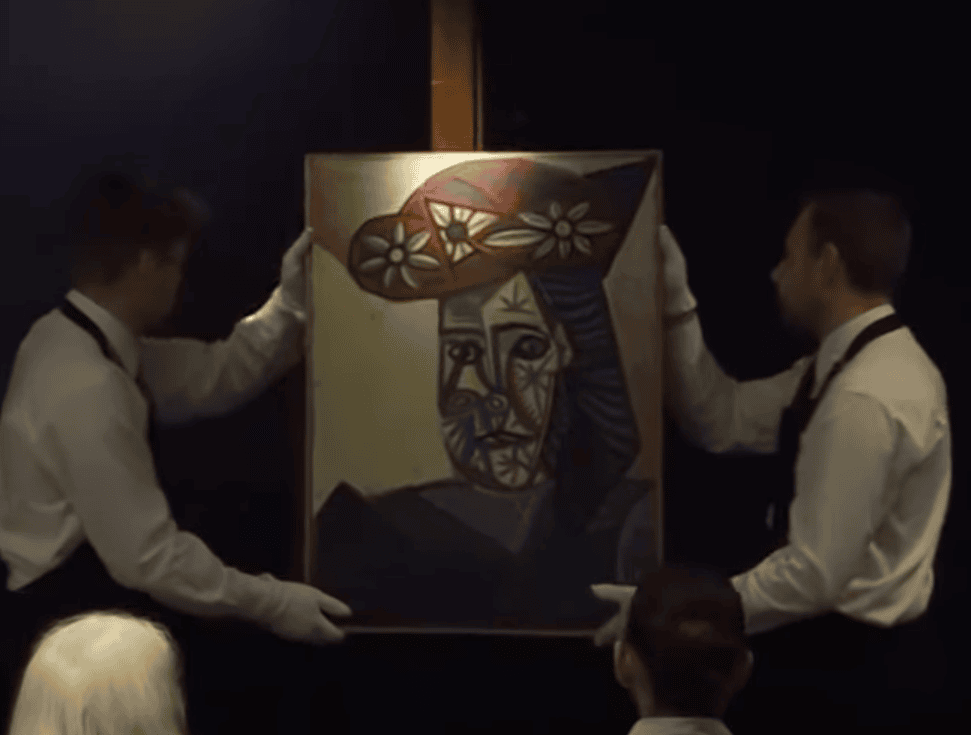
Pablo Picasso Bust of a Woman with a Flowered Hat (Dora Maar) 1943 sold for $31.49 million at auction October 2025.
"It's without a doubt the most moving work of Picasso that involved his muse, because he was about to leave her (Dora Maar) for Francoise Gilot," said auctioneer Christophe Lucien. "And through this portrait, we see a woman who holds back her tears. So it's lucky for an auctioneer to have a piece of art history before their own eyes."
10 Facts about Picasso's Dora Maar
1. Birth and Early Life: Born Henriette Theodora Markovitch on November 22, 1907, in Paris, Dora Maar spent her early years in Buenos Aires, Argentina, where her Croatian father worked as an architect.
2. Artistic Education: Upon returning to Paris in 1926, she studied at several prestigious institutions, including the Union Centrale des Arts Décoratifs, the École de Photographie, the Académie Julian, and the atelier of André Lhote.
3. Surrealist Photographer: Dora Maar gained recognition in the 1930s for her surrealist photography, characterized by experimental techniques and dreamlike imagery.
4. Political Activism: She was actively involved in left-wing political movements during the 1930s, using her art to comment on social and economic issues of the time.
5. Collaboration with Picasso: Dora Maar met Pablo Picasso in 1935, and their relationship lasted nearly a decade. She documented the creation of his famous painting "Guernica" through photographs.
6. Artistic Influence: Beyond being Picasso's muse, Dora Maar influenced his work by introducing him to new photographic techniques and contributing to his exploration of political themes in art.
7. Transition to Painting: Encouraged by Picasso, Dora Maar shifted her focus from photography to painting, creating abstract landscapes and still lifes, especially after their separation.
8. Later Life and Reclusion: Following her breakup with Picasso, Dora Maar experienced a period of mental health challenges but eventually found solace in religion and lived a reclusive life in Provence, France.
9. Posthumous Recognition: After her death in 1997, Dora Maar's work received renewed attention, leading to major retrospectives at institutions like Tate Modern and the Centre Pompidou.
10. Legacy: Today, Dora Maar is celebrated as a significant surrealist artist in her own right, with her contributions to photography and painting gaining widespread acknowledgment.
Picasso’s Dora Maar Paintings in Museums
1. The Weeping Woman – Tate Modern, London
Picasso’s emotionally charged 1937 series featuring Dora Maar includes the most iconic version housed at London’s Tate Modern—a hallmark of Cubist portraiture and wartime anguish.
2. Portrait of Dora Maar – Musée Picasso, Paris
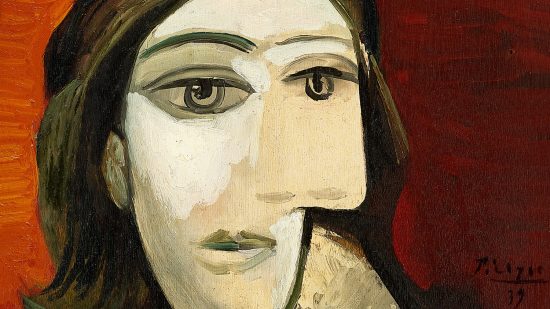
This striking 1937 oil-on-canvas work portrays Dora seated, rendered with fractured depth and psychological intensity. It remains part of the Musée Picasso’s esteemed collection.
3. Woman’s Head (depicting Dora Maar) – National Gallery, Athens
This 1939 Cubist bust, a complex abstract depiction of Dora, was donated by Picasso to Greece as a tribute to their resistance during WWII.
4. Dora Maar in an Armchair – The Metropolitan Museum of Art, New York
Painted in 1939 during a stay in Royan, this portrait reveals visceral distortions and a bold, patterned background—hallmarks of Picasso's intense engagement with his subject.
5. Dora Maar in a Wicker Chair – The Metropolitan Museum of Art, New York
Another vivid portrayal from 1938, this depiction frames Dora as a surreal “spider queen,” merging fragility and menace through strong geometric lines and stylized form.
6. Dora Maar (1941 portrait) – National Gallery of Art, Washington, D.C.
Part of the Chester Dale Collection, this oil-on-linen portrait offers yet another facet of Picasso’s multifaceted representations of Dora Maar.
7. Prints and Drawings at The MetThe Met also holds Picasso’s Portrait of Dora Maar with a Chignon I & II (drypoint prints from 1936), demonstrating his varied media exploration through etching and printmaking.
Most Expensive Picasso Dora Maar Painting Sold
The most expensive painting of Dora Maar ever sold is Dora Maar au Chat (1941), a portrait by Pablo Picasso. This artwork fetched $95.2 million at a Sotheby’s auction in New York on May 3, 2006, making it the second-highest price ever paid for a painting at that time.
The painting portrays Dora Maar seated in an armchair, holding a small cat. It was created during a period when Picasso was deeply influenced by his relationship with Dora Maar, who was both his lover and muse. The piece is noted for its vibrant colors and the emotional depth conveyed through Picasso's distinctive style.
This sale marked a significant moment in the art market, highlighting the enduring value of Picasso's works and his portrayal of Dora Maar.
Other Picasso Muses
References
Caws, Mary Ann. ‘A tortured goddess,’ The Guardian. October 6, 2000. Accessed November 10, 2016. https://www.theguardian.com/books/2000/oct/07/features.weekend
Freeman, Judi. Picasso and the Weeping Women: The Years of Marie-Thérèse & Dora Maar. Los Angeles: Los Angeles County Museum of Art, 1994.
Masterworks collection: Pablo Picasso Dora Maar