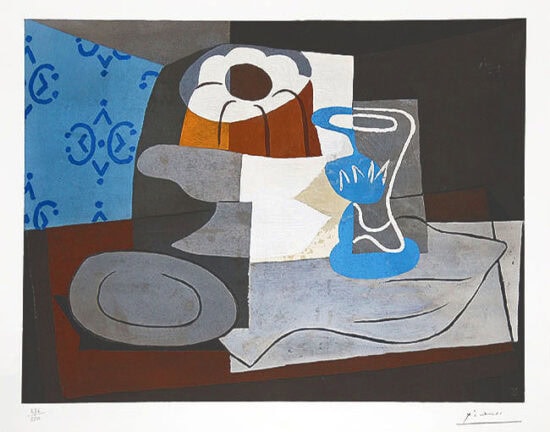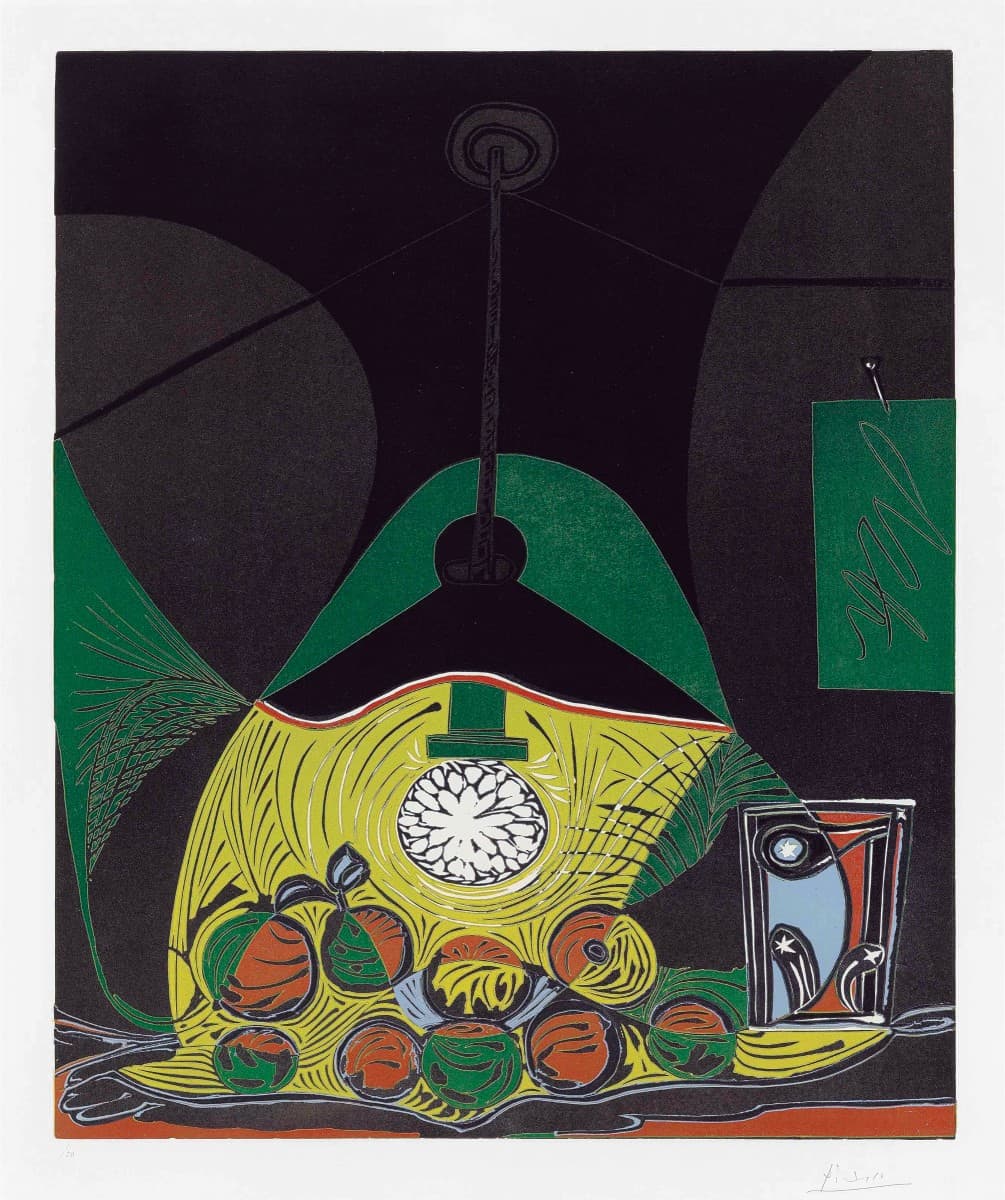
Pablo Picasso, Nature morte sous la lampe (Still Life Below a Lamp), 1962 |
|
| Artist: | Pablo Picasso (1881 - 1973) |
|---|---|
| Title: | Nature morte sous la lampe (Still Life Below a Lamp), 1962 |
| Reference: | Baer 1313, Bloch 1102 |
| Medium: | Color Linocut on Arches paper |
| Image Size: | 25 1/4 in x 20 7/8 in (64.1 cm x 53 cm) |
| Sheet Size: | 29 5/8 in x 24 1/4 in (75.2 cm x 62.2 cm) |
| Edition: | Numbered from the edition of 50 in pencil in the lower left margin. |
| Signature: | This work is hand-signed by Pablo Picasso (Malaga, 1881 - Mougins, 1973) in pencil in the lower right margin. |
| ID # | w-8356 |
|
Price on Request
Questions? |
|
Pablo Picasso’s Nature morte sous la lampe (Still Life Below a Lamp), 1962, is a striking example of the artist’s late graphic brilliance, where the everyday subject of a still life is transformed into a theatrical composition charged with drama and vitality. Executed in linocut, a medium Picasso had mastered with radical innovation, the work captures a table of familiar objects—fruit, vessels, and forms—illuminated beneath the stark glow of a lamp. Yet, rather than depicting domestic calm, Picasso infuses the scene with a sense of tension and monumentality, as though the objects themselves vibrate with presence under the penetrating force of light.
The lamp, central to the composition, casts sharp contrasts that fracture the still life into bold zones of black and white. Each object—curved, angular, or faceted—is rendered with sculptural clarity, their silhouettes locked in dynamic interplay. The geometry of the lamp’s light transforms the table into a stage where form, shadow, and void perform together, recalling the charged atmosphere of Guernica, in which the motif of the lamp held deep symbolic weight. Here too, the lamp is more than a source of illumination—it is an emblem of revelation, exposing the raw essence of objects and elevating the still life into a meditation on vision, perception, and truth.
In Nature morte sous la lampe, Picasso fuses the intimacy of still life with the grandeur of abstraction. The ordinary becomes extraordinary, transformed by the artist’s hand into a play of oppositions—light and darkness, weight and void, the humble and the monumental. It is a work that demonstrates not only Picasso’s mastery of linocut, but also his lifelong ability to invest the simplest of subjects with universal resonance.
Created in 1962, this color linocut on Arches paper is hand-signed by Pablo Picasso (Malaga, 1881 – Mougins, 1973) in the lower right margin, and numbered from the edition of 50 in the lower left margin.
Catalogue Raisonné & COA:
Pablo Picasso Nature morte sous la lampe (Still Life Below a Lamp), 1962 is fully documented and referenced in the below catalogue raisonnés and texts (copies will be enclosed as added documentation with the invoices that will accompany the sale of the work).
1. Baer, Brigitte. Picasso: Peintre-Graveur, Tome V. Berne : Editions Kornfeld, 1989. Listed and illustrated as catalogue raisonné no. 1313.
2. Bloch, Georges. Picasso, Tome I: Catalogue de l'oeuvre gravé et lithographié 1904-1967. Berne: Editions Kornfeld, 1984. Listed and illustrated as catalogue raisonné no. 1102.
3. McVinney, L. Donald, et al. Picasso Linoleum Cuts: The Mr. and Mrs. Charles Kramer Collection in the Metropolitan Museum of Art. New York: Random House, 1985. Listed and illustrated as catalogue raisonné no. 97.
4. A Certificate of Authenticity will accompany our Pablo Picasso’s Nature morte sous la lampe (Still Life Below a Lamp), 1962.
About the Framing:
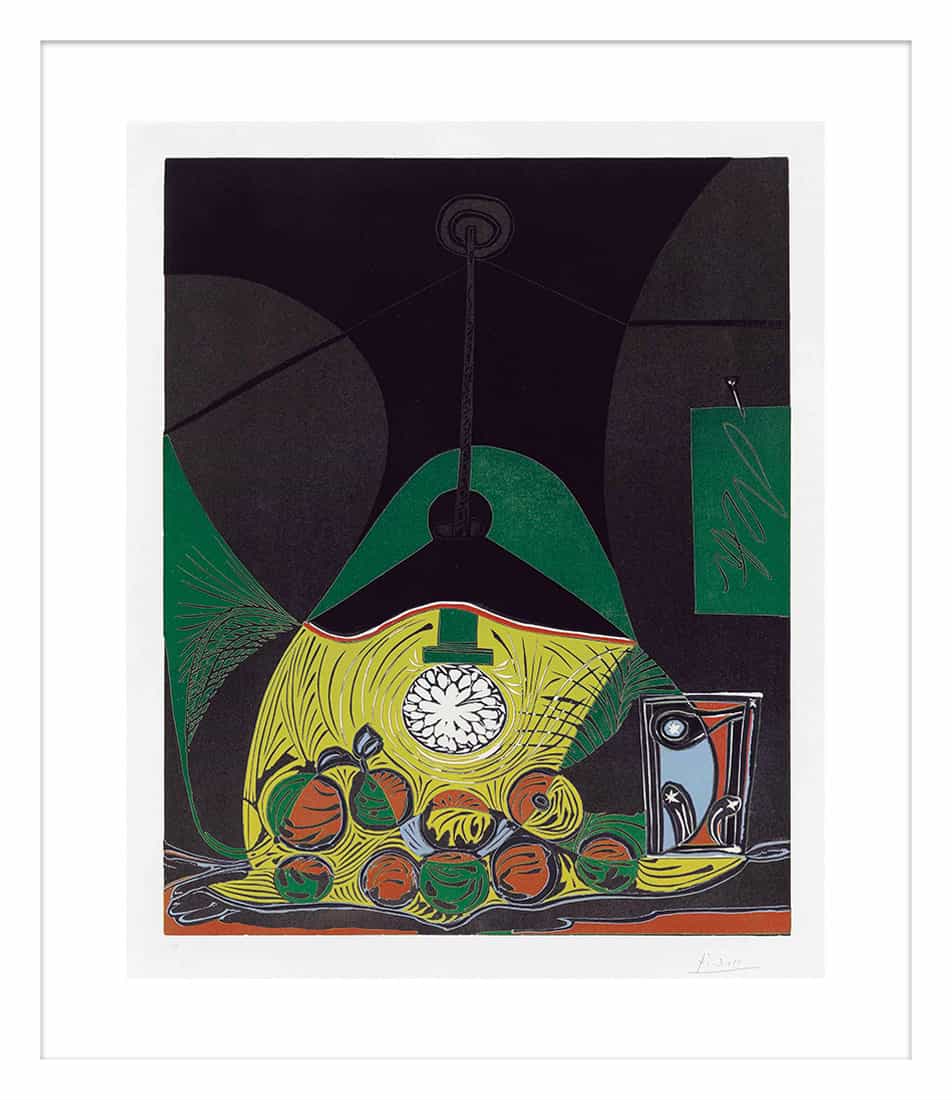
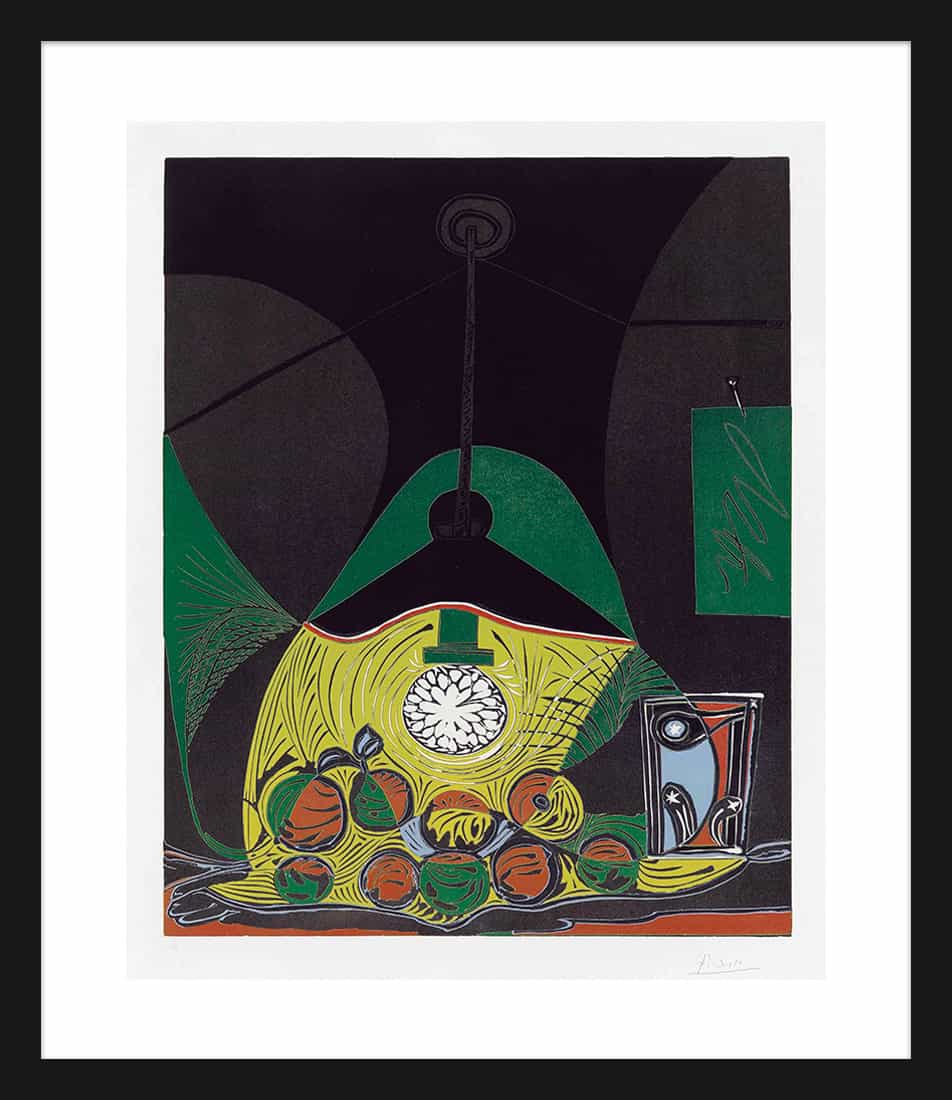
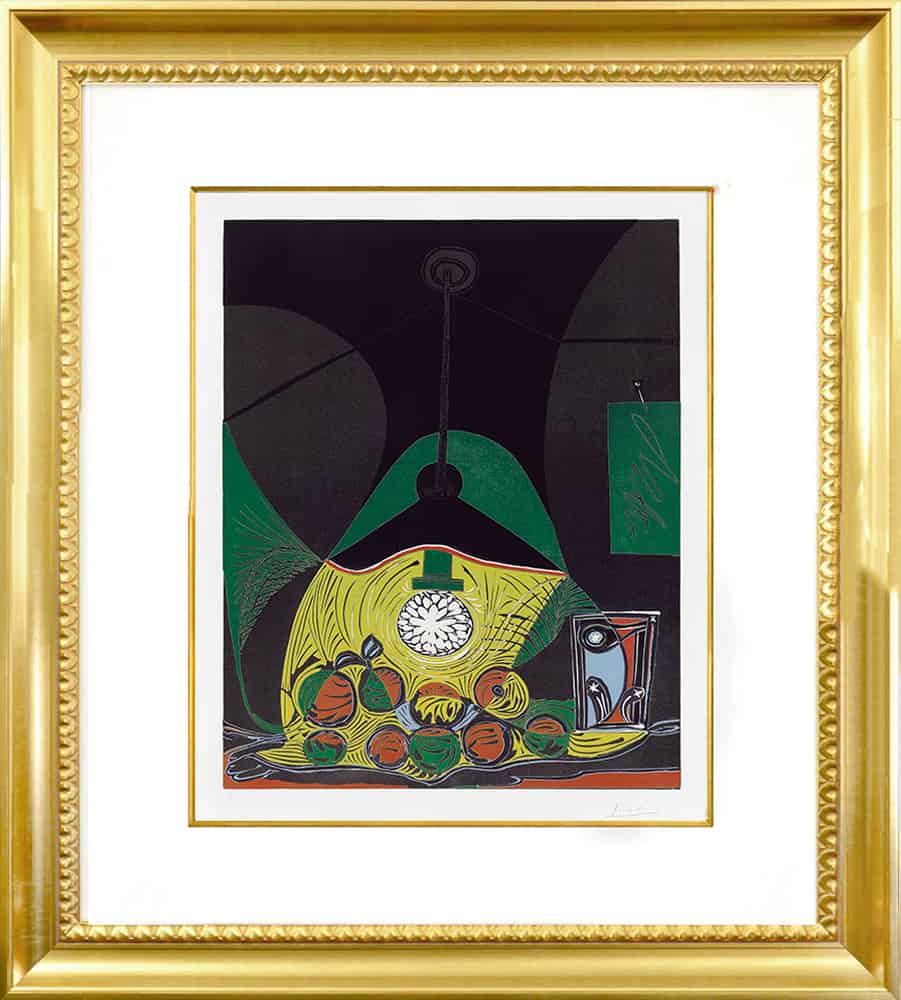
Framed to museum-grade, conservation standards, Pablo Picasso Nature more sous la lampe (Still Life Below a Lamp), 1962 is presented in a complementary moulding and finished with mats and optical grade Plexiglas.
Subject Matter: $76k+ Still Life Abstract