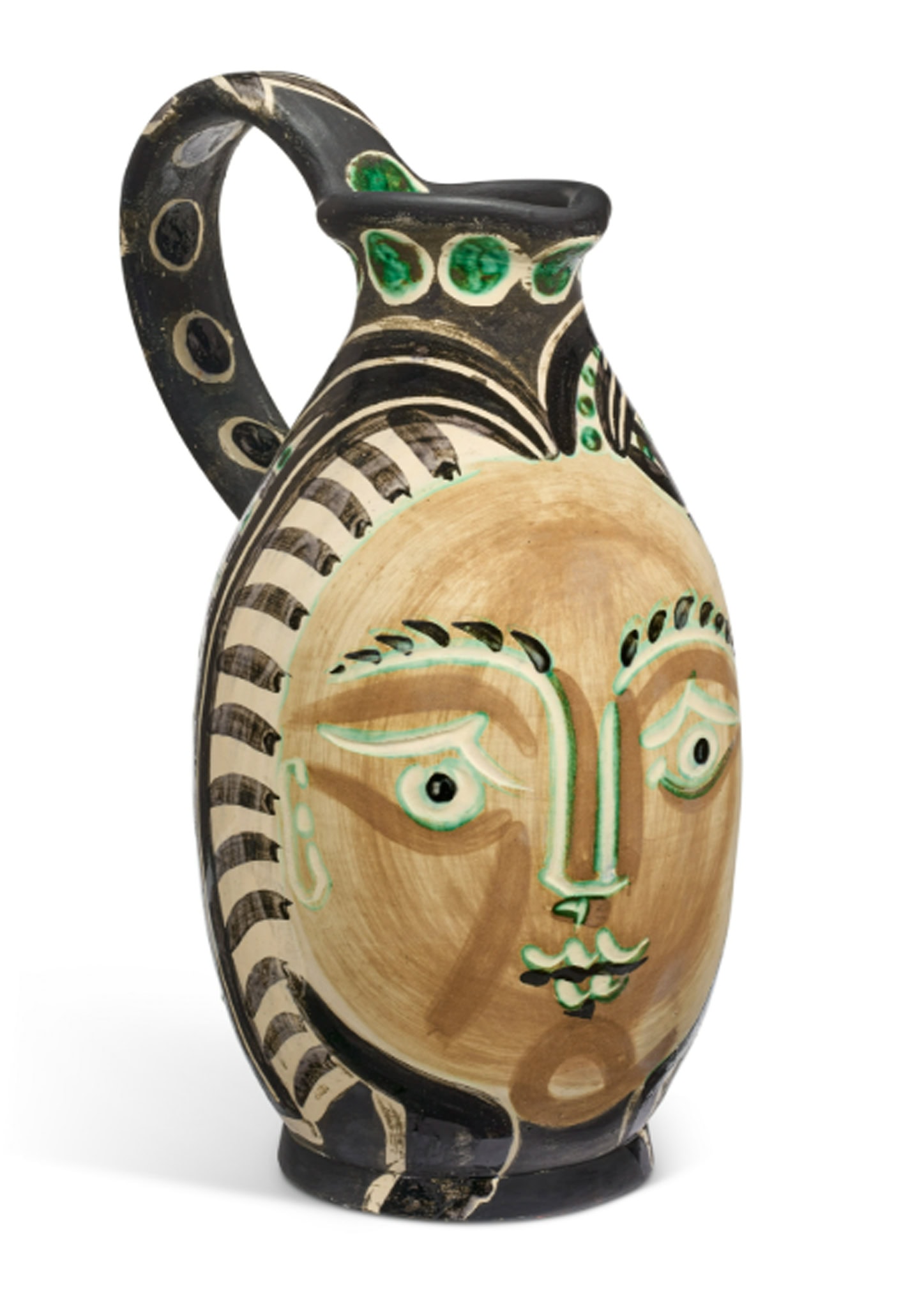
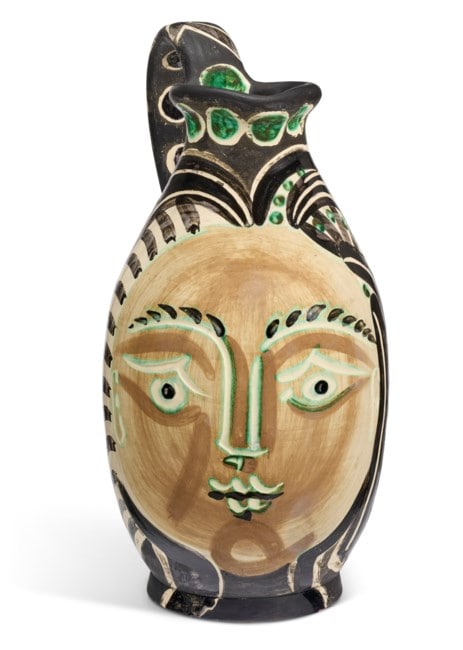
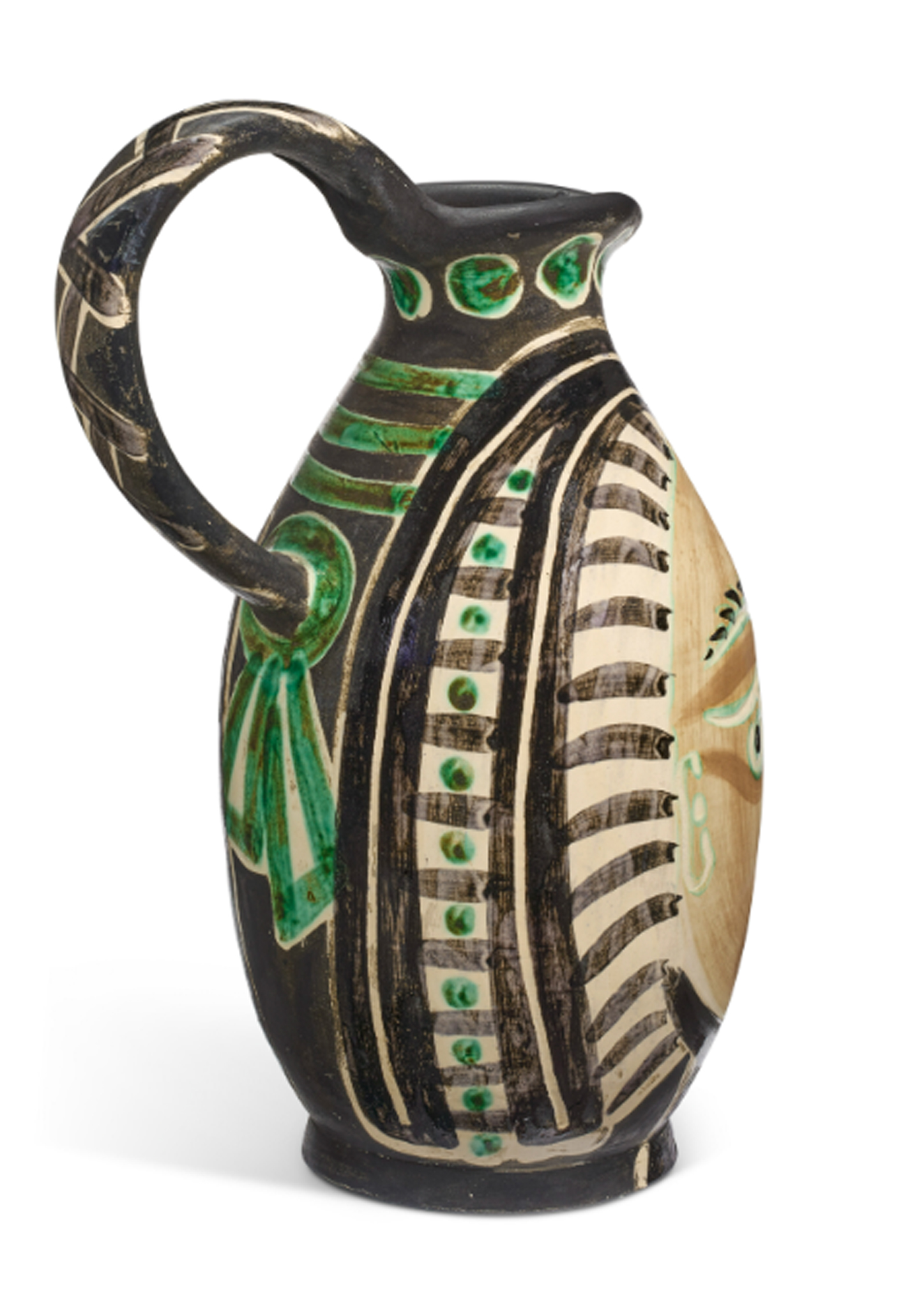
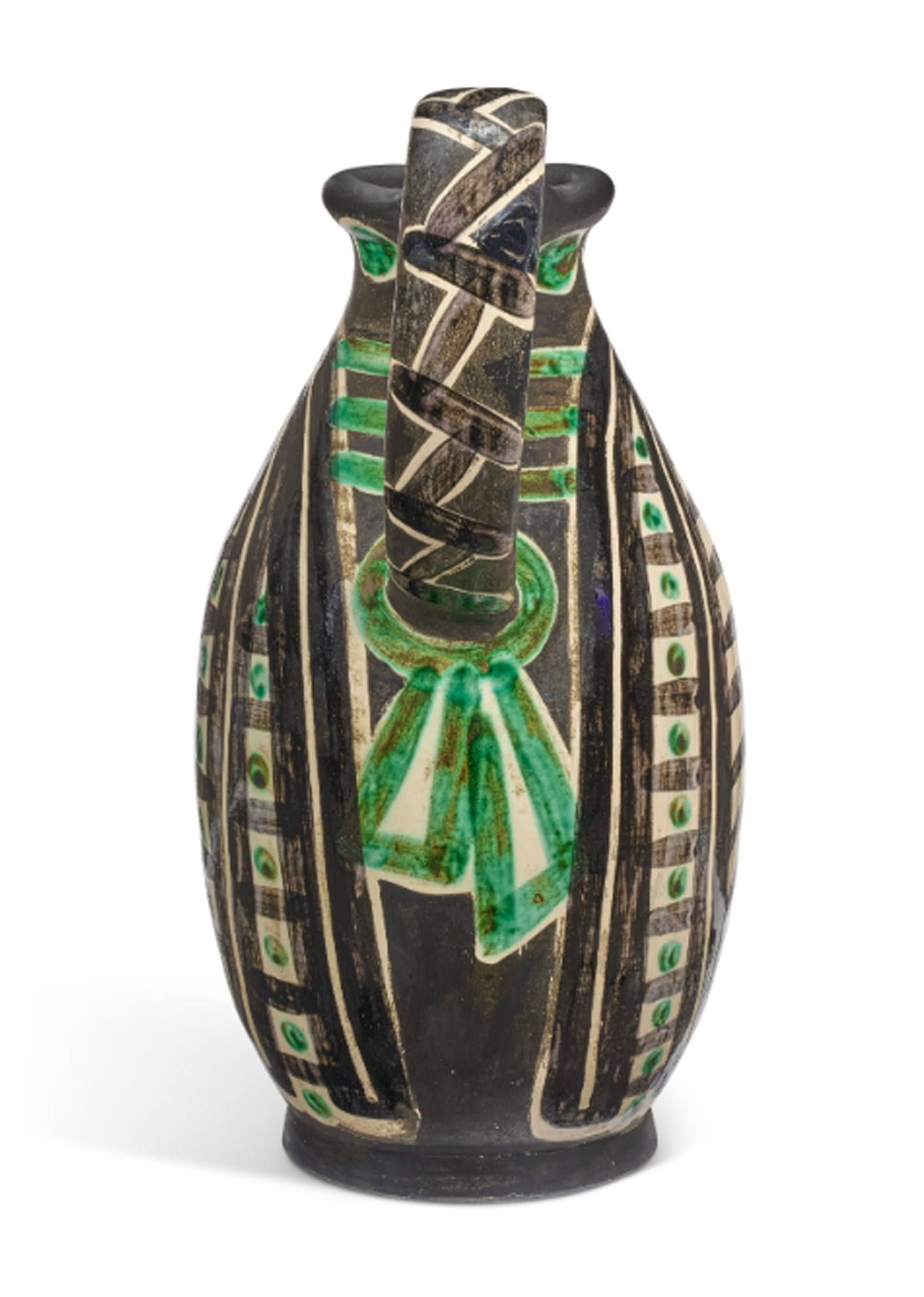
Pablo Picasso, Femme de Barbu (Bearded Man's Wife) 1953 |
|
|
|
|
| Artist: | Pablo Picasso (1881 - 1973) |
|---|---|
| Title: | Femme de Barbu (Bearded Man's Wife) 1953 |
| Reference: | Ramie 193 |
| Medium: | Madoura turned pitcher of white earthenware clay with decoration in engobes, knife engraved under partial brushed glaze (black, beige, green, grey patina) |
| Image Size: | DIMENSIONS: 14 13/16 in x 10 13/16 in (37.5 cm x 20.5 cm) |
| Edition: | From the edition of 500. |
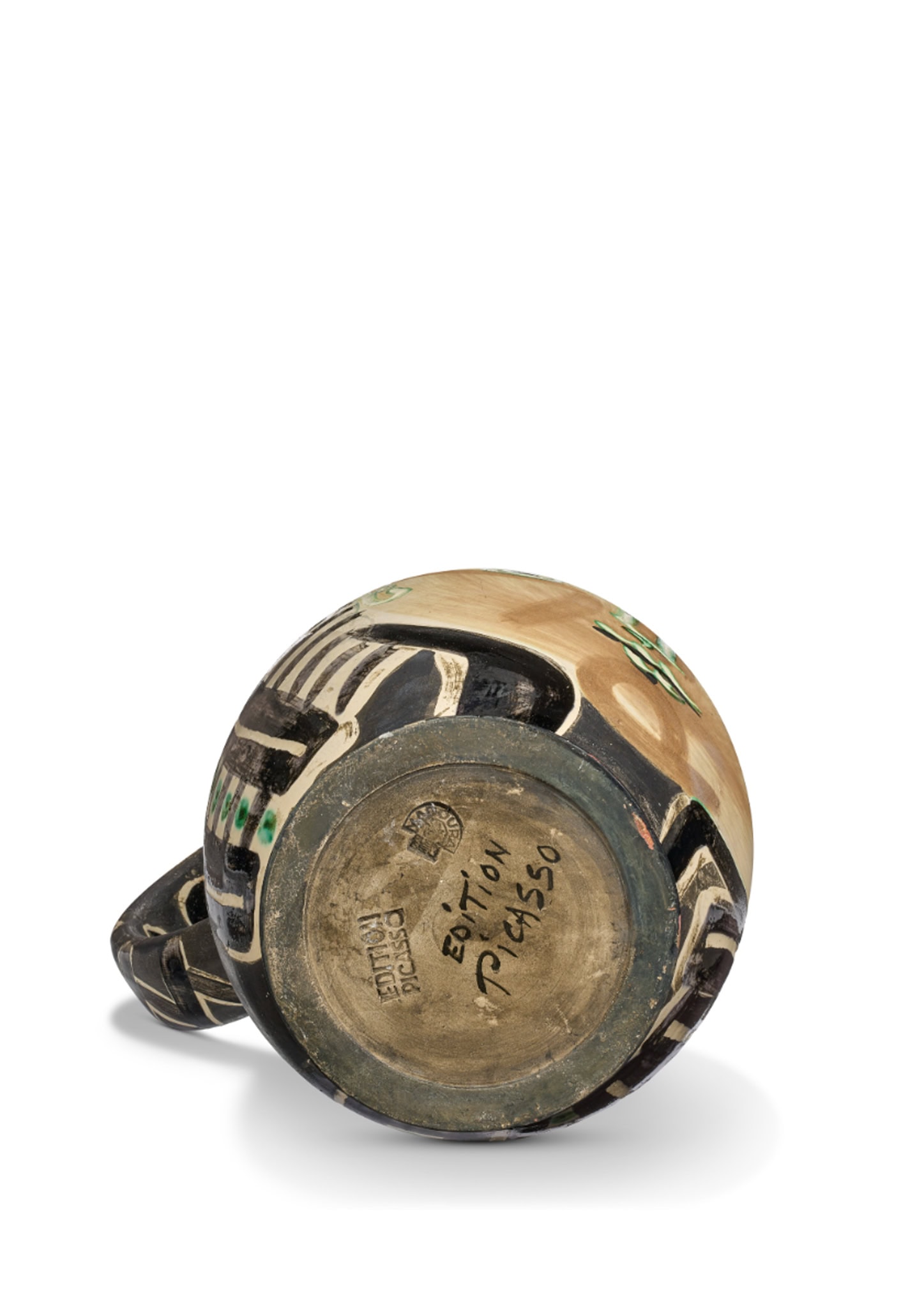
| Signature: | This work is stamped with the 'MADOURA PLEIN FEU' and 'EDITION PICASSO' pottery stamps on the reverse, along with the handwritten 'EDITION PICASSO' inscription in black. |
| ID # | w-7217 |
|
Price on Request
Questions? |
|
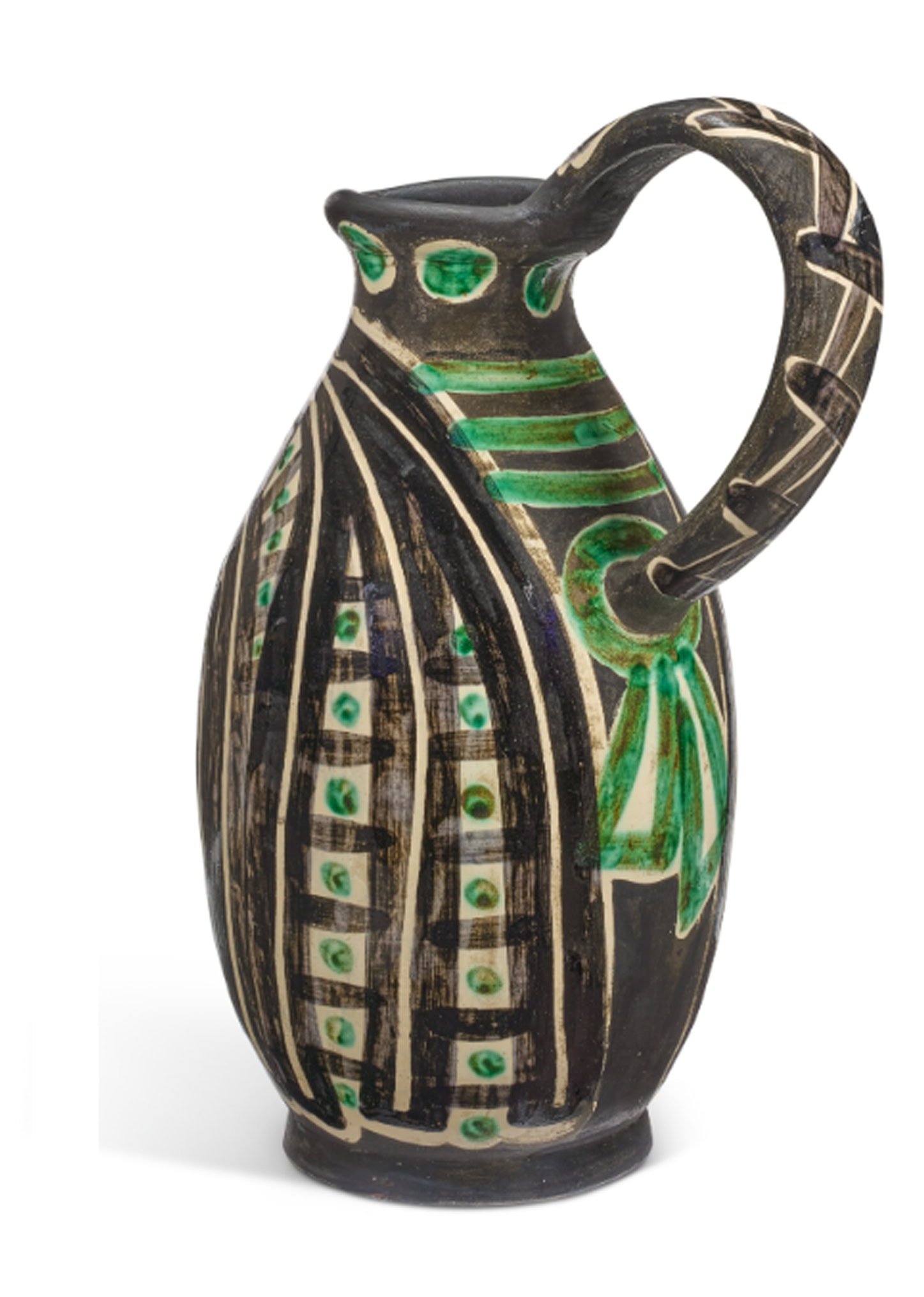
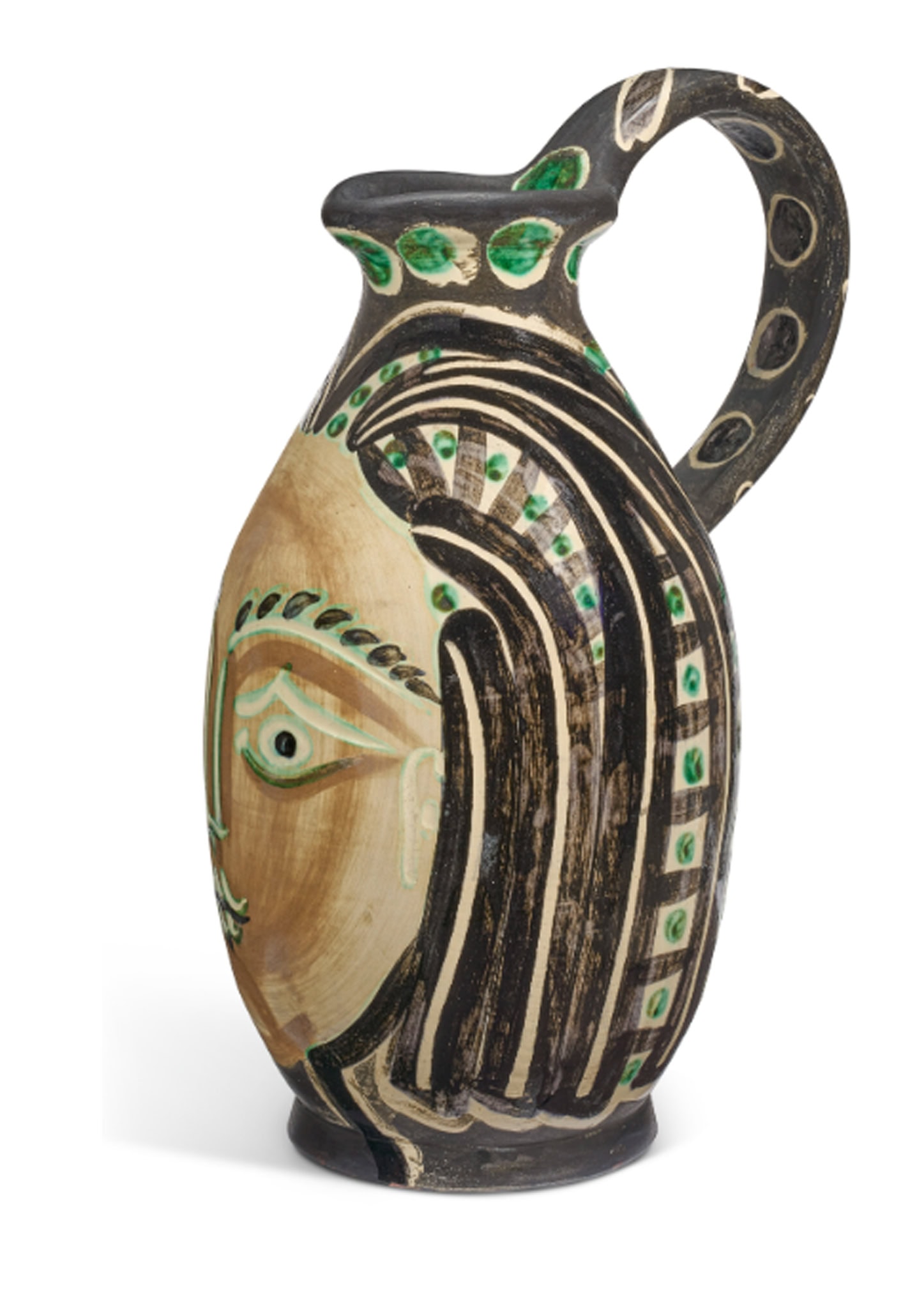
Pablo Picasso Femme de Barbu (Bearded Man's Wife), 1953, is an extraordinary and highly coveted ceramic masterpiece created during Picasso’s celebrated Vallauris period in collaboration with the renowned Madoura Pottery. Transforming a functional vessel into a sculptural portrait, Picasso masterfully integrates form, surface, and imagery so that the contours of the pitcher become the architecture of the face itself. With wide, luminous eyes, delicate linear ornamentation, and rhythmic black and emerald-green glazes set against warm earthen tones, the work exudes both elegance and vitality. The sweeping handle—decorated with bold circular motifs—serves almost as a sculptural extension of the figure’s hair or adornment, demonstrating Picasso’s playful yet deeply inventive approach to the ceramic medium. Created in 1953, during the height of Picasso’s experimentation in clay, the piece exemplifies the artist’s remarkable ability to merge painting, drawing, and sculpture into a single object of striking presence and character. Works from this period are among the most celebrated of Picasso’s ceramic output and have become increasingly sought after by collectors and institutions alike.
Picasso’s ceramics from Vallauris represent one of the most revolutionary chapters of modern art, redefining the boundaries between fine art and craft. Beginning in 1947, Picasso embraced the possibilities of clay with extraordinary freedom, producing over 3,500 ceramic works that transformed everyday forms into imaginative works of sculpture and design. Today these works are widely recognized as essential to the artist’s legacy and are prominently represented in the permanent collections of the world’s most prestigious institutions, including the Musée National Picasso-Paris, The Museum of Modern Art, The Metropolitan Museum of Art, the Art Institute of Chicago, and the Tate Modern. Within this remarkable body of work, sculptural vessels such as Femme du Barbu stand out for their rarity, visual impact, and museum-quality presence—making them among the most desirable and collectible examples of Picasso’s celebrated ceramic oeuvre.
In this charismatic ceramic, Picasso creates a strong profile of a woman. With green and white highlights to accentuate the facial features over the beige underneath, it's almost as if she is effervescent. Taken in contrast to her dark luscious hair that flows around the vase, everything Picasso does accentuates the pitcher's shape perfectly, right down to the neck which is hardly ever featured in his ceramic faces.
Created in 1953, this turned pitcher of white earthenware clay with decoration in engobes, knife engraved under partial brushed glaze (black, beige, green, grey patina) is from the edition of 500. Featured on the verso are the inscribed stamps 'MADOURA PLEIN FEU' and 'EDITION PICASSO', along with the handwritten 'EDITION PICASSO' inscription in black.
Catalogue Raisonné & COA:
This work is fully documented and referenced in the below catalogue raisonnés and texts (copies will be enclosed as added documentation with the invoices accompanying the final sale of the work):
1. Ramié, Alain. Picasso Catalogue of the edited ceramic works 1947-1971. Madoura: Galerie Madoura, 1988. Listed and illustrated as catalogue raisonné no. 193.
2. A Certificate of Authenticity will accompany this work.
