Details
| Artist: | Frank Stella (1936 - 2024) |
|---|---|
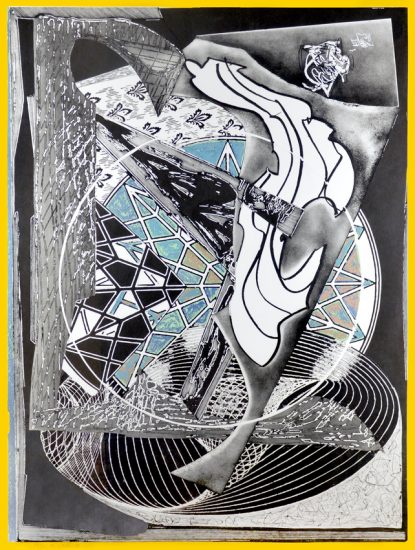
| Title: | Nowe Miastro (IV), from Paper Reliefs, 1975 |
| Reference: | Axsom 106.4 |
| Series: | Paper Reliefs Series, 1975 |
| Medium: | Cotton-pulp relief, collage, and hand coloring on paper. |
| Image Size: | 24 1/2 in x 21 in (62.23 cm x 53.34 cm) |
| Sheet Size: | 24 1/2 in x 21 in (62.23 cm x 53.34 cm) |
| Framed Size: | 31 in x 28 in (78.74 cm x 71.12 cm) |
| Edition: | Numbered on the reverse 'IV-4', (the edition was 26 each work is unique). |
| Signature: | This work is hand-signed by Frank Stella (1936 - 2024) in pencil. |
| Price: | Price on Request |
| Availability | This Frank Stella Relief is for sale |
| Item # | w-12627 |
Historical Description
Frank Stella’s Nowe Miastro (IV), from Paper Reliefs, 1975, is an extraordinary and visually sophisticated example of the artist’s revolutionary exploration of geometric abstraction, sculptural form, and the expressive possibilities of paper. Created during a particularly inventive period in Stella’s career, this remarkable composition transforms the traditionally flat surface of a print into a dimensional arrangement of raised elements, overlapping structures, and carefully orchestrated geometric relationships. Rather than treating paper simply as a support for an image, Stella makes the material itself an essential component of the artwork, challenging conventional distinctions between painting, printmaking, collage, and sculpture. The composition belongs to his celebrated Paper Reliefs series of 1975, an important body of work in which the artist investigated the relationship between abstract structure and physical depth with extraordinary technical inventiveness. Particularly compelling is the way the composition occupies actual space rather than merely suggesting the illusion of depth. The sculptural elements introduce an intricate interplay of projecting surfaces, recessed areas, and subtle shadows, allowing the artwork to respond to its surrounding environment in ways that a conventional two-dimensional print cannot. There is a remarkable balance between the intellectual discipline of Stella’s geometric vocabulary and the tactile, almost organic character of the handmade materials. The work possesses an architectural quality, with its constructed forms suggesting a carefully organized structure while retaining the spontaneity and individuality inherent in the artistic process. As light moves across the relief, its physical contours become increasingly apparent, introducing subtle changes in emphasis and giving the composition a continually evolving visual presence. Nowe Miastro (IV) exemplifies Stella’s determination to extend abstraction beyond the limitations of traditional painting, transforming geometric relationships into a sophisticated investigation of material, structure, and space. The result is unmistakably Frank Stella: intellectually ambitious, technically innovative, visually commanding, and filled with the extraordinary creative confidence that established him as one of the most influential artists of postwar American art.
The combination of cast paper relief, collage, and hand-coloring is particularly important to Nowe Miastro (IV). Executed with acrylic, casein, and watercolor on HMP papers, the work demonstrates Stella’s remarkable ability to expand the possibilities of original printmaking beyond conventional techniques of applying ink to a flat surface. By manipulating cotton pulp into raised and sculptural forms, Stella transforms the paper itself into an active artistic medium, creating a composition in which physical structure and visual design become inseparable. The collage elements introduce additional complexity, allowing separate components to interact within a carefully orchestrated arrangement, while the hand-coloring contributes an individual expressive character to the finished work. These techniques establish a fascinating relationship between the precision of Stella’s geometric structures and the inherent irregularities of handmade materials. The physical relief creates subtle variations of light and shadow, giving the work a sculptural presence that cannot be fully appreciated through photographic reproduction alone. Published by Tyler Graphics Ltd., Bedford Village, New York, with the publisher’s blindstamp, the work reflects the extraordinary technical experimentation that characterized Stella’s collaborations with innovative printmakers and papermakers during the 1970s. The Paper Reliefs series occupies a particularly fascinating position within the history of contemporary printmaking because it challenges the assumption that an original print must remain confined to a flat surface. Instead, Stella uses the physical substance of the paper to establish the composition itself, integrating relief, collage, and hand-applied color into a unified artistic statement. Particularly significant is the fact that each work in the edition is unique, emphasizing the individuality of the handmade process and the distinctive character of every completed impression. The resulting work combines the intellectual rigor of geometric abstraction with the tactile richness of handmade paper and the expressive individuality of hand-finished elements. Nowe Miastro (IV) stands as an exceptional example of Stella’s technical ambition and his remarkable ability to transform the materials and processes of printmaking into a distinctive artistic language.
Imagine living with Frank Stella’s Nowe Miastro (IV) every day. This is not simply an artwork to be admired on a wall, but an exceptional sculptural presence capable of transforming the atmosphere and architectural character of an entire room. Beautifully displayed in an elegant living room, contemporary study, sophisticated library, or distinguished private gallery, the work would introduce an unmistakable sense of refinement, artistic innovation, and intellectual depth. Its dimensional composition establishes a compelling dialogue with the surrounding architecture, while the interplay of raised forms, layered surfaces, and subtle shadows creates an experience that changes throughout the day. Natural light moving across the relief can reveal different aspects of its sculptural structure, emphasizing the contours of the handmade paper and the intricate relationships between its individual elements. From across the room, Nowe Miastro (IV) commands attention through the confidence and discipline of its geometric organization; as one approaches, the remarkable tactile qualities of the cotton-pulp relief, the complexity of the collage, and the individuality of the hand-coloring become increasingly apparent. There is something particularly rewarding about living with an artwork that combines the visual authority of modern abstraction with the intimate character of handmade materials. In a contemporary interior, Nowe Miastro (IV) would beautifully complement clean architectural lines, sculptural furnishings, natural stone, warm woods, and carefully selected design objects, introducing a sophisticated balance between geometric precision and material richness. In a more traditional setting, its distinctly modern character could establish a fascinating dialogue with classical furniture, richly textured fabrics, and timeless decorative elements. The work would be especially compelling in an interior where its sculptural qualities can be appreciated from different viewing angles, allowing the subtle variations of relief and shadow to become part of the experience of the room. Whether displayed above an elegant console, given a prominent position in a thoughtfully curated living space, or incorporated into an important collection of postwar American art, this original Stella relief would bring an enduring sense of artistic distinction to its surroundings. More than a decorative statement, Nowe Miastro (IV) offers the pleasure of living with a remarkable expression of Stella’s artistic imagination—a work whose material sophistication, intellectual ambition, and extraordinary originality can be appreciated for generations.
Frank Stella (American, 1936–2024) was one of the most influential and innovative artists of the postwar period, continually redefining the possibilities of abstraction through painting, printmaking, sculpture, and architectural form. Born in Malden, Massachusetts, Stella studied at Phillips Academy in Andover before attending Princeton University, where he developed an increasingly sophisticated interest in the history and structure of painting. Emerging in New York during the late 1950s, he became internationally recognized for his revolutionary Black Paintings, whose disciplined geometric compositions challenged the expressive gestures and emotional intensity associated with Abstract Expressionism. His famous assertion, “What you see is what you see,” reflected an artistic philosophy that emphasized the physical and structural qualities of an artwork rather than its symbolic or narrative content. During the 1960s, Stella expanded his investigations through shaped canvases, increasingly complex geometric configurations, and brilliant color, helping to establish him as a defining figure in the development of Minimalism and post-painterly abstraction. By the 1970s, however, his work had undergone a remarkable transformation. The restrained surfaces and rigorous geometry of his earlier paintings evolved into increasingly dimensional compositions incorporating relief, collage, unconventional materials, and more elaborate spatial relationships. Printmaking became an essential part of this artistic evolution, providing Stella with opportunities to collaborate with master printers and experiment with techniques that challenged the distinction between original prints and unique works of art. His Paper Reliefs series of 1975 represents a particularly important stage in this development, demonstrating his determination to transform the physical structure of paper into an active component of artistic expression. These investigations anticipated the increasingly elaborate relief paintings, sculptural constructions, and exuberant compositions that would define his mature career. Stella's achievements were recognized through major retrospectives at the Museum of Modern Art in New York, including his landmark 1970 exhibition, and at the Whitney Museum of American Art in 2015–2016. His work is represented in the collections of the Museum of Modern Art, the Metropolitan Museum of Art, the Whitney Museum of American Art, the Solomon R. Guggenheim Museum, and numerous other prestigious institutions internationally. Throughout a career spanning more than six decades, Stella remained committed to challenging established artistic conventions and expanding the possibilities of abstract form. Nowe Miastro (IV), 1975, reflects this extraordinary spirit of experimentation, offering a compelling example of the material inventiveness, structural intelligence, and artistic ambition that established Frank Stella as one of the most important American artists of his generation.
Frank Stella’s Nowe Miastro (IV), from Paper Reliefs, 1975, is a unique cast paper relief with collage and hand-coloring in acrylic, casein, and watercolor on HMP papers. Hand-signed by Frank Stella (Malden, 1936–New York, 2024) in pencil and dated on the verso, numbered on the reverse 'IV-4', (the edition was 26 each work is unique). Published by Tyler Graphics Ltd., Bedford Village, New York, with the publisher’s blindstamp.
Catalogue Raisonné & COA:
Frank Stella, Nowe Miastro (IV), from Paper Reliefs, 1975, is fully documented and referenced in the below catalogue raisonné and accompanying documentation. Copies of the applicable catalogue raisonné references will be enclosed as additional documentation with the invoice accompanying the final sale of the work (when available).
1. Axsom, Richard H. The Prints of Frank Stella: A Catalogue Raisonné. New York: Jordan Schnitzer Family Foundation, 2016. Listed and illustrated as catalogue raisonné no. 106.4.
2. A Certificate of Authenticity will accompany Frank Stella, Nowe Miastro (IV), from Paper Reliefs, 1975.
About the Framing:
Frank Stella’s Nowe Miastro (IV), from Paper Reliefs, 1975, is presented in museum-grade conservation framing with complementary molding and optical-grade Plexiglas. The carefully considered presentation is particularly important for a work of this unusual material character, allowing the sculptural qualities of the cast paper relief and collage to remain central to the viewing experience. Unlike a conventional flat print, the raised elements of the composition create subtle variations in depth, texture, and shadow that contribute significantly to its artistic identity. The restrained framing provides an elegant architectural boundary around the artwork without competing with the sophistication of Stella’s geometric language or the tactile richness of the handmade paper. The conservation presentation respects the delicate qualities of the relief, allowing the individual elements to be appreciated as part of a unified and remarkably inventive composition. The complementary molding creates a refined transition between the artwork and its surrounding environment, while the optical-grade Plexiglas provides a polished and sophisticated finished appearance. Whether displayed in a contemporary residence, an elegant traditional interior, or a distinguished private collection, the framing enhances the work’s sculptural presence and emphasizes its importance as an exceptional example of Stella’s experimental printmaking. The finished presentation gives Nowe Miastro (IV) the distinguished character appropriate for an original work by one of the most influential American artists of the twentieth century.
Some of Frank’s most prestigious museum exhibitions worldwide, reflect his significant impact on contemporary art. Here are some notable exhibitions:
1. Museum of Modern Art (MoMA), New York: MoMA has hosted several exhibitions featuring Stella's work, including his major retrospective in 1970, which showcased his early explorations in Minimalism and Abstract Expressionism.
2. Whitney Museum of American Art, New York: In 2015-2016, the Whitney Museum organized a comprehensive retrospective titled 'Frank Stella: A Retrospective," highlighting his prolific career from the late 1950s to the present. This exhibition underscored Stella's versatility and innovation across different media.
3. Solomon R. Guggenheim Museum, New York: Stella's work has been prominently displayed at the Guggenheim, including in the 1995 exhibition "Frank Stella: A Retrospective," which provided an extensive overview of his career, from his early paintings to his more recent three-dimensional works.
4. San Francisco Museum of Modern Art (SFMOMA): In 2002, SFMOMA hosted "Frank Stella: Painting into Architecture," which examined Stella's transition from two-dimensional paintings to three-dimensional architectural forms.
5. Centre Pompidou, Paris: In 1988, the Centre Pompidou presented a major exhibition of Stella's work, emphasizing his influence on both American and European art scenes.
6. Hirshhorn Museum and Sculpture Garden, Washington, D.C.: Stella's work has been featured in multiple exhibitions at the Hirschhorn, including a 1976 retrospective that showcased his evolving style and technique.
These exhibitions have cemented Frank Stella's reputation as a pioneering artist who continues to influence contemporary art with his innovative approach and creative vision.
About the Series: Paper Reliefs Series, 1975
Frank Stella's Paper Reliefs, 1975 is a series of six cotton-pulp reliefs, each of which are from editions of varying sizes. Each of the works are reconfigurations of Stella's painting series, the Polish Village series of 1971-73. The respective titles of each work are derived from the names of cities, settlements, districts, or shtetls in Poland and the Soviet Union. Browse Frank Stella, Paper Reliefs Series, 1975.
Frank Stella (1936 - 2024)
Explore original Frank Stella prints and artwork for sale, including signed and editioned screenprints, lithographs, etchings, woodcuts, reliefs and mixed-media works. Masterworks Fine Art specializes in important Frank Stella series such as Imaginary Places, Circuits, The Waves, Moby Dick, Italian Folktales and Had Gadya, with detailed edition information, provenance and catalogue raisonné references provided for collectors.
Availability
This Frank Stella Relief is for sale. Upon purchase, we ship as soon as overnight or your preferred shipping method. Learn more about shipping.
Selling
If you are looking for where to sell Frank Stella Paper Reliefs Series, 1975 original works, we are interested in buying from collections of private sellers. As seasoned fine art dealers of 30+ years, we will research the current value and guide you in our simple online selling process.
-
Step 1:
Send Photos -
Step 2:
Receive Offer -
Step 3:
Get Paid
Frank StellaNowe Miastro (IV), from Paper Reliefs, 1975 |
|
| Cotton-pulp relief, collage, and hand coloring on paper. | |
| on the reverse 'IV-4', (the edition was 26 each work is unique). | |
| hand-signed by Frank Stella (1936 - 2024) in pencil. | |
|
Price on Request
|
|
|
|
|