BETA USA Flag, English translation English - Spain Flag, traducción al español Español - France Flag, Traduction en français Français
Signed original prints, drawings, paintings, and sculptures for sale


Search artists…

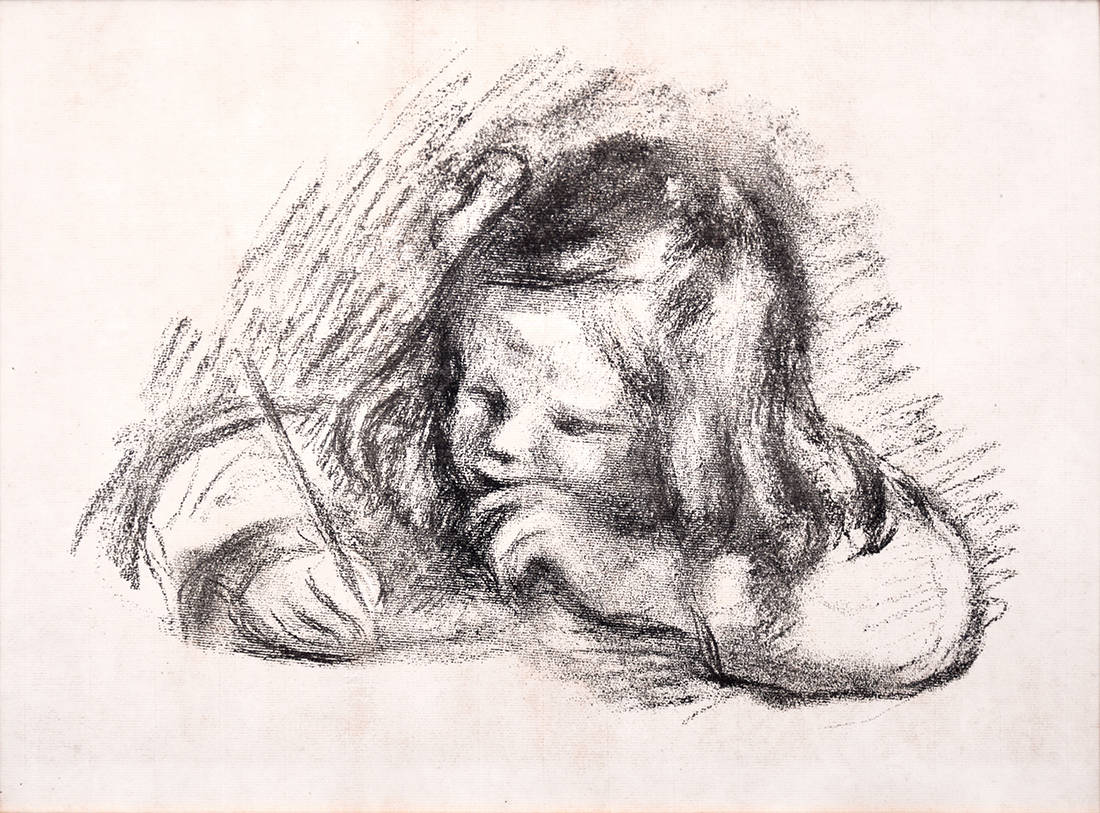
Pierre-Auguste Renoir, Le petit garcon au porte-plume (Little Boy with Quill Pen), c.1900


Pierre-Auguste Renoir, Lithograph, Le petit garcon au porte-plume (Little Boy with Quill Pen), c.1900

Renoir, Lithograph, Le petit garcon au porte-plume (Little Boy with Quill Pen), c.1900

Place your cursor over the thumbnails below to view the full-size image:

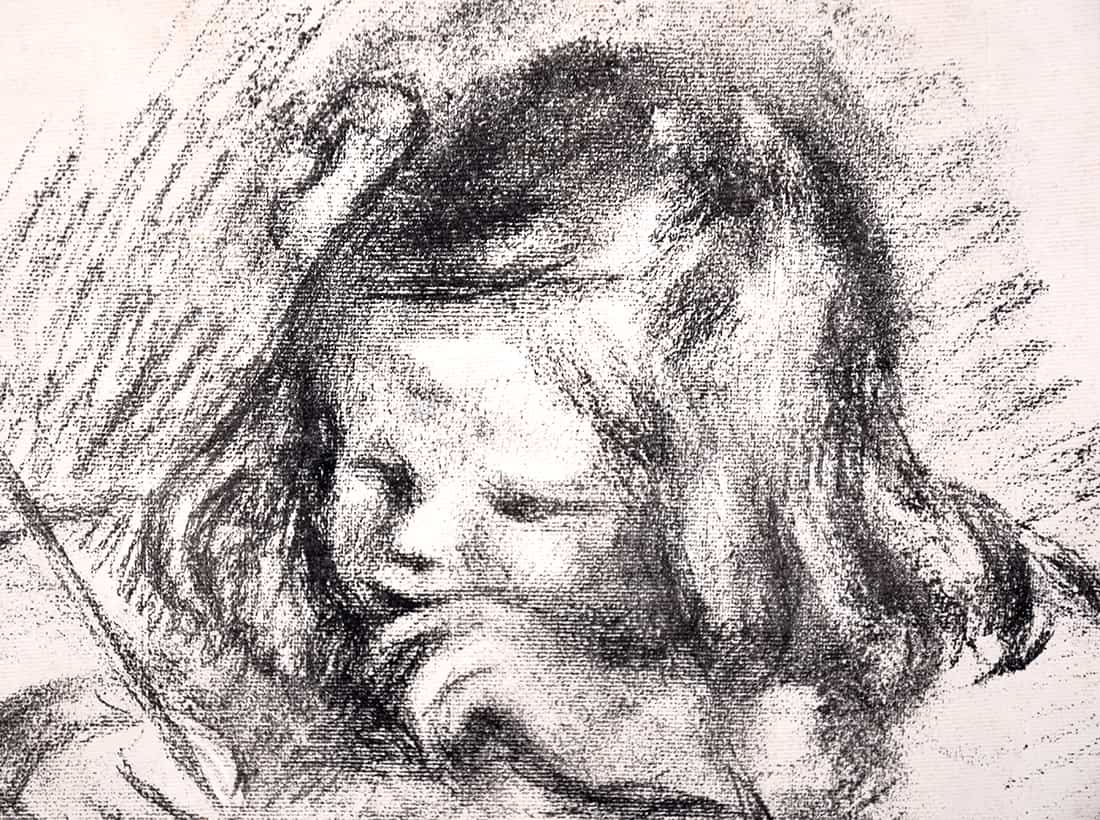
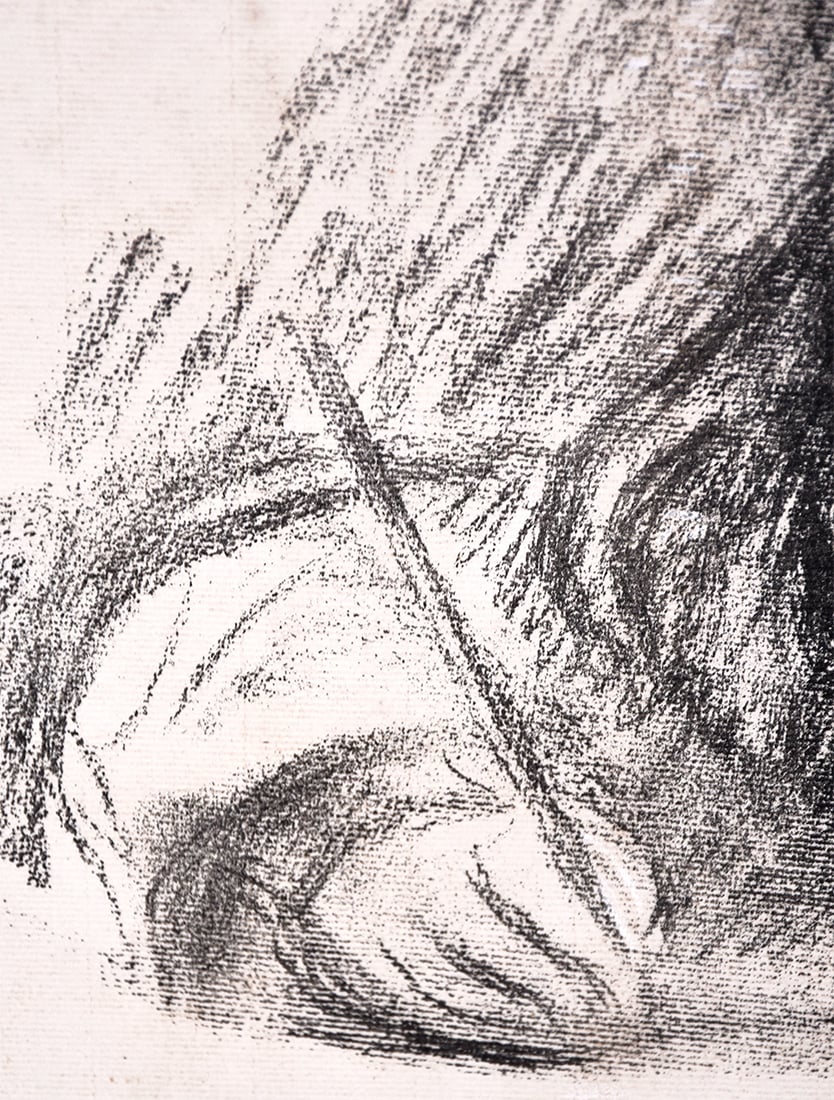
Renoir, Lithograph, Le petit garcon au porte-plume (Little Boy with Quill Pen), c.1900 (thumbnail 1) Renoir, Lithograph, Le petit garcon au porte-plume (Little Boy with Quill Pen), c.1900 (thumbnail 2)

Click on each room to see how the piece would potentially look on display:

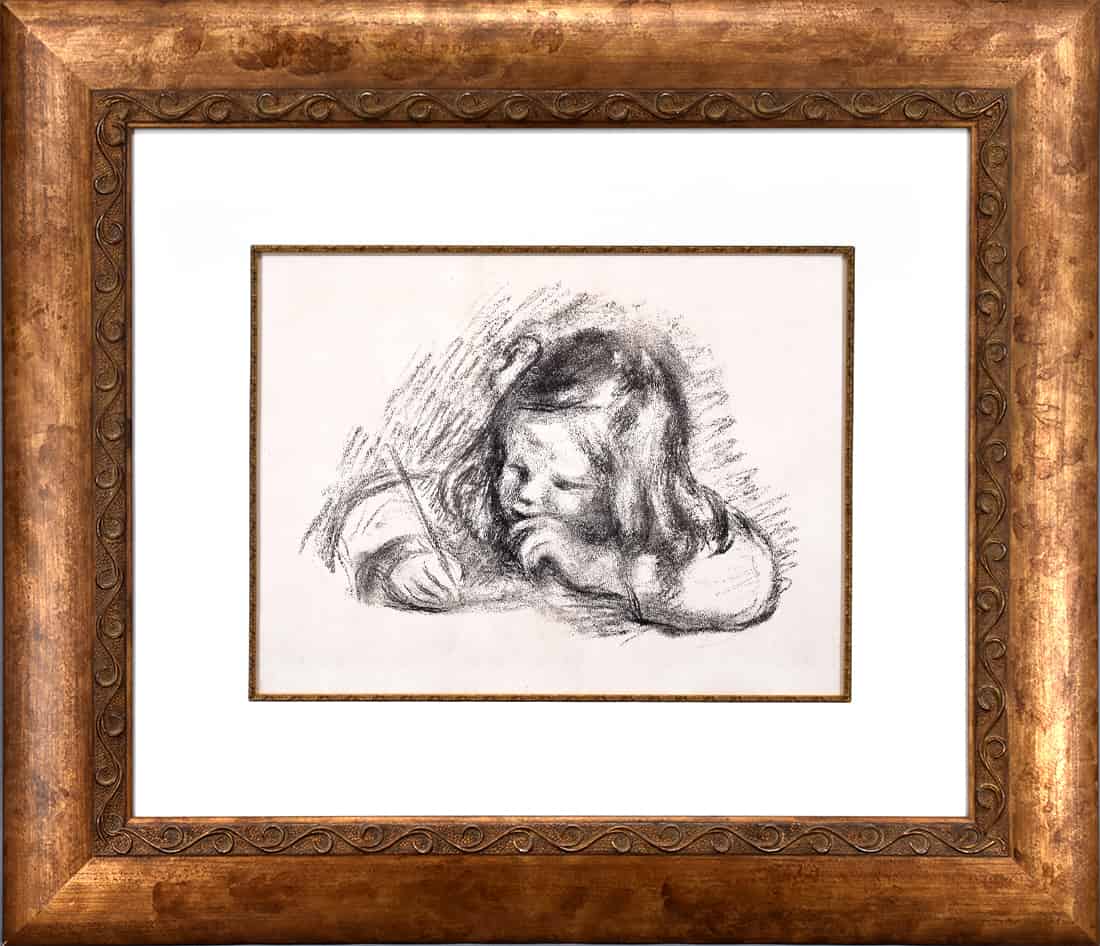
Renoir, Lithograph, Le petit garcon au porte-plume (Little Boy with Quill Pen), c.1900 (thumbnail room-view)
Artist: Renoir, Pierre-Auguste (1841 - 1919)
Title: Le petit garcon au porte-plume (Little Boy with Quill Pen), c.1900
Reference: Stella 55, Delteil 55
Medium:
Original lithograph on MBM Cerange watermarked paper
Image Size: 15 5/8 in x 11 3/4 in (39.8 cm x 29.8 cm)
Sheet Size: 22 3/4 in x 18 in (57.8 cm x 45.7 cm)
Framed Size: 39 1/2 in x 35 3/4 in (100.3 cm x 90.8 cm)
Edition: From an only state out of an edition of 50 unsigned proofs
Condition: This work is in excellent condition, a fine impression with dark contrasts and full margins; lightly mounted on back sheet
Price 

Item# 2358
$24,000 Submit Best Offer

We'd love to hear from you at (510) 777-9970 / 1-800-805-7060. In fact, we're waiting for you to call!
 
Historical Description:

Created in c. 1900 this original lithograph is from an only state out of an edition of 50 unsigned proofs. There is an MBM Cerange watermark visible within the sheet.

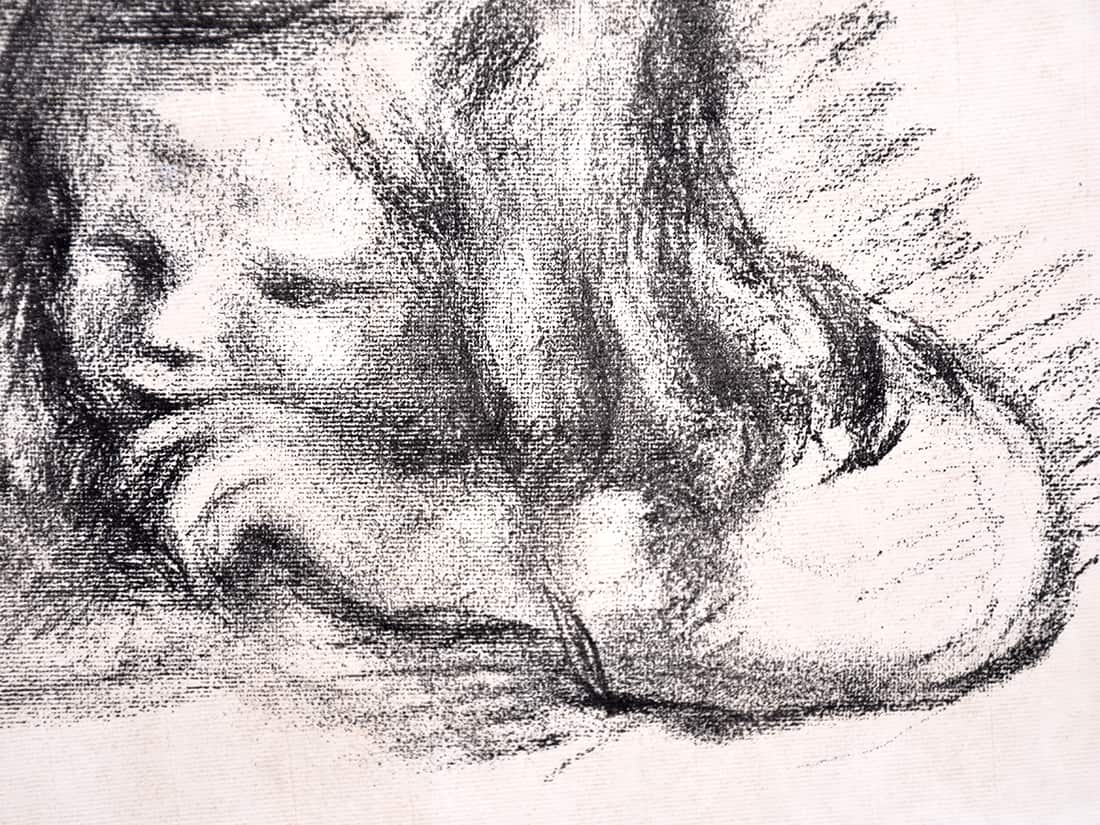
 This very charming and intriguing portrait study of Pierre-Auguste Renoir’s young son,Claude, is shown here, deep in childish though as he writes (or draws) with his quill pen. He is incredibly expressive, wearing a contemplative yet happy smile, slightly biting his index finger as if to be in deep concentration. Renoir has skillfully used background shading in order to centralize the focus and impact of his son within the composition. We can imagine the plane of the table depicted by the manner in which Claude’s elbows rest on the surface. 
 
ABOUT THE FRAMING:
Conservation framed with museum quality archival materials, this work is float mounted on archival white linen in an ornate gold leaf Baroque inspired frame. The sculptural layers of floral motifs add a sense of grandeur and highlight the importance of this piece. The gold tone of the moulding accentuates and enhances the subtle and contrasting tones in this work. Completed with white, linen-wrapped mats and a matching gold inner fillet, this work is set behind an archival Plexiglas® cover.

Style: Impressionist
 

About Us: Masterworks Fine Art strives to be the best source of fine art for our clients and collectors all over the world. We believe the most direct way to accomplish this is by establishing a lifetime of personal and professional relationships with our clients. More About Us »

  • Renoir, Le chapeau épinglé (The Hat Secured with a Pin), c. 1898
  • Renoir, Trois jeunes filles dans un paysage (Three young girls in a landscape) or Trois personages assis, de dos, dans un paysage valloné, et croquis sur la droite (Three people seated on a hilly landscape and sketches on the right)
  • Renoir, Baigneuse s’essuyant (Bathers Drying Themselves)
  • Renoir, Maternité, Grande Planche c. 1912
  • Renoir, Une mère et deux enfants, c. 1912
  • Renoir, Le petit garcon au porte-plume (Little Boy with Quill Pen), c.1900
  • Renoir, Les Baigneuses (Women Bathers), c. 1912
  • Renoir, Baigneuse assise (Woman Bathing, Seated), c. 1897
  • Renoir, La Pierre au Trois Croquis (The Stone with Three Sketches), 1904
  • Renoir, Etude de femme nue, assise, variante (Study of Seated Female Nude), c. 1904
  • Renoir, Claude Renoir, La Tête Baissée (Claude Renoir, Head Lowered), 1904
  • Renoir, Etude de femme nue, assise (Study of Seated Female Nude), c. 1904
  • Renoir, Louis Valtat, c. 1904
  • Renoir, Le Fleuve Scamandre, 1re Planche (The Scamandre River, 1st Version)
  • Renoir, Jeune fille en buste et etudes de têtes (ou Gabrielle) [Three Sketches of Faces, Gabrielle]
  • Renoir, Ambroise Vollard, c. 1904
  • Renoir, Claude Renoir, Tourné à Gauche (Claude Renoir, Turning to the Left), c. 1904
  • Renoir, Femme Nue Assise, c. 1906
  • Renoir, Claude Renoir, de Trois-Quarts à Droite (Claude Renoir, Three-Quarters to the Right), 1908
  • Renoir, Femme Nue Couchée (Tournée à Droite), 1906
  • Renoir, Richard Wagner
  • Renoir, Claude Renoir, fils de l'artiste, de profil (Claude Renoir, The Artist's Son, In Profile), 1908
  • Renoir, Le chapeau épinglé (The Hat Secured with a Pin), c. 1894

Do you own a similar Renoir to sell? We offer free evaluations.

Biography of Pierre-Auguste Renoir

Pierre-Auguste RenoirPierre-Auguste Renoir (1841 - 1919)

French painter born in Limoges, died in Cagnes.  He was the son of a tailor.  In 1845 his family moved to Paris.  Between 1856 and 1859 he took an apprenticeship and then worked as a porcelain painter, also taking evening classes in drawing. Renoir then studied at the Ecole des Beaux-Arts, Paris. He was a fellow student of Monet, Sisley and Bazille; he went on summer painting trips with them to Chailly and Fountainbleau.  He studied the eighteenth century paintings in the Louvre and also met Corot, Millet and Diaz.   In 1864 his work was first accepted at the Salon. During the 1870s he painted with Monet at Argenteuil and elsewhere, and came to know Cezanne, Degas, and Pissarro. In 1874 his work was included in the first Impressionist exhibition (and in three of the subsequent seven.)  He had little public success but was patronized by Caillebotte, Chocquet and others.  From the late 1870s on he enjoyed increased success at the Salons, especially with portraiture. Eventually, he became dissatisfied with Impressionism and felt renewed admiration for Ingres, Raphael and eighteenth-century art.  During the 1880s he worked increasingly in the south of France.  Renoir's early work as a porcelain painter reflects two constant characteristics of his art: an enormous natural facility and a dedication to eighteenth century standards of decoration and craftsmanship.  Apart from the personality of his brushwork, the main distinction of his 1870s Impressionism was his preoccupation with the figure as subject matter and particularly with the gay vitality of Parisian life.  Less rigorously introspective than Monet, he made his reputation at the Salons from the late 1970s with a series of fashionable portraits.  Here his dexterity was combined with anecdotal charm.   many of the sculptures he made at the end of his life are direct transpositions of painted motifs.  These were largely made by an assistant (a pupil of Maillol), Renoir's own hands being almost crippled with arthritis. ¹

¹ Phaidon Dictionary of Twentieth Century Art.

RELATED IMPRESSIONISTS:
Cassatt | Cezanne | Corot | Degas | Manet | Renoir | Signac | Toulouse-Lautrec | Whistler