Picasso and the Madoura Pottery: Ceramics, History and Editions Biography

Madoura Pottery in Vallauris, France, played a defining role in Pablo Picasso’s ceramic work. After discovering the workshop in 1946, Picasso began collaborating closely with its founders, Suzanne and Georges Ramié, experimenting with clay, glazes, engobes and traditional ceramic techniques. Madoura became the center of Picasso’s ceramic production, where he created unique works and original models for his celebrated ceramic editions. Today, Picasso Madoura ceramics are among the most recognizable and collectible works from this important period of his career.

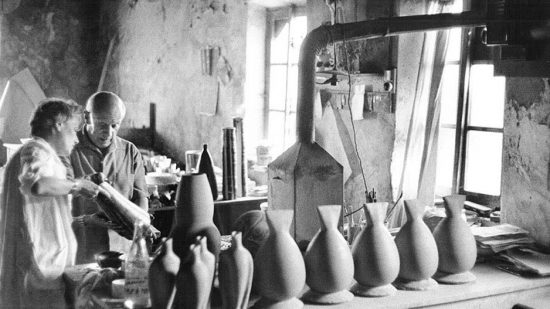
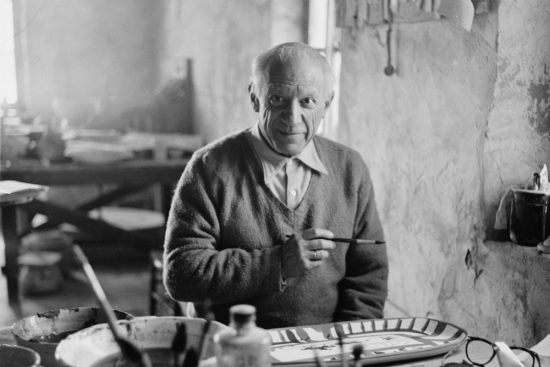
Pablo Picasso at the Madoura Pottery Studio inspecting a ceramic artwork.

What is Madoura Pottery?

The Madoura Pottery was an influential ceramic workshop in Vallauris, France, founded in 1938 by Suzanne and Georges Ramié. Located on the French Riviera, Vallauris had a centuries-old tradition of pottery production and was known for its skilled ceramic craftsmen and locally produced earthenware.

Suzanne Ramié was a ceramic artist and designer, while Georges Ramié helped manage and develop the workshop. Together, they transformed Madoura into a center where traditional ceramic craftsmanship could intersect with modern art and experimentation.

Madoura became particularly important because it encouraged collaboration between artists and skilled ceramic artisans. Rather than functioning solely as a commercial pottery, the workshop offered an environment where established ceramic traditions could be adapted to new artistic ideas.

How Did Picasso Discover Madoura Pottery?

Pablo Picasso first encountered the Madoura Pottery in Vallauris in 1946, while visiting the annual pottery exhibition in the historic ceramic town on the French Riviera. There he met Suzanne and Georges Ramié, who invited him to experiment with clay at their workshop.

Picasso initially created only a small number of ceramic pieces, but the possibilities of the medium fascinated him. He returned to Madoura the following year and began working extensively with its artisans, exploring traditional pottery forms alongside painting, carving, modeling, glazing and firing techniques.

What began as an experiment soon developed into a major part of Picasso's artistic practice. His collaboration with the Ramiés would continue for decades and transform both his own work and the international reputation of Madoura.

Learn how Picasso created his ceramics at Madoura →

Who Were Suzanne and Georges Ramié?

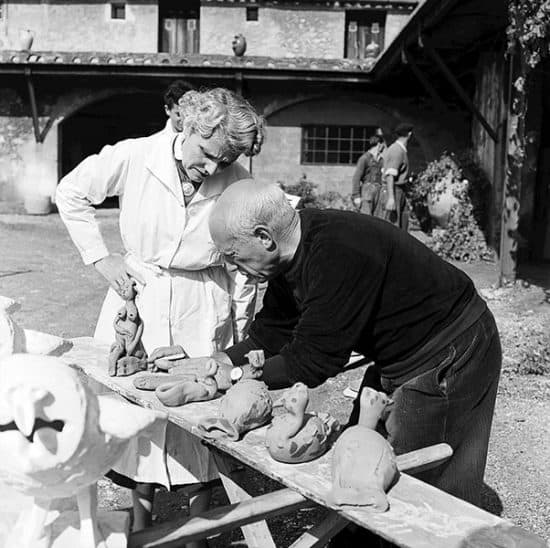
Photograph of Pablo Picasso and Suzanne Ramié, 1957 © DD Duncan

Suzanne Ramié

Suzanne Ramié (1905–1974) was a French ceramic artist and the creative force behind the Madoura Pottery in Vallauris. She founded the workshop with her husband, Georges Ramié, in 1938 and developed a distinctive approach that combined the traditional pottery techniques of Vallauris with modern forms and decoration.

Georges Ramié

Georges Ramié (1901–1976) helped manage Madoura and played an important role in developing the workshop and its relationships with artists. Together, Georges and Suzanne created an environment where traditional ceramic craftsmanship could support ambitious artistic experimentation.

The Ramiés' Collaboration with Picasso

Picasso met Suzanne and Georges Ramié in Vallauris in 1946 and soon began working extensively at Madoura. Their collaboration gave Picasso the freedom to pursue ambitious experimentation in ceramics while drawing upon the workshop’s established expertise.

The collaboration ultimately enabled Picasso to create both unique ceramics and authorized editions, establishing Madoura as inseparable from the history of Picasso’s ceramic work.

Why Madoura Was Essential to Picasso's Ceramics

Madoura gave Picasso the technical expertise and infrastructure needed to turn his ideas into finished ceramics. The workshop provided skilled potters and ceramic technicians, along with clay, molds, glazes, kilns and specialized knowledge of ceramic production.

The distinction is important: Picasso provided the artistic conception and experimentation, while Madoura provided the technical ceramic expertise and production capabilities.

This collaboration allowed Picasso to reshape, carve, incise, paint and reinvent traditional pottery while relying on Madoura’s artisans for specialized production and firing processes.

How Picasso Transformed Traditional Pottery at Madoura

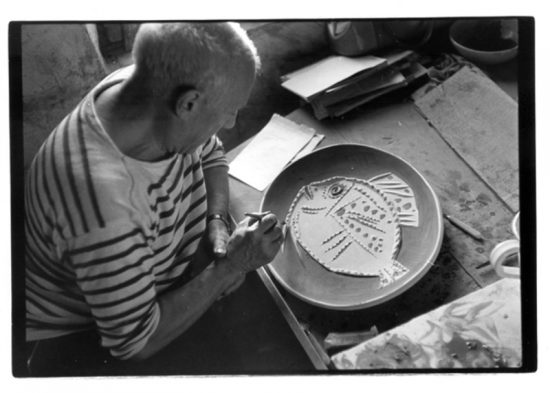
Pablo Picasso photographed painting "Fish Dish" in his studio.

At Madoura, Picasso rarely treated pottery as simply a functional object. He saw the shapes of plates, pitchers and vases as starting points for new images, transforming traditional ceramic forms through painting, carving, modeling and imagination.

Plates Became Faces

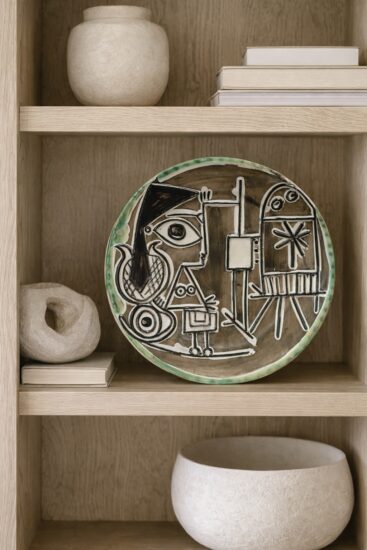
Picasso frequently used the circular form of a plate as the foundation for a face. Eyes, noses, mouths and expressive features were painted, incised or modeled directly onto the ceramic surface.

Pitchers Became Figures and Animals

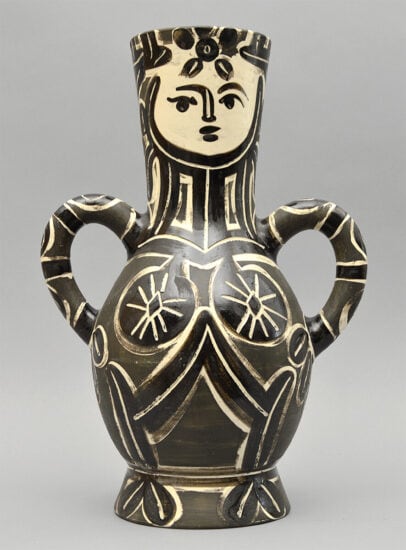
Handles, spouts and curved bodies inspired Picasso to transform pitchers into human figures, birds, owls and other animals. Existing functional elements often became part of the subject itself.

Vases Became Sculptures

Picasso pushed traditional vessels toward sculpture by reshaping forms and adding modeled elements. The curves and volume of a vase could become the body of a figure or animal, blurring the distinction between pottery and sculpture.

Clay Became a Surface for Drawing and Painting

Picasso also treated clay as another surface for his extraordinary draftsmanship. Using incised lines, engobes, oxides and glazes, he explored recurring subjects including faces, animals, mythology, bullfighting and still lifes.

Together, these transformations demonstrate how Picasso turned the traditions of Vallauris pottery into a distinctly modern artistic language.

Unique Picasso Ceramics vs. Madoura Editions

Picasso's ceramic oeuvre includes both unique works and authorized Madoura editions, and understanding the distinction is important for collectors.

Unique Picasso Ceramics

Unique ceramics are one-of-a-kind works created or directly transformed by Picasso through techniques such as modeling, carving, incising and painting. These works exist as individual creations rather than as part of a numbered edition.

Madoura Editions

For editioned ceramics, Picasso created and approved the original design or model, while Madoura's skilled artisans helped produce the authorized edition using molds, impressions, decoration, glazing and other ceramic techniques. These works are recognized and documented as part of Picasso's ceramic oeuvre.

For collectors, understanding whether a Picasso ceramic is a unique work or part of an authorized edition is essential because production method, rarity, markings and market value can differ considerably.

Read the Complete Beginner's Guide to Buying Picasso Ceramics →

What Do Madoura Stamps Mean on Picasso Ceramics?

Many Picasso ceramics produced at Madoura carry stamps, inscriptions or edition markings on the underside that provide important clues about their production and origin.

Madoura Plein Feu

MADOURA PLEIN FEU identifies an association with the Madoura Pottery in Vallauris, where Picasso created and produced much of his ceramic work.

Edition Picasso

Edition Picasso markings are associated with authorized Picasso ceramic editions produced at Madoura from designs or models approved by the artist.

Empreinte Originale de Picasso

Empreinte Originale de Picasso refers to a specific production method connected to an original ceramic model or impression by Picasso and its authorized edition.

These markings can be important for identification, but no single Madoura stamp proves authenticity by itself. Specialists also consider the ceramic's form, clay, glaze, dimensions, edition information, provenance and catalogue raisonné reference.

Complete Guide to Picasso Ceramic Marks, Stamps & Signatures →

How Are Madoura Picasso Ceramics Documented?

Picasso's authorized Madoura ceramic editions are documented in the Alain Ramié catalogue raisonné, Picasso: Catalogue of the Edited Ceramic Works, one of the essential scholarly references for identifying and researching Picasso ceramics.

What Is an A.R. Number?

Collectors will often see Picasso ceramics identified by references such as A.R. 125 or A.R. 254. “A.R.” refers to Alain Ramié, and the number identifies the ceramic's corresponding entry in the catalogue raisonné.

These references help specialists compare important details including the title, date, dimensions, edition size, ceramic technique and documented markings associated with a particular work.

For collectors, an A.R. reference is an important part of researching a Picasso ceramic, but it should be considered together with the physical work, its condition, markings, provenance and other documentation.

Why Madoura Picasso Ceramics Matter to Collectors

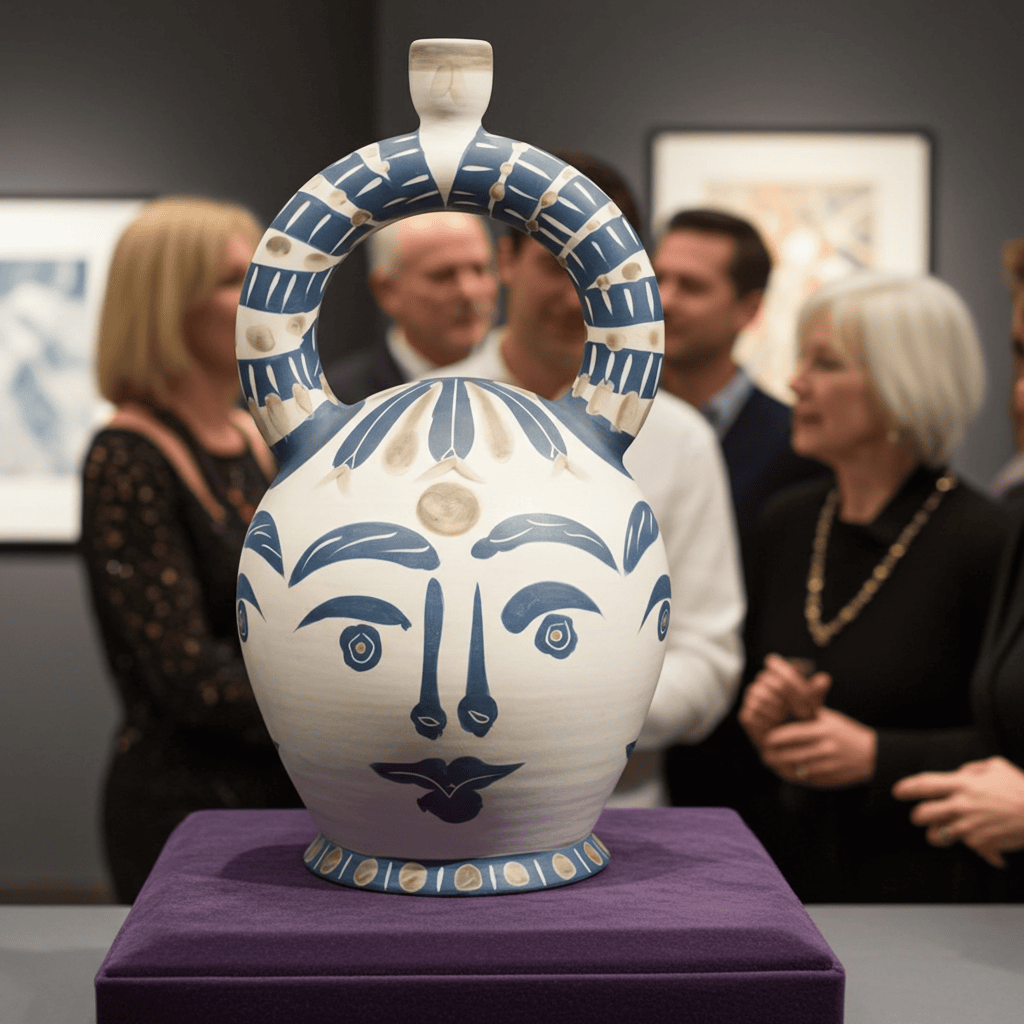
Picasso's Madoura ceramics are highly collectible because they combine painting, drawing and sculpture with traditional ceramic craftsmanship. His recognizable subjects—including owls, faces, bulls, fish, flowers, goats, fauns, women and mythology—appear across unique works and authorized editions in a wide variety of forms and sizes.

Differences in subject, form, technique, rarity and edition size contribute to varying levels of collector demand. Many editioned ceramics are also documented in the Alain Ramié catalogue raisonné, providing an important scholarly reference for researching individual works.

What Is the Value of a Picasso Ceramic? →

Collecting Picasso Madoura Ceramics

For collectors, Picasso's Madoura ceramics offer an opportunity to acquire an original work by one of the most important artists of the twentieth century in a medium that combines painting, drawing and sculpture.

When evaluating a Picasso ceramic, collectors should consider the specific model, Ramié catalogue reference, edition size, markings, condition, provenance, subject matter and overall rarity.

Masterworks Fine Art specializes in original Pablo Picasso ceramics and has worked with collectors buying and selling Picasso works for more than 30 years. Our available ceramics are carefully researched and documented, with particular attention to authenticity, catalogue raisonné references, provenance and condition.

Explore Pablo Picasso Ceramics for Sale →

Do You Own a Picasso Madoura Ceramic?

If you own a Picasso ceramic and are researching its Madoura marks, Ramié catalogue reference, authenticity or current market value, Masterworks Fine Art can assist with identifying and evaluating the work.

Request a confidential Picasso ceramic evaluation →

Frequently Asked Questions About Madoura Picasso Ceramics

What Is Madoura Pottery?

Madoura was a ceramic workshop founded by Suzanne and Georges Ramié in Vallauris, France, in 1938. It became the center of Picasso's ceramic production and experimentation.

Did Picasso Personally Make His Madoura Ceramics?

Picasso directly created and transformed many ceramics through modeling, carving, incising and painting. For authorized editions, Madoura artisans assisted with technical production based on designs and models created and approved by Picasso.

Are Madoura Picasso Ceramics Original?

Yes. Authentic Madoura ceramics created or authorized by Picasso form part of his recognized ceramic oeuvre, including both unique works and authorized editions.

What Does Madoura Plein Feu Mean?

MADOURA PLEIN FEU is a workshop marking found on many ceramics associated with Madoura. The stamp alone, however, does not establish that a ceramic is an authentic work by Picasso.

What Is an A.R. Number on a Picasso Ceramic?

An A.R. number refers to the ceramic's entry in the Alain Ramié catalogue raisonné of Picasso's editioned ceramics and is an important reference used by collectors and specialists.

How Can You Authenticate a Madoura Picasso Ceramic?

Authentication requires evaluating the ceramic's form, dimensions, technique, markings, edition information, provenance and catalogue raisonné reference. No single stamp or signature should be relied upon by itself.

Continue Your Picasso Ceramics Research

Picasso Ceramics for Sale

Browse original Pablo Picasso ceramics currently available from Masterworks Fine Art.

Beginner's Guide to Buying Picasso Ceramics

Learn how collectors evaluate editions, authenticity, condition, documentation and rarity.

How Picasso Made His Ceramics

Discover Picasso's ceramic techniques and production process at Madoura.

Picasso Ceramics: Unique Works vs. Editions — A Collector’s Guide

Explore Picasso Ceramics: Unique Works vs. Editions

Picasso Ceramic Marks, Stamps & Signatures

Understand Madoura Plein Feu, Edition Picasso, Empreinte Originale and other identifying marks.

Picasso Ceramics Value Guide

Learn which factors influence the value and collectability of Picasso ceramics.

This Picasso and the Madoura Pottery: Ceramics, History and Editions biography was written in part by Masterworks Fine Art.

Your Shopping Cart
...