

Jim Dine Use of Hearts
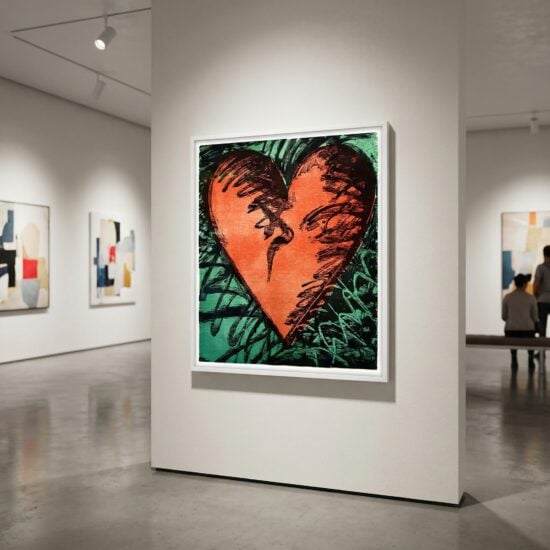
For over six decades, Jim Dine has returned to the heart as his defining motif of a timeless symbol through which he explores love and the creative spirit.
Emerging in the 1960s alongside Pop Art, Dine’s hearts distinguished him from his contemporaries: while others borrowed from commercial culture, he turned inward, transforming a familiar symbol into a deeply personal expression.
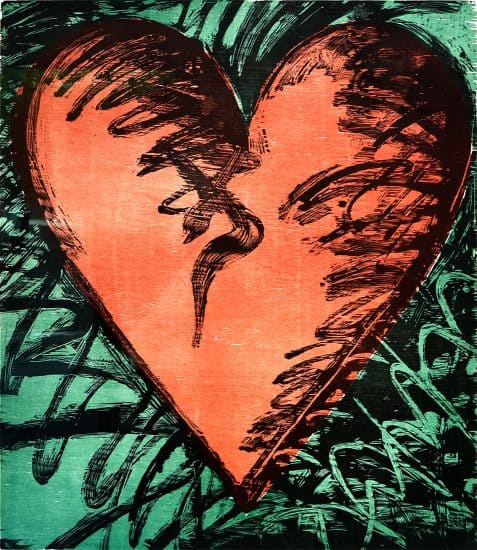
The heart first appeared in his work around 1965, inspired by its universal meaning and emotional directness. Each heart is unique: some pulse with vibrant color and energy, while others are subdued, textured, or introspective, mirroring the artist’s shifting inner world.
This recurring form also became Dine’s laboratory for painterly experimentation, allowing him to blend abstraction, gesture, and symbolism. The heart unites his early conceptual work with his later expressive canvases, marking it as the emotional core of his career.
Notable examples include Four Hearts (1969, MoMA, New York), The New Building of the Heart (1984, Tate Modern, London), and Heart #2 (1981, Art Institute of Chicago). Through them, Dine elevates the simple heart into a universal emblem of humanity.