You have reached the end of the best results we have for you.
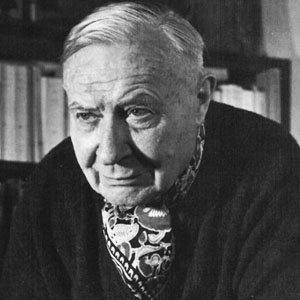
French painter, b. 1896 in Balagny. The work of André Masson has an important place in the development of Surrealism. He began his studies before 1914, at the Academie Royale des Beaux-Arts, Brussels, and the Ecole des Beaux-Arts in Paris. He served in the Great War in the fighting lines, and was severely wounded. The war experience of Masson affected him very deeply. The abnormal realities of trench warfare, with its domination by extreme violence, its immediate contiguity of life and death, presented questions of the motivation of human behavior. His work has been an essay in confronting life at that-level of experience. Masson went to Paris in 1922, and associated with Miro and with the poets. Armand Salacrou, Michel Leiris and Georges Limbour. His interest in the deeper reality of man's behavior drew him to Surrealism. In 1924 he met Andre Breton, joined the Surrealist group, and exhibited with them for some years. He became very involved with non-rational purpose in art, in developing drawing and painting as nearly as possible as direct thought transference. With Miro he produced 'automatic' drawings. These allowed the free movement of the pen line, without pre-thought or condition of any kind. To obtain the same effect in painting, Masson used drawn continuous lines of glue on the canvas, adding the color by coating with different Coloured sands.
Very early in his career Masson relinquished any desire to construct paintings on Cubist or any other lines. For him painting has not been a contrived art, a matter of developing a style. It had to be a part of life itself, a 'way of knowing' simultaneous with a way of action; admitting the violent, the erotic, the chaotic, spurning any rationally formulated order. In 1940 he exiled himself to America. Masson's Surrealist ideas found the new soil productive, and. his influence on American painting was strong. In particular Arshile Gorky drew on it, as did Jackson Pollock and Mark Rothko. Pollock's Action Painting has much in common with Masson's early sand paintings, and with his automatism of method. He returned to Paris in 1945. He designed the scenery for a production of Hamlet in 1946, and for Berg's opera Wozzeck in 1963. He had before the war been concerned in a similar way with various productions. Masson's life work represents a series of periods of exploration, for his personal purpose, of various techniques, varying from full, rich polychrome to monochrome and purely linear work. On occasions involving closely defined biomorphic images, his work is characterized by extreme speed of execution and complex personal imagery.
Browse André Masson Catalogue Raisonnés Online.
En español: André Masson.