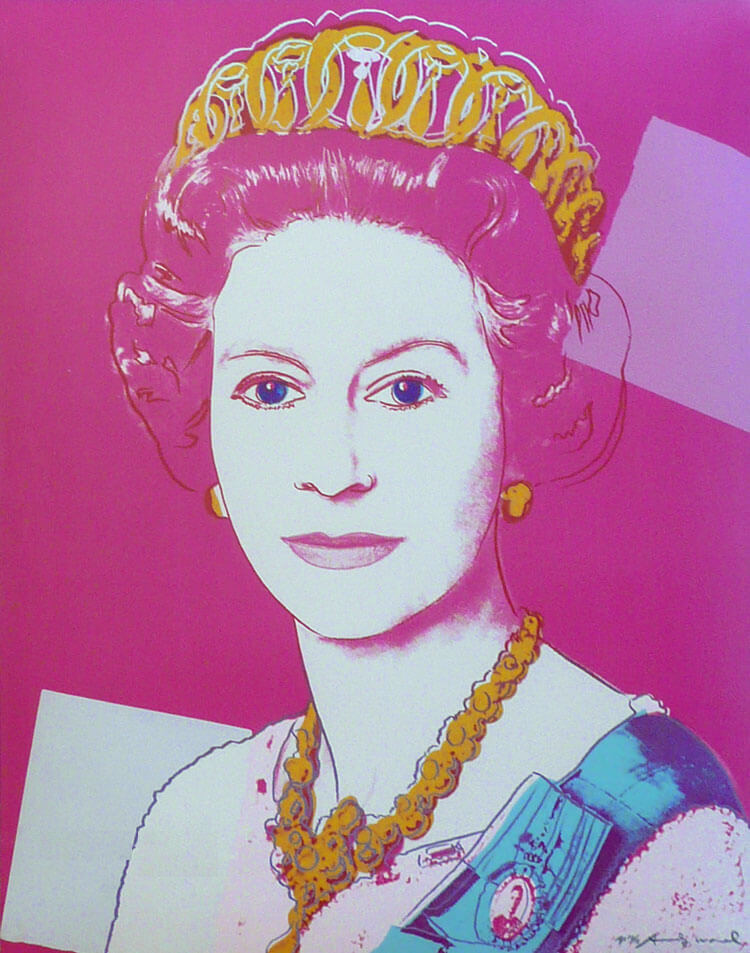
Andy Warhol, Queen Elizabeth II of the United Kingdom from the Reigning Queens Edition, 1985 |
|
| Artist: | Andy Warhol (1928 - 1987) |
|---|---|
| Title: | Queen Elizabeth II of the United Kingdom from the Reigning Queens Edition, 1985 |
| Series: | Reigning Queens Royal Edition with Diamond Dust, 1985 |
| Medium: | Original Color Warhol Screenprint |
| Image Size: | 40 1/4 in x 32 1/16 in (102.24 cm x 81.43 cm) |
| Sheet Size: | 40 3/8 in x 32 1/16 in (102.57 cm x 81.43 cm) |
| Framed Size: | 51 1/2 in x 43 1/2 in (130.8 cm x 110.5 cm) |
| Signature: | Hand-signed by Andy Warhol (1928-1987) in pencil in lower right corner |
| ID # | w-2168 |
Warhol addresses his fascination with the extremes of social hierarchy in this series of Reigning Queens, specifically with the iconography of Queen Elizabeth II. This is the perfect example of Warhol’s ability to transform the entire medium of traditional portraiture and translate it to contemporary, political relevance.
Queen Elizabeth II of the United Kingdom was originally created in 1985 as part of a portfolio of 16 screenprints on Lenox Museum Board. It is from a limited edition series in which Warhol also featured Queen Beatrix, Queen Margrethe II, and Queen Ntombi Twala; there also exists a Reigning Queens (Royal Edition) from the same year in which diamond dust was included within the screenprint during production. Printed by Rupert Jasen Smith, New York and published by George C. P. Mulder, Amsterdam.
This portrait of Queen Elizabeth details Warhol’s playfulness with line and color while also exhibiting his view on conventional portraiture. The vibrant shades of pink, coupled with bright yellows and teal accents create a radical image of the Queen, perhaps transforming her from the view of the bourgeois upper class to a more palpable, everyday poster image we can all relate to. She now falls into the category of popular kitsch culture, while her elegant features continue to be accented by the drawn line of Warhol’s hand while prominent pixilation of the print details elaborate shading and highlights of the portrait.
Frayda Feldman describes this series best:
“Warhol intended his portraits to be seen – as vanitas images, history paintings, or simply glamour poses – he did more than any other artist to revitalize the practice of portraiture, bringing renewed attention to it in the avant-garde art world. He reflected the desires and dreams of a new decade and expanded his cast to include the latest characters from the world of sports, television, and politics and also dramatically escalated his portrait commissions” (Feldman 3rd ed. pg. 22-3).
Catalogue Raisonné & COA:
This Warhol screen print is fully documented and referenced in the below catalogue raisonnés and texts (copies will be enclosed as added documentation with the invoices that will accompany the final sale of the work).
1) Feldman, Frayda and Jörg Schellmann. Andy Warhol Prints, A Catalogue Raisonné, 1989. Illustrated pg. 110, cat. no. 334.
2) Feldman, Frayda and Jörg Schellmann, A Catalogue Raisonné. 3rd ed. Listed as 334 on pg. 138 and detailed on pg. 17.
About the Framing:
Queen Elizabeth is featured in a custom designed, modern gold frame with bronze accents. The contemporary frame style encases and further features the modernity and grandiose size of the work. All materials are archival and to museum quality standards. The framing is completed with a Plexiglas cover.
