Picasso Ceramic Madoura Sculpture Sculpture | Mat Owl (A.R.284), 1955 (Sold)
Signed original prints, drawings, paintings, and sculptures for sale
fine art home > BUY ORIGINALS > PABLO PICASSO > Ceramic Madoura Sculpture Sculpture

Fine art sale

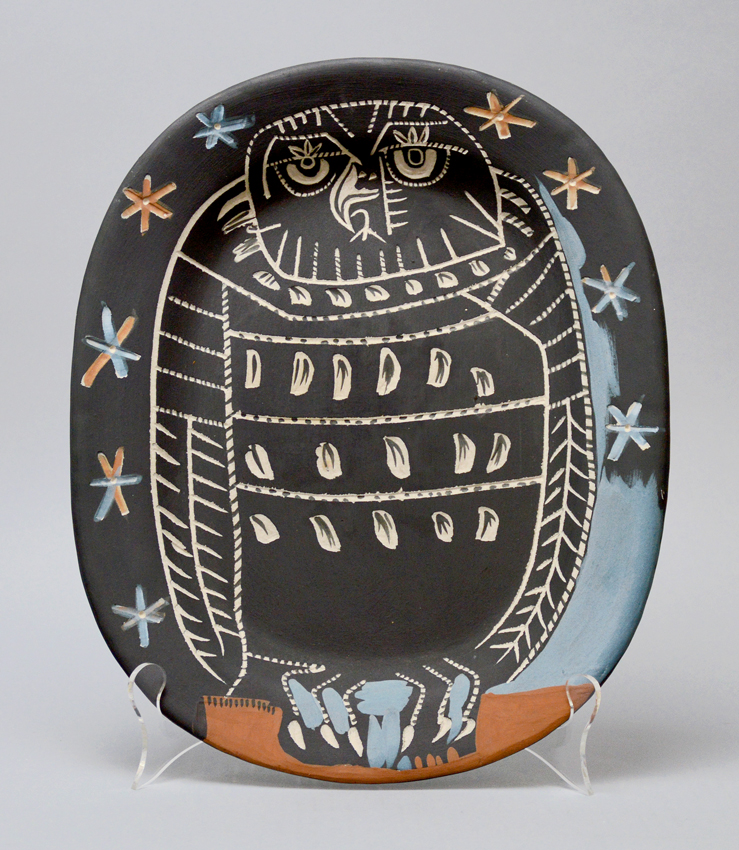
Pablo Picasso, Mat Owl (A.R.284), 1955


Signed Pablo Picasso, Ceramic Madoura Sculpture Sculpture, Mat Owl (A.R.284), 1955

Picasso Ceramic Madoura Sculpture Sculpture Signed, Mat Owl (A.R.284), 1955

Place your cursor over the thumbnails below to view the full-size image:

Picasso Ceramic Madoura Sculpture Sculpture Signed, Mat Owl (A.R.284), 1955 (thumbnail 1) Picasso Ceramic Madoura Sculpture Sculpture Signed, Mat Owl (A.R.284), 1955 (thumbnail 2) Picasso Ceramic Madoura Sculpture Sculpture Signed, Mat Owl (A.R.284), 1955 (thumbnail 3)

Click each room to better visualize its scale and beauty in different contexts.:


 (thumbnail room-view)
 (thumbnail room-view)
 (thumbnail room-view)
 (thumbnail room-view)
 (thumbnail room-view)
Artist: Picasso, Pablo (1881 - 1973)
Title: Mat Owl (A.R.284), 1955
Medium:
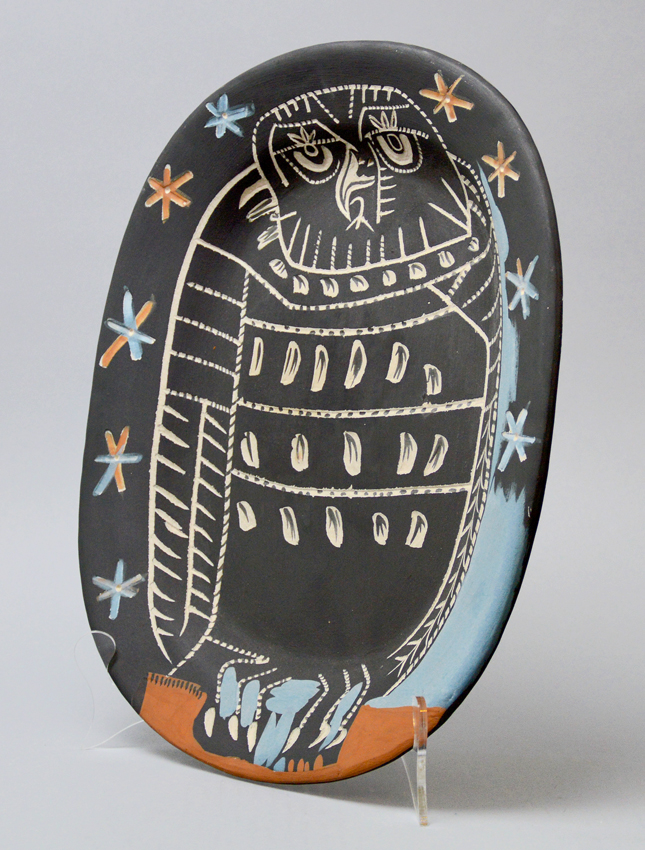
Picasso Madoura partially glazed terre de faïence platter painted in black, blue, white and red, glazed on the underside. Charger ceramic sculpture
Image Size: 14 3/4 in x 12 in (37.5 x 30,5 cm)
Framed Size: 24 3/4 in x 24 in (62.9 x 61 cm)
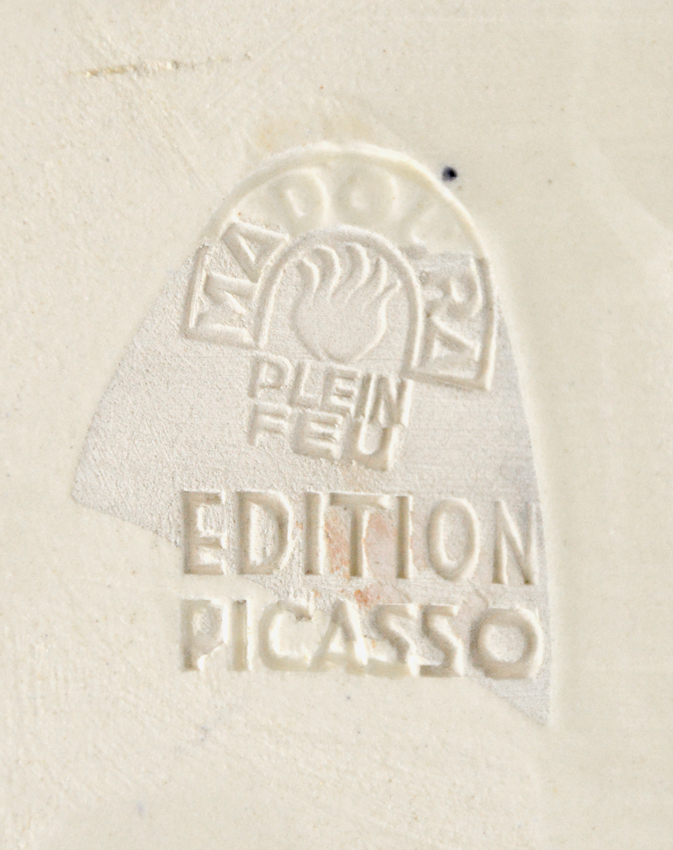
Signed: This Work Is Engraved On The Reverse With The Publisher's Stamp, 'Madoura Plein Feu' In Addition To The Stamp, 'Edition Picasso.'
Edition: With the Edition Picasso and Madoura pottery stamps, also inscribed Edition Picasso Exemplaire Editeur. From the edition of 500
Condition: Excellent
Gallery Price:
Item# 1996
Sorry, this item is sold. Please visit the rest of our Picasso fine art collection
Historical Description:

Created on 1955, this white earthenware clay, rectangular dish is decorated in engobes engraved by knife; also features glaze on the underside.  Inscribed stamps on the verso: ‘Edition Picasso’ and ‘Madoura Plein Feu’.  Out of the edition of 450.

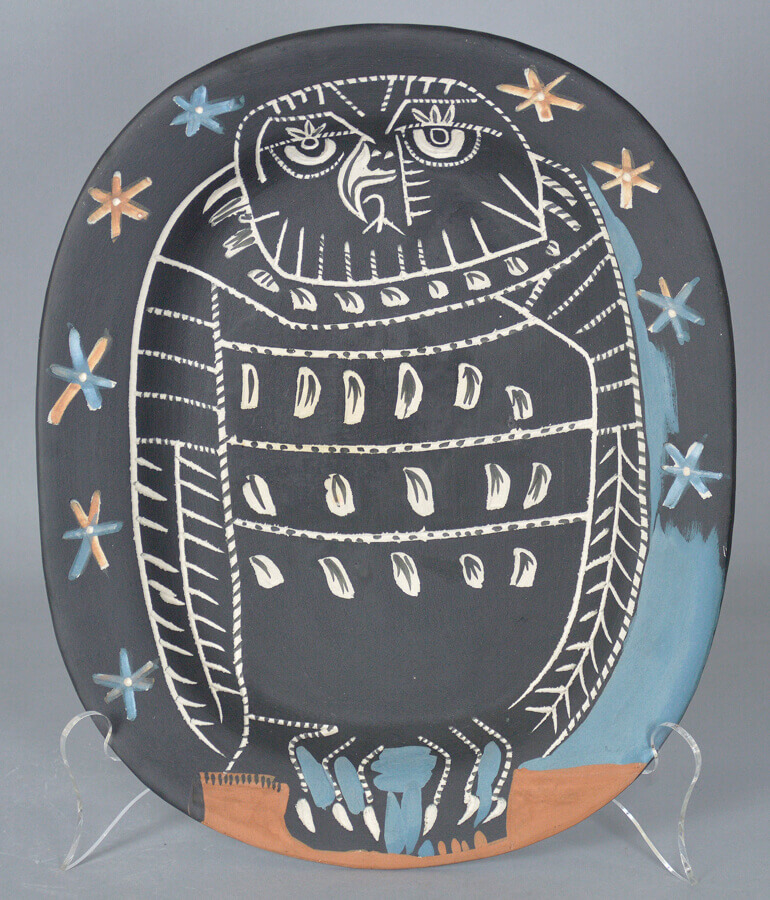
This very whimsical rendition of a friendly owl, is a testament to Picasso’s charming and imaginative creativity.  It is incredibly rendered and detailed, with expressive strokes characterizing its lush feathers and patterning.  The owl takes up the entirety of the dish, perched against a background of brick red and sky blue coloration.  It carries a hilarious expression and also echoes the rectangular shape of the medium in which it rests.

Catalogue Raisonné & Coa:
It is fully documented and referenced in the below catalogue raisonnés and texts (copies will be enclosed as added documentation with the invoices that will accompany the final sale of the work):

1.    Ramié, Alain. Picasso Catalogue of the edited ceramic works 1947-1971, Madoura, 1988. Listed and illustrated as catalogue raisonné no. 284 on pg. 146.
2.    Ramié, Georges. Picasso’s Ceramics, Viking Press: New York, 1976. Listed and illustrated as catalogue raisonné no. 726 on pg. 279.

About The Framing:
This resplendent custom frame is the perfect elegant compliment to this remarkable work. Framing begins with linen wrapped wooden liners that securely hold the ceramic and allow visibility in the back (to view markings). A contemporary and elegant varnished gold leaf frame encases the wood liners. The delicate coloration of the wood moulding perfectly compliments the gentle texture and color within the terracotta. A heavy weight picture wire is attached to the frame to ensure a secure hanging. Due to the size and weight of this piece, we recommend using a heavy duty double nail hook with 100-150 pound weight capacity (double the weight of the piece to determine hook capacity).

Style: 20th Century Modern Art, Modern Artist, Cubism, Cubist

About Us: Masterworks Fine Art strives to be the best source of fine art for our clients and collectors all over the world. We believe the most direct way to accomplish this is by establishing a lifetime of personal and professional relationships with our clients. More About Us »

  • Picasso, Bull, 1957
  • Picasso, Picador, 1952
  • Picasso, Flute Player and Goat, 1956
  • Picasso, Jacqueline's Profile, 1956
  • Picasso, Fish Subject, 1952
  • Picasso, Yan Pitcher, 1952
  • Picasso, Spiraled Motif, 1957
  • Picasso, Set of Four Red Earthenware Tiles
  • Picasso, Exposition Vallauris, 1964
  • Picasso, Face with Hands, 1956
  • Picasso, Face No. 54, 1963
  • Picasso, Wood-Owl Woman, 1951
  • Picasso, Toros en Vallauris (Bulls in Vallauris), 1957
  • Picasso, Tormented Faun's Face, 1956
  • Picasso, Bearded Yan, 1963
  • Picasso, Nature morte au crâne (Still Life with Skull), 1914 [G.36; Bl.26]
  • Picasso, Mains au poisson (Hands with Fish), 1953
  • Picasso, Prow Figure, 1952
  • Picasso, Dancers and Diaulos Player, 1956
  • Picasso, Football, 1961
  • Picasso, Figures, 1956
  • Picasso, Dancing, 1957
  • Picasso, Lozenge with Mask, 1956
  • Picasso, Flute Player and Cavaliers, 1956
  • Picasso, Face with Points, 1969
  • Picasso, Famille de Saltimbanques (Family of Acrobats), c.1950
  • Picasso, Bouquet à la pomme (Bunch with apple), 1956
  • Picasso, Grey Engraved Pitcher, 1954
  • Picasso, Jacqueline's Profile, 1956, AR. 383
  • Picasso, Centaur, 1950
  • Picasso, Carnaval (Carnival), 1967
  • Picasso, Arena, 1958
  • Picasso, Cavalier Faun, 1956
  • Picasso, Dwarf Dancer from the 'Barcelona' suite, 1966
  • Picasso, Mère et enfant au fichu (Mother and Child with Shawl), 1966
  • Picasso, Woman, 1955
  • Picasso, Picador, 1959
  • Picasso, La Fenêtre De L'atelier À La Californie (The Window Of The Studio at La Californie), C.1960
  • Picasso, Still Life with Spoon, 1952
  • Picasso, Flute Player, 1951
  • Picasso, Seized Handled Pitcher, 1953
  • Picasso, Figure with Round Nose, 1971
  • Picasso, La Bouteille de Rhum (Bottle of Rum), c. 1965
  • Picasso, Large Head, Right Profile, 1965
  • Picasso, Large Head, Left Profile, 1965
  • Picasso, Nature morte à l'aubergine (Still Life with Eggplant), c. 1946
  • Picasso, L'Attente (The Wait), 1966
  • Picasso, Colombe de paix (Dove of Peace), 1962
  • Picasso, Face and Owl, 1958, AR. 407
  • Picasso, Glass Under Lamp, 1964
  • Picasso, Family Scene, 1962
  • Picasso, Le Peintre (The Painter), 1963
  • Picasso, La Corrida (The Bullfight), 1956
  • Picasso, Le Clown et l'Harlequin (The Clown and the Harlequin), 1971
  • Picasso, Femme au Chapeau a Fleurs,  Woman with Flowery Hat, 1964
  • Picasso, Fluffy Haired Woman, 1964
  • Picasso, Tête de femme à la couronne de fleurs, 1964
  • Picasso, Personnage avec mains sur les hanches (Vase with two high handles), 1953
  • Picasso, Little Bust of Woman, 1964
  • Picasso, Jacqueline en Mariée (Jacqueline, Married)
  • Picasso, Nue Au Faubourg St. Honoré, 1970
  • Picasso, La Pique en Rouge et Jaune (The Bullfight in Red and Yellow), 1959
  • Picasso, Nature morte à la pastèque (Still Life with a Watermelon)

Do you own a similar Picasso to sell? We offer free evaluations.

Biography of Pablo Picasso

Pablo PicassoPablo Picasso (1881 - 1973)

"Yet Cubism and Modern art weren't either scientific or intellectual; they were visual and came from the eye and mind of one of the greatest geniuses in art history. Pablo Picasso, born in Spain, was a child prodigy who was recognized as such by his art-teacher father, who ably led him along. The small Museo de Picasso in Barcelona is devoted primarily to his early works, which include strikingly realistic renderings of casts of ancient sculpture.

"He was a rebel from the start and, as a teenager, began to frequent the Barcelona cafes where intellectuals gathered. He soon went to Paris, the capital of art, and soaked up the works of Manet, Gustave Courbet, and Toulouse-Lautrec, whose sketchy style impressed him greatly. Then it was back to Spain, a return to France, and again back to Spain - all in the years 1899 to 1904.

"Before he struck upon Cubism, Picasso went through a prodigious number of styles - realism, caricature, the Blue Period, and the Rose Period. The Blue Period dates from 1901 to 1904 and is characterized by a predominantly blue palette and subjects focusing on outcasts, beggars, and prostitutes. This was when he also produced his first sculptures. The most poignant work of the style is in Cleveland's Museum of Art, La Vie (1903), which was created in memory of a great childhood friend, the Spanish poet Casagemas, who had committed suicide. The painting started as a self-portrait, but Picasso's features became those of his lost friend. The composition is stilted, the space compressed, the gestures stiff, and the tones predominantly blue. Another outstanding Blue Period work, of 1903, is in the Metropolitan, The Blind Man's Meal. Yet another example, perhaps the most lyrical and mysterious ever, is in the Toledo Museum of Art, the haunting Woman with a Crow (1903).

"The Rose Period began around 1904 when Picasso's palette brightened, the paintings dominated by pinks and beiges, light blues, and roses. His subjects are saltimbanques (circus people), harlequins, and clowns, all of whom seem to be mute and strangely inactive. One of the premier works of this period is in Washington, D.C., the National Gallery's large and extremely beautiful Family of Saltimbanques dating to 1905, which portrays a group of circus workers who appear alienated and incapable of communicating with each other, set in a one-dimensional space.

"In 1905, Picasso went briefly to Holland, and on his return to Paris, his works took on a classical aura with large male and fernale figures seen frontally or in distinct profile, almost like early Greek art. One of the best of these of 1906 is in the Albright-Knox Gallery in Buffalo, NY, La Toilette. Several pieces in this new style were purchased by Gertrude (the art patron and writer) and her brother, Leo Stein.

Picasso enjoyed creating his art on many media. From paintings to etchings to ceramics, all of his works are a testament to his skills. There are even Picasso prints that are worth more than unique original works.

Picasso Ceramic Madoura Sculpture Sculpture Signed, Mat Owl (A.R.284), 1955