Pablo Picasso, The Embrace, 1966
|
|
|
Signed Pablo Picasso, Collotype, The Embrace, 1966 ![]() |
| Artist: | Picasso, Pablo (1881 - 1973) |
|---|---|
| Title: | The Embrace, 1966 |
| Medium: | Original Collotype with Pochoir |
| Image Size: | 22.8 in x 22 in (58 cm x 56 cm) |
| Framed Size: | 41 in x 40 1/2 in (104.1 cm x 102.9 cm) |
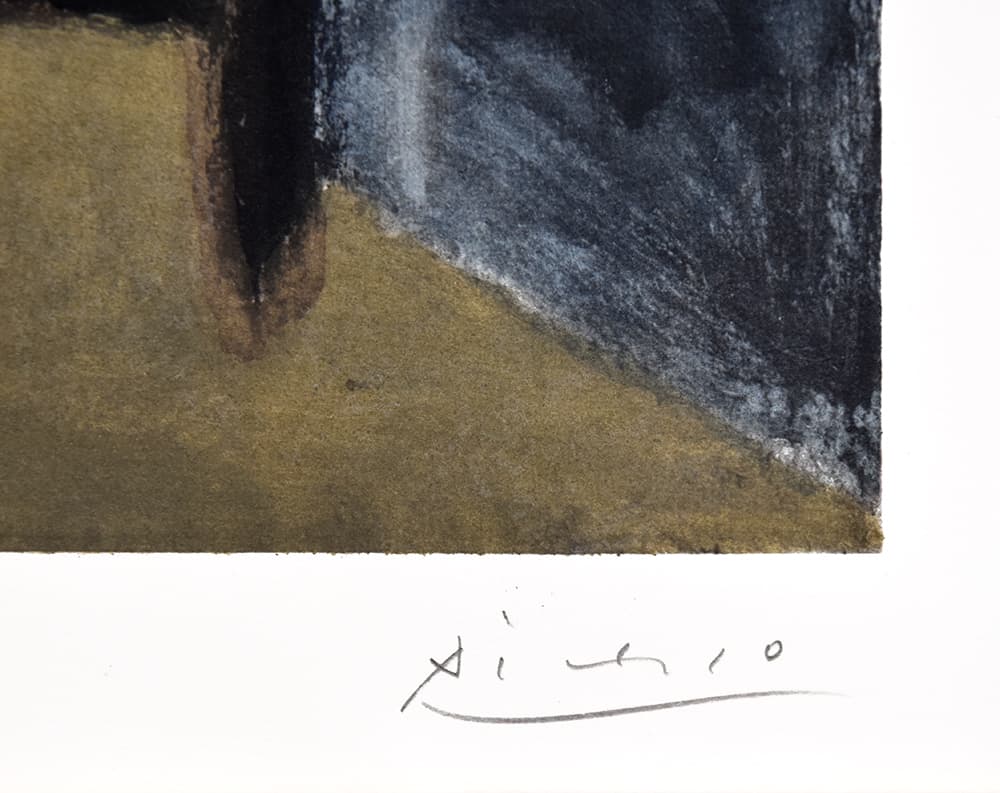
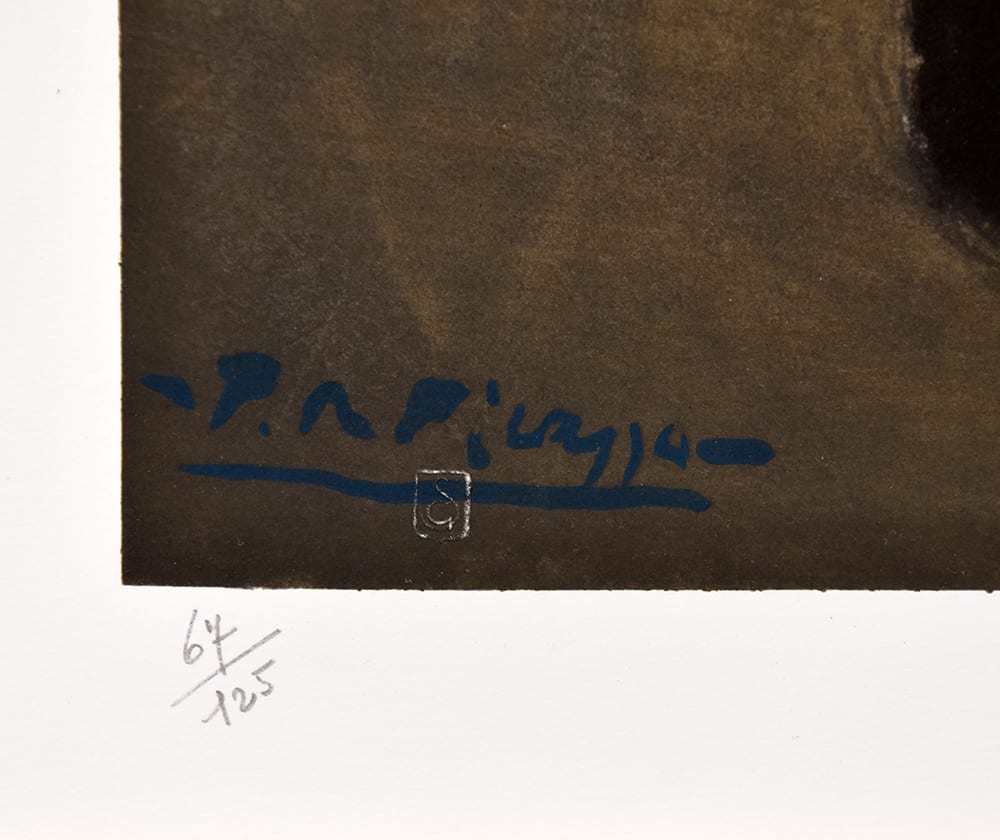
| Signed: | This work is hand-signed by Pablo Picasso (1881-1973) in the lower right corner. |
| Edition: | Numbered from the edition of 125 in the lower left margin, with Guy Spitzer publisher's stamp in the lower left of the image. |
| Condition: | This work is in excellent condition, the colors are bright and fresh. |
| Gallery Price: Item# 3775 | Sorry, this item is sold. Please visit the rest of our Picasso fine art collection |
| Historical Description: | |
|---|---|
| Depicting the influence art nouveau and impressionism had on Picasso's early
works, this image hints at the approaching arrival of the artist's revolutionary
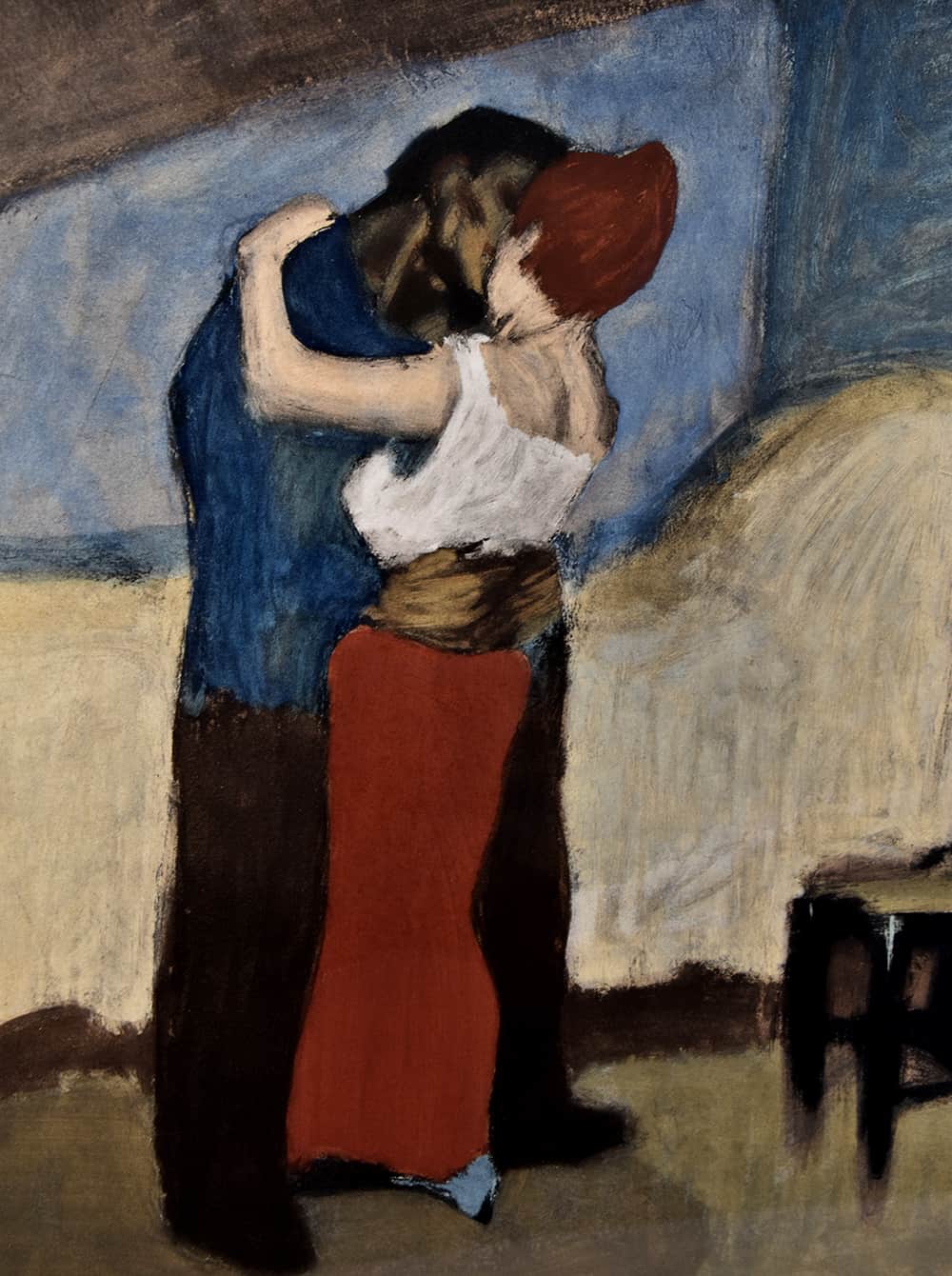
Blue Period. Full of painterly applications of color, an embracing couple stands
just off center drawing our eye to their intimate exchange. The woman captures
our eye with the bright red of her skirt and hair, while the man recedes to
the background in dark blue and black. The faces of both figures are obscured,
creating a mysterious air that causes the viewer to create their own unique
interpretation of the full story behind this work. Further adding to the intrigue
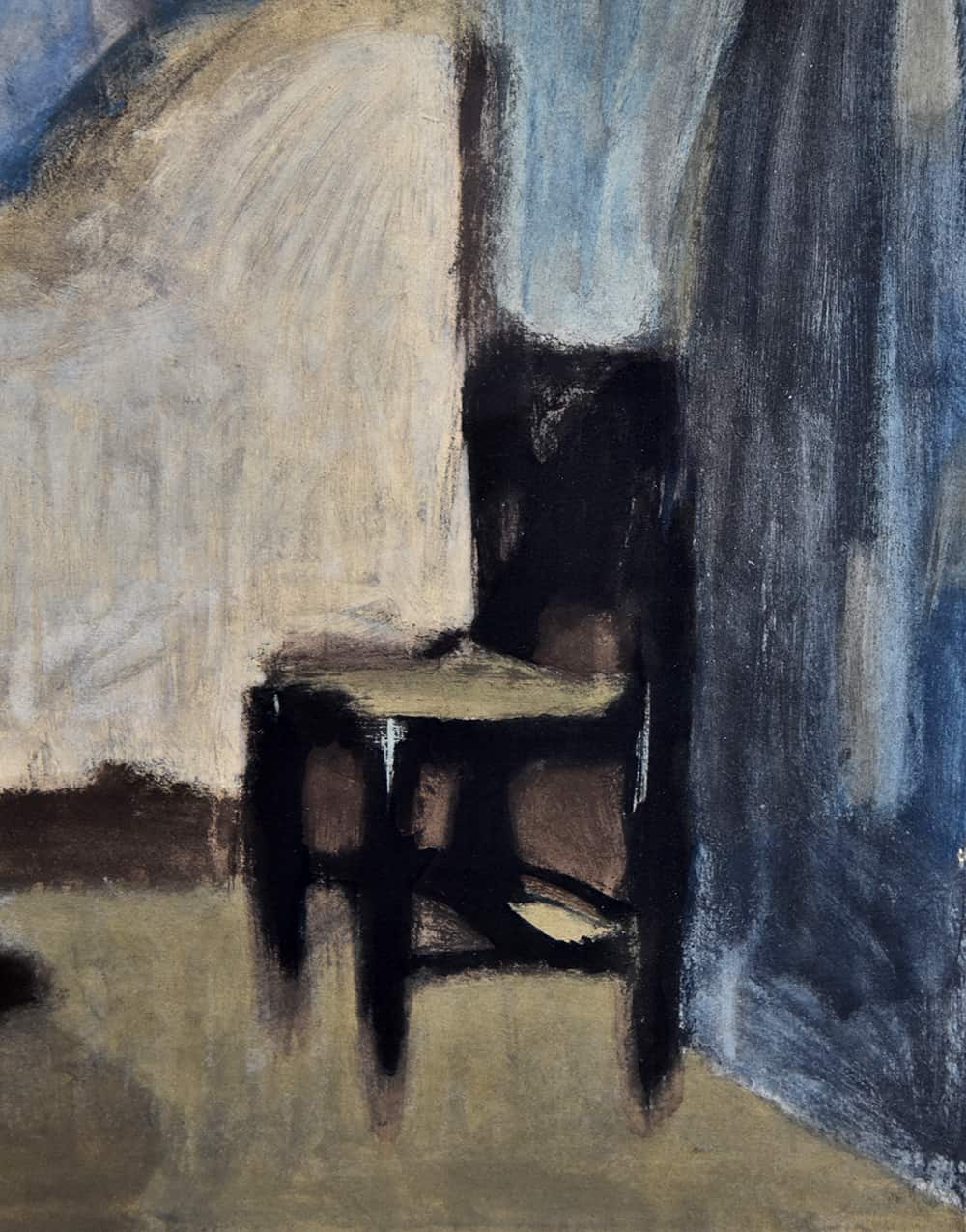
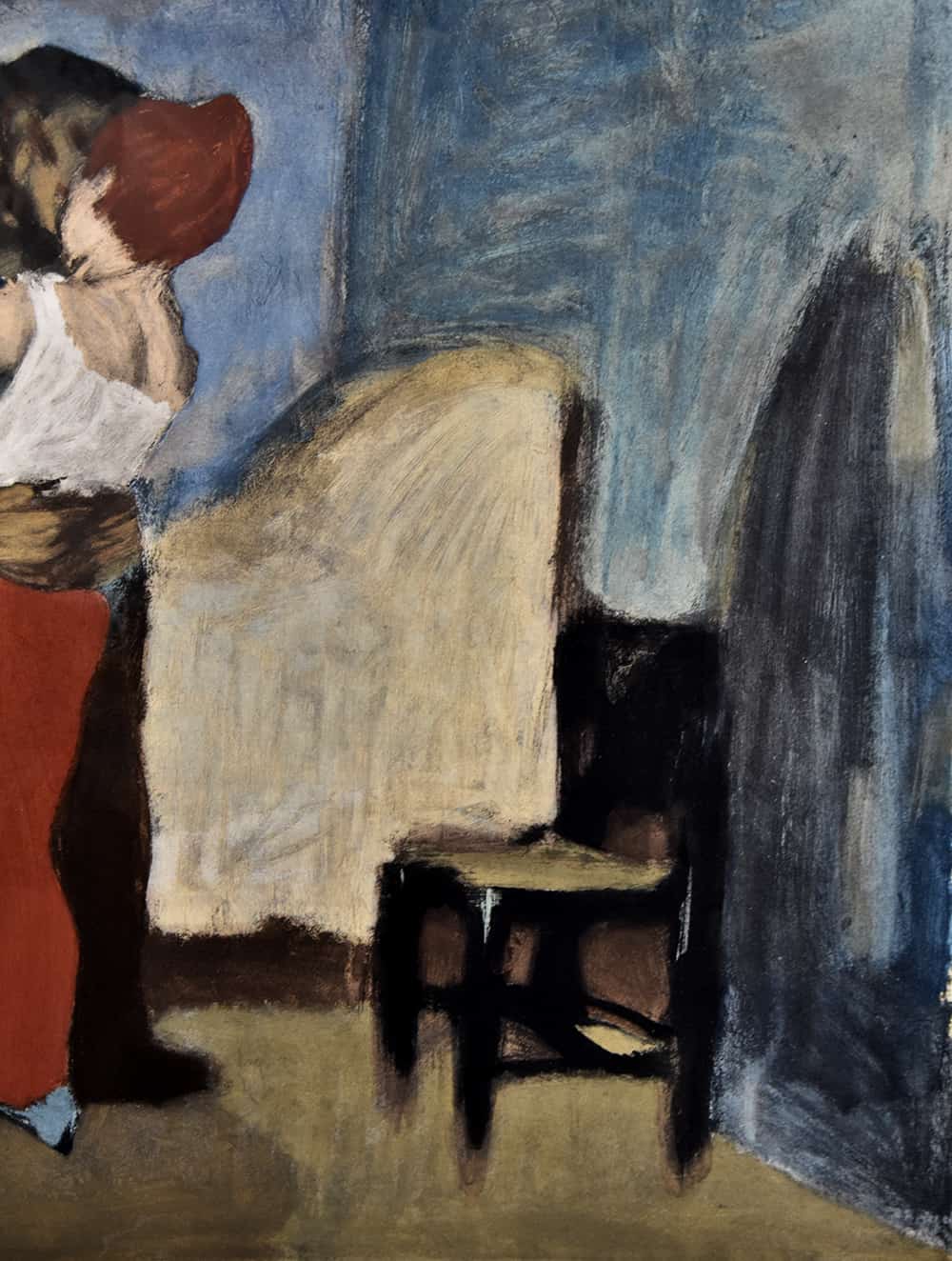
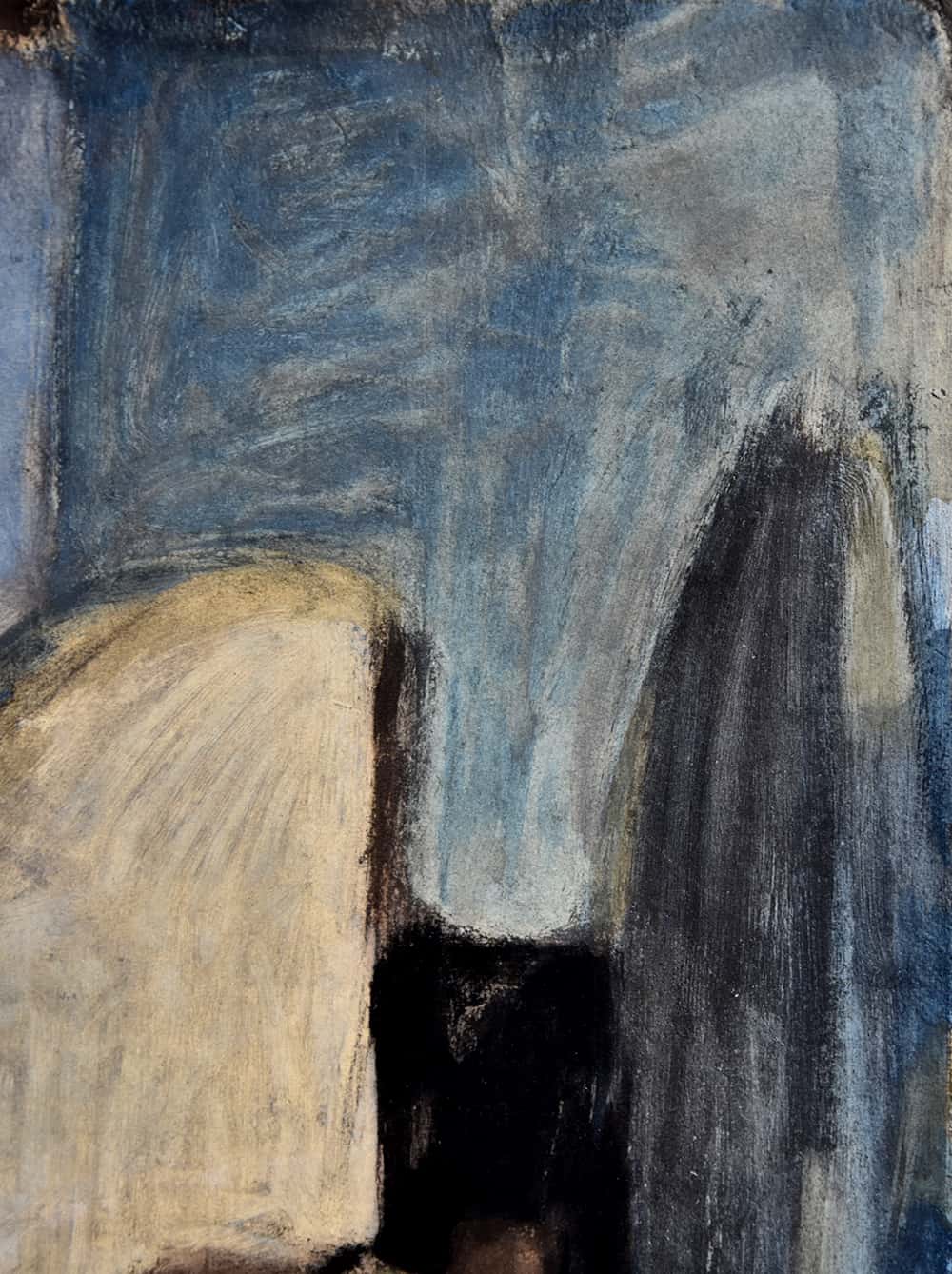
of this piece, a draped piece of furniture is hidden beneath a white sheet,
and a single chair sits to the right. One can contemplate endless possibilities
to this setting; Are they in a café just before closing? Or could they
be at the edge of a dance floor, full of other couples just like them? With
strong shadows, the lighting and contrast of this work are masterfully composed,
exhibiting Picasso's exemplary skill at an early stage of his career.
Created in 1966, this original color collotype with pochoir is hand-signed by Pablo Picasso (1881-1973) in blue in the lower left of the image, this work is numbered 67/125 in pencil the lower left margin. This work is based on an original oil painting from 1900 of the same title
About the Framing: | |
| Style: | Cubism, Blue Period, Rose Period, 20th Century Spanish Modern Master, Madoura ceramics of Vallauris, Vollard |
About Us: Masterworks Fine Art strives to be the best source of fine art for our clients and collectors all over the world. We believe the most direct way to accomplish this is by establishing a lifetime of personal and professional relationships with our clients. More About Us »
Do you own a similar Picasso to sell? We offer free evaluations.
Biography of Pablo Picasso
Pablo Picasso (1881 - 1973)
"Yet Cubism and Modern art weren't either scientific or intellectual; they were visual and came from the eye and mind of one of the greatest geniuses in art history. Pablo Picasso, born in Spain, was a child prodigy who was recognized as such by his art-teacher father, who ably led him along. The small Museo de Picasso in Barcelona is devoted primarily to his early works, which include strikingly realistic renderings of casts of ancient sculpture.
"He was a rebel from the start and, as a teenager, began to frequent the Barcelona cafes where intellectuals gathered. He soon went to Paris, the capital of art, and soaked up the works of Manet, Gustave Courbet, and Toulouse-Lautrec, whose sketchy style impressed him greatly. Then it was back to Spain, a return to France, and again back to Spain - all in the years 1899 to 1904.
"Before he struck upon Cubism, Picasso went through a prodigious number of styles - realism, caricature, the Blue Period, and the Rose Period. The Blue Period dates from 1901 to 1904 and is characterized by a predominantly blue palette and subjects focusing on outcasts, beggars, and prostitutes. This was when he also produced his first sculptures. The most poignant work of the style is in Cleveland's Museum of Art, La Vie (1903), which was created in memory of a great childhood friend, the Spanish poet Casagemas, who had committed suicide. The painting started as a self-portrait, but Picasso's features became those of his lost friend. The composition is stilted, the space compressed, the gestures stiff, and the tones predominantly blue. Another outstanding Blue Period work, of 1903, is in the Metropolitan, The Blind Man's Meal. Yet another example, perhaps the most lyrical and mysterious ever, is in the Toledo Museum of Art, the haunting Woman with a Crow (1903).
"The Rose Period began around 1904 when Picasso's palette brightened, the paintings dominated by pinks and beiges, light blues, and roses. His subjects are saltimbanques (circus people), harlequins, and clowns, all of whom seem to be mute and strangely inactive. One of the premier works of this period is in Washington, D.C., the National Gallery's large and extremely beautiful Family of Saltimbanques dating to 1905, which portrays a group of circus workers who appear alienated and incapable of communicating with each other, set in a one-dimensional space.
"In 1905, Picasso went briefly to Holland, and on his return to Paris, his works took on a classical aura with large male and fernale figures seen frontally or in distinct profile, almost like early Greek art. One of the best of these of 1906 is in the Albright-Knox Gallery in Buffalo, NY, La Toilette. Several pieces in this new style were purchased by Gertrude (the art patron and writer) and her brother, Leo Stein.
Picasso enjoyed creating his art on many media. From paintings to etchings to ceramics, all of his works are a testament to his skills. There are even Picasso prints that are worth more than unique original works.


Print Page
Email to Friend


