Signed original paintings, lithographs, etchings, drawings, sculptures for sale
Chagall lithograph
Picasso etching
Renoir etchings
Rembrandt etching
Vasarely sculptures
HOME > INVENTORY > TOULOUSE-LAUTREC > Le Tocsin (The Alarm Bell) aka La Châtelaine (The Lady of the Manor), 1895

TOULOUSE-LAUTREC, Henri de, Le Tocsin (The Alarm Bell) aka La Châtelaine (The Lady of the Manor), 1895

Toulouse-Lautrec, Henri de (Henri-Marie-Raymond de Toulouse-Lautrec Monfa). French painter, draughtsman and lithographer, born in Albi and died in … [Read biography »]

Print this pageEmail to a friend

Signed Henri de Toulouse-Lautrec (1864 - 1901), Original Color Lithograph, Le Tocsin (The Alarm Bell) aka La Châtelaine (The Lady of the Manor), 1895

TOULOUSE-LAUTREC signed, Le Tocsin (The Alarm Bell) aka La Châtelaine (The Lady of the Manor), 1895

Place your cursor over the thumbnails below to view the full-size image:

TOULOUSE-LAUTREC signed, Le Tocsin (The Alarm Bell) aka La Châtelaine (The Lady of the Manor), 1895 (thumbnail 1)TOULOUSE-LAUTREC signed, Le Tocsin (The Alarm Bell) aka La Châtelaine (The Lady of the Manor), 1895 (thumbnail 2)
Artist: Toulouse-Lautrec, Henri (1864 - 1901)
Title: Le Tocsin (The Alarm Bell) aka La Châtelaine (The Lady of the Manor), 1895
Medium: Original Color Lithograph
Image Size: 22.52 in x 17.8 in (57.2 cm x 45.2 cm)
Sheet Size: 28.35 in x 21.57 in (72 cm x 54.8 cm)
Framed Size: 39 1/4 in x 33 3/4 in (99.7 cm x 85.73 cm)
Signed: Monogram stamp and date is engraved in the lower l
Edition: From Wittrock's first state of three, also known as a State A impression printed in blue before the printed text on wove paper with wide margins; uncommon
Condition: In excellent condition
Price 
:

Item# 1670
$17,000


To speak directly with the Director, Alex Adelman, please call (510) 777-9970 / 1-800-805-7060.
 
Description:

In this lithograph, we see Toulouse-Lautrec experimenting with illusions of depth, using horizon lines in conjunction with diagonals to create a fantastic composition full of depth and mystery. Clearly showing his willingness to go beyond his realm of poster images, Toulouse-Lautrec was able to redefine the typical posters of his time, allowing his audience to appreciate them as an art form, rather than merely modes of advertisement.

Created in 1895 on wove paper in order to advertise the novel of the same name, Le Tocsin (La Châtelaine) features the signature monogram stamp of Toulouse Lautrec (1864 - 1901) engraved in the stone in the lower left with the date '95'. There are 12 prints of this rare edition featured in public collections, having been included in exhibitions at the Bibliothèque Nationale, Paris and the National Gallery of Art, Washington, D.C.

Written by Jules de Gastyne, the short story Le Tocsin was to be published in the periodical, La Dépêche de Toulouse in which Toulouse-Lautrec was commissioned to create posters and ads. Evoking a mysterious atmosphere, Le Tocsin features a lady in white walking ponderingly down a steep path. The crescent moon illuminates a vague landscape in which a few rooftops and a bell can be seen. A timid dog follows her as they both continue to leave the world behind them and into a wooded environment. The effect of the grey-green color tone only adds to the characterization of the figures in this piece, undoubtedly linking them to the narrative from which this scene derives in the novel.

Catalogue Raisonné & COA:
It is fully documented and referenced in (copies will be enclosed as added documentation with the invoices that I will enclose with the sale of the work) :

1) Adhémar, Jean. Toulouse-Lautrec: His Complete Lithographs and Drypoints, New York, 1951. Listed and illustrated as cat. no. 147.

2) Adriani, Gotz. Toulouse Lautrec: The Complete Graphic Works A Catalogue Raisonne, London, 1988. Listed and illustrated as cat. no. 143 on pg. 202-203.

3) Delteil Loys. H. de Toulouse-Lautrec, seconde partie, Paris, 1920. Listed and illustrated as cat. no. 357.

4) Los Angeles County Museum of Art. Toulouse-Lautrec & His Contemporaries: Posters of the Belle Epoque from the Wagner Collection, Los Angeles, 1985. Listed and illustrated as cat. no. 19.

5) Lugt, Frits. Les Marques de Collections de Dessins & d'Estampes, Amsterdam, 1921. Signature stamp listed and illustrated as cat. no. 1338 on pg. 240.

6) Wittrock, Wolfgang. Toulouse-Lautrec The Complete Prints, Vol II, New York, 1985. Listed and illustrated on pgs. 792-793 as cat. no. P19.

About the Framing:
Conservation framed with museum-quality, archival materials, this work is set in a beautiful Italian-style moulding that gracefully complements this marvelous work. Its accented gold moulding along each corner contrasts nicely with the bold turquoise blue accents of the piece. Completed with white, linen-wrapped mats and a matching gold inner fillet, this work is set behind an archival Plexiglas® cover.


Biography of Henri de Toulouse-Lautrec

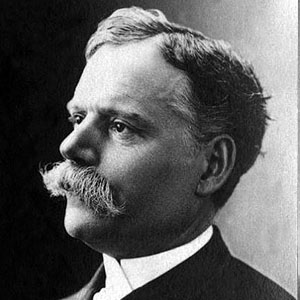
Henri de Toulouse-LautrecHenri de Toulouse-Lautrec (1864 - 1901)

Toulouse-Lautrec, Henri de (Henri-Marie-Raymond de Toulouse-Lautrec Monfa). French painter, draughtsman and lithographer, born in Albi and died in Malrome. The child of aristocratic parents, he had a conventional boyhood, with plenty of riding and shooting. A son of the wealthy and aristocratic Lautrec family line, Toulouse suffered the effects of several hundred years of inbreeding: he was genetic dwarf. Because his dwarfism was due to insufficient genetic variety, he was incapable of retaining nutrients, including calcium, to strengthen bones, promote growth, and prevent fracture. In 1878, and again in 1879, he broke his left leg and right femur. He would never fully recover from this accident, and while his torso continued to develop, his legs remained stunted. In 1882, he enrolled in Bonnat's studio in Paris; when Bonnat gave up teaching, he went on to work under Cormon. In 1885 he settled in Montmartre, a raffish area that satisfied his need to find a milieu in which his physical appearance would be accepted without embarrassment or attention. Montmartre also provided Lautrec with a series of dubious women, from one of whom he contracted the syphilis that contributed to his early death.

In 1888, Lautrec produced his first really independent, mature work: The Cirque Fernando (Art Institute of Chicago), which reveals such characteristic Impressionist devices as the flattening of the picture space, the employment of a rather unusual viewpoint, and the cutting of the figures by the edge of the composition. Peculiar to Lautrec himself, however, is an ingredient of caricature (in the ringmaster, for example) and the use of bold, simplified, non-naturalistic color. The painting already contains most of the elements that Lautrec was to exploit in his posters.

His first lithographic print, a poster for the Moulin Rouge, dates from 1891; in the remaining ten years of his life, he was to make nearly 400 prints in black and white and in color, and produce thirty-one posters proper. Lautrec was among the first and, in many respects, the greatest of all poster designers. A man with a strong theatrical sense, interested in individual personality and fascinated by social extremes, he had the right kind of flair, panache and an appropriate, often sardonic sense of exaggeration.

The Divan Japonais or Jane Avril-Jardin de Paris combine inventiveness and keen visual precision with a kind of careless, cynical elegance in a way that is quite breath-taking. Lautrec's influence on the development of the poster was enormous. His first lithographic print, a poster for the Moulin Rouge, dates from 1891; in the remaining ten years of his life, he was to make nearly 400 prints in black and white and in color, and produce thirty-one posters proper. Lautrec was among the first and, in many respects, the greatest of all poster designers.

Like Degas - but unlike most of the Impressionists -Lautrec was not really interested in landscape; and the lighting in his pictures is often most convincing and effective when it is artificial. His favorite themes were the Parisian dance halls, cabarets and circuses (notably the Moulin Rouge and the Moulin de la Galette). And even life in the brothels, where he spent a great deal of his time-as an observer as well as a customer. His ordered and calculated pictures of the calculating but disordered world of the prostitute are neither lascivious nor coy; and in their unglamorized. acceptance of the facts of real life, they were to be influential in the history of twentieth century art. The young Picasso, for example, was obviously influenced by them.

Lautrec also painted relatively conventional nude studies, and he incorporated in his work in various ways many of the celebrities of the music-hall world: Jane Avril, 'La Goulue', Valentin-le Desosse, Loie Fuller and Yvette Guilbert. As the 1890s wore on, Lautrec's life became increasingly dissipated; and the quantity and quality of his work began to decline. In 1899 he suffered a complete physical and mental breakdown, and was confined to a sanatorium. While he was still an inmate he resumed work (partly to establish his sanity), and on his release he began painting again. His style, however, was now different. In the later works (In a Private Room at the 'Rat Mort', 1899, London, Courtauld Gallery), the coloring is more somber, the handling broader; the emphasis has become painterly rather than linear. His health broken, and worn out by his excesses, Lautrec died in September 1901, surrounded by his family. The contents of his studio were later presented to his native town of Albi.